The average ecommerce conversion rate hovers around 2.5%, with a staggering 70% of shopping carts abandoned before checkout. For years, the default response has been a simple pop-up asking for an email, a tactic that often captures low-intent leads without directly impacting immediate revenue or solving cart abandonment. This article moves beyond that basic approach, exploring a more sophisticated and profitable strategy.
We will dissect multiple distinct types of pop up advertisement examples that are engineered for revenue generation, not just lead capture. Each example is grounded in proven consumer psychology principles like scarcity, FOMO (Fear Of Missing Out), and social proof, transforming pop-ups from intrusive annoyances into powerful, scientifically-backed urgency marketing tools. You'll see how advanced behavioral triggers outperform basic countdown timers and how to apply these concepts to protect profit margins and improve inventory management.
Throughout this guide, we'll provide a strategic breakdown of each pop-up, complete with screenshots and actionable takeaways. For Shopify and Shopify Plus merchants, we've included specific implementation details to help you replicate these high-performing campaigns. To truly measure the effectiveness of these ROI-driven pop-up advertisements, it's crucial to align them with broader strategies to increase e-commerce conversion rates and sales across your business. This list is your blueprint for turning passive browsers into active, immediate buyers.
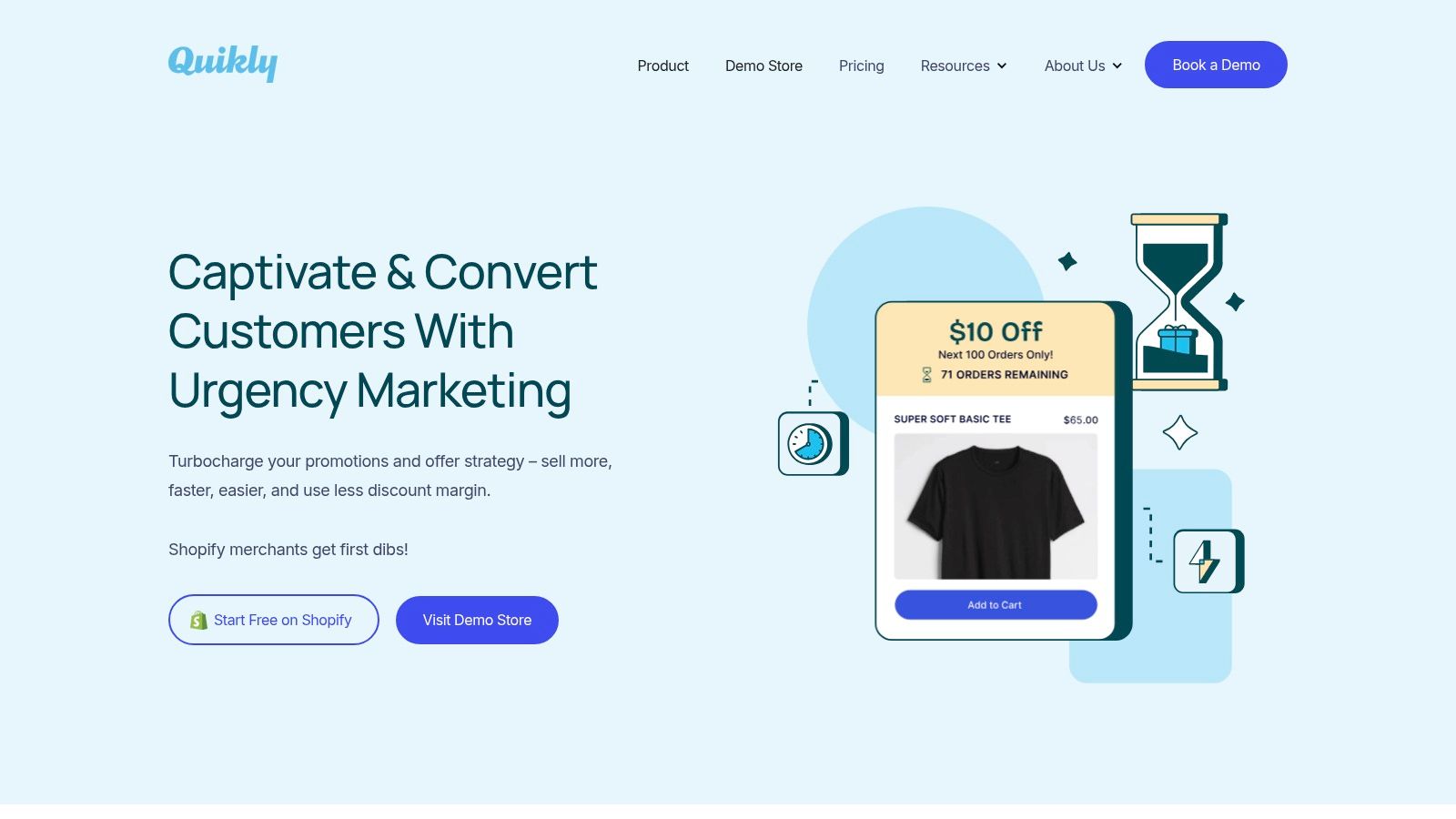
1. Example 1: The Scarcity-Driven Ranked Offer (Quikly)
This first pop up advertisement example moves beyond a simple discount offer and transforms the user experience into a competitive, time-sensitive event. It leverages the psychological principle of scarcity by offering tiered rewards based on response speed. The fastest customers receive the best prize, creating a powerful sense of FOMO (Fear of Missing Out) and genuine anticipation, principles rooted in behavioral economics.
Unlike a basic countdown timer that offers the same discount to everyone, this dynamic model drives immediate, high-intent action. This sophisticated behavioral trigger also protects profit margins by strictly limiting the number of deep discounts awarded. This approach positions the brand as an expert in the science of urgency, creating exciting shopping "Moments" that engage, convert, and drive revenue.
Strategic Breakdown
Trigger: This pop-up is typically triggered by a user visiting a specific landing page after opting into the campaign via email or SMS. This pre-qualified audience ensures high engagement from the start. It can also be configured as an exit-intent pop-up for abandoning visitors who have not yet signed up, offering them a final, compelling reason to stay.
Offer: The offer is a ranked-tier system. For example, the first person gets a $500 gift card, the next 10 get $100, and everyone else who acts fast gets 20% off. This structure creates a competitive dynamic that a single-offer pop-up cannot match.
Design & Copy: The design is clean and urgent. The headline clearly states the value proposition ("Don’t Miss Out!"). The body copy explains the ranked prizes, while a prominent countdown clock visually reinforces the time sensitivity. The copy uses action-oriented words like "Hurry," "Fastest," and "Claim" to prompt immediate user response.
Call-to-Action (CTA): The CTA is a simple, direct button like "CLAIM YOURS." Its singular focus removes any friction or decision paralysis, guiding the user to the one action that matters: participating in the event.
Actionable Takeaways & Implementation
Protect Margins with Tiered Offers: Instead of a blanket 20% discount that erodes profit, a ranked offer limits your deepest discounts to a small, controllable number of top prizes. This drives the same (or better) urgency while protecting your bottom line and helping manage inventory for high-demand items.
Build an Engaged Pre-Launch List: Use this pop-up model not just for immediate sales but as a list-building tool. Announce an upcoming "Quikly" drop and use a simple sign-up pop-up to capture emails and phone numbers of interested shoppers, building a high-intent audience before the event goes live.
Integrate with Your Tech Stack: For Shopify Plus merchants, this strategy integrates directly with tools like Klaviyo and Attentive. You can segment audiences who participate in these events and create follow-up flows based on their engagement level, turning a one-time event into a long-term customer relationship.
This sophisticated approach elevates the standard pop-up from a simple promotional tool into a powerful revenue-generating engine that drives both immediate sales and long-term brand loyalty. You can explore how to build these dynamic experiences at Quikly.com.
2. OptiMonk: The Template-Driven Personalization Engine
This pop up advertisement example showcases a platform built for speed and versatility. OptiMonk specializes in providing a vast library of pre-built templates that allow brands to quickly deploy personalized onsite messages, from exit-intent offers to gamified lead capture forms. It leverages behavioral targeting to ensure the right message reaches the right user at the most impactful moment.
Unlike platforms focused on a single type of engagement, OptiMonk's strength lies in its breadth. It allows merchants to experiment with various pop-up formats, A/B test different psychological triggers like urgency or social proof, and find what resonates best with their audience without needing extensive design or development resources. This approach positions the brand as a flexible and data-driven conversion optimization tool.
Strategic Breakdown
Trigger: The platform offers a wide range of triggers, including exit-intent, time on page, scroll depth, cart value, and targeting based on URL or UTM parameters. This allows for precise segmentation, ensuring a first-time visitor sees a different offer than a high-value returning customer who is about to abandon their cart.
Offer: Offers are highly customizable through templates. They can range from simple percentage-off discounts and free shipping to more engaging gamified "Spin the Wheel" promotions, product recommendations, or content downloads. The variety allows brands to align the offer with specific campaign goals, such as list growth, cart abandonment recovery, or average order value (AOV) increase.
Design & Copy: With over 300 templates, the design process is streamlined. Brands can select a professionally designed pop-up and customize it with their branding, colors, and fonts. The copy is guided by proven formulas within the templates, often featuring clear headlines ("Wait! Before You Go...") and benefit-driven body text explaining the value of the offer.
Call-to-Action (CTA): CTAs are designed to be clear and compelling. Buttons like "GET MY 15% OFF" or "TRY MY LUCK" are common. The templates ensure the CTA is visually prominent and uses action-oriented language to minimize friction and drive conversions.
Actionable Takeaways & Implementation
Leverage Template-Based A/B Testing: Instead of building designs from scratch, use OptiMonk's library to rapidly test different pop-up concepts. Test a gamified wheel against a standard discount offer for exit-intent to see which psychological approach drives more email sign-ups and recovered sales.
Segment Offers for Different Traffic Sources: Use the UTM targeting trigger to create custom pop-ups for visitors from specific channels. A user arriving from a Facebook ad could see a pop-up referencing that specific campaign, creating a highly relevant and personalized user journey that boosts conversion rates.
Integrate with Your Tech Stack: For Shopify and Shopify Plus merchants, OptiMonk integrates natively. This allows you to pass collected emails directly to your ESP like Klaviyo and use cart value data to trigger specific pop-ups, creating a seamless flow of data between your core marketing tools.
This platform's focus on templates and user-friendly testing makes it a powerful tool for brands looking to implement a diverse pop-up strategy without a steep learning curve. While you can see more examples of OptiMonk in action, remember to analyze the underlying strategy of each pop up advertisement example. You can learn more about how to choose the right pop-up strategy at Quikly's resource hub.
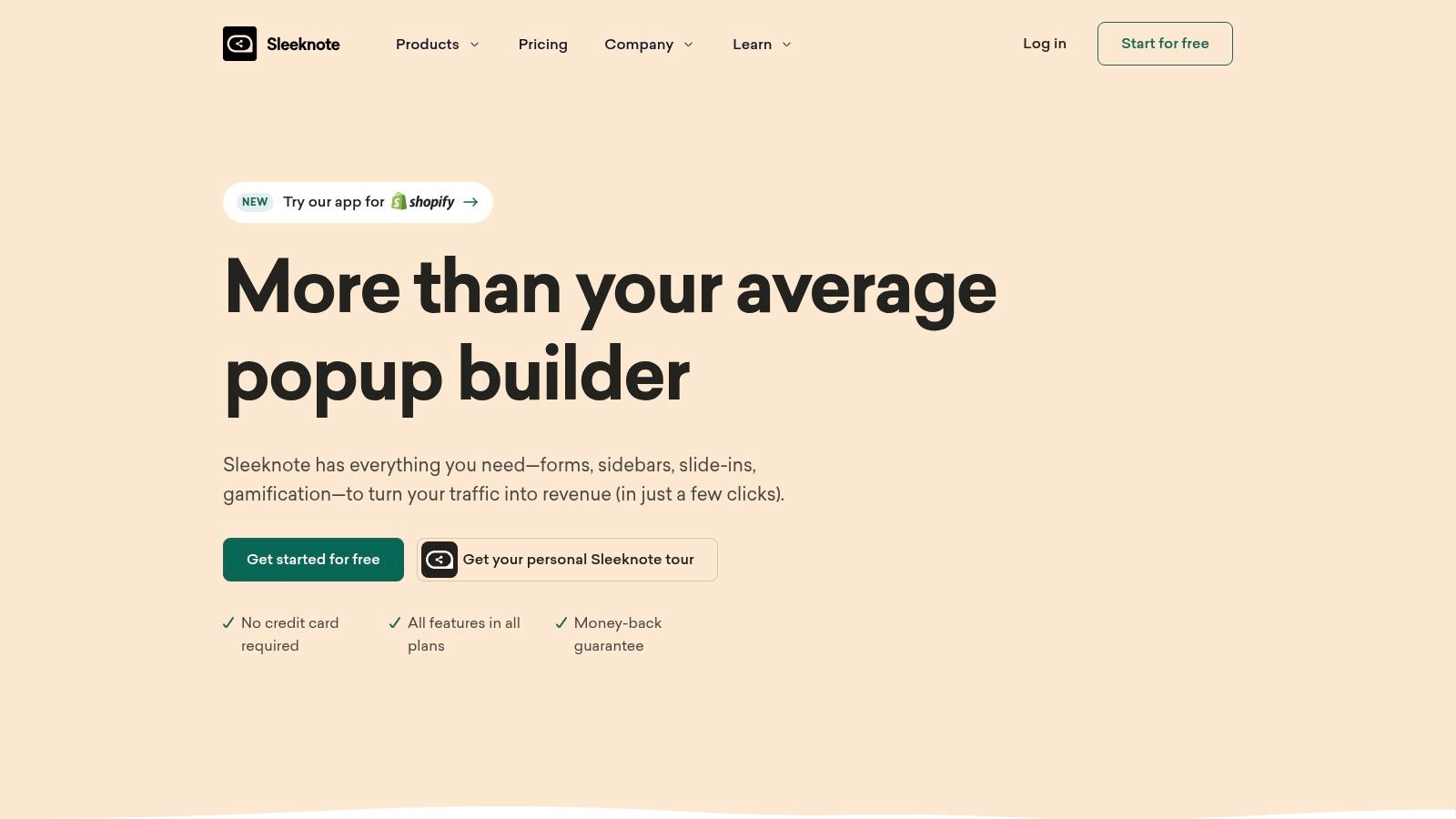
3. The Gamified Multistep Experience (Sleeknote)
This pop up advertisement example showcases how to move beyond a simple lead capture and into a more engaging, gamified user journey. Sleeknote excels at building multistep pop-ups that guide users through a series of micro-commitments, making the final conversion feel less like a transaction and more like a rewarding interaction. This approach leverages the psychological principle of consistency, where users who complete a small first step (like answering a question) are more likely to complete subsequent steps.
Unlike a single-field email pop-up that only captures a contact, a multistep campaign can qualify leads, segment audiences, and recommend products all within the same interaction. By breaking the process into smaller, digestible chunks, it reduces cognitive load and increases completion rates, ultimately turning passive browsers into active, engaged subscribers.
Strategic Breakdown
Trigger: These are often triggered by user behavior such as time on page, scroll depth, or exit-intent. For a new visitor, a welcome pop-up might trigger after 10 seconds. For an abandoning shopper, an exit-intent trigger can present a gamified "spin-to-win" wheel as a final attempt to retain them.
Offer: The offer is often revealed progressively. A multistep form might first ask a non-threatening question like "Who are you shopping for?" and then present a tailored discount or product recommendation in the next step, followed by the email field. This builds momentum and provides value before asking for contact information.
Design & Copy: Sleeknote’s strength lies in its extensive template library and drag-and-drop editor, allowing for highly branded and visually appealing designs. The copy is conversational and guiding, using phrases like "Let's find your perfect fit" or "Spin to win a prize!" to frame the interaction as a helpful or fun experience rather than a direct ask.
Call-to-Action (CTA): Each step has its own micro-CTA. The first step might have buttons like "For Men" and "For Women," while the final step has a clear "Get My 15% Off" button. This reduces friction at each stage and keeps the user moving forward.
Actionable Takeaways & Implementation
Use Micro-Commitments to Qualify Leads: Start with a simple, low-friction question to segment your audience. For a skincare brand, you could ask, "What's your primary skin concern?" This allows you to tag subscribers in your ESP (like Klaviyo) and send highly personalized follow-up campaigns, boosting ROI far beyond a generic welcome series.
Gamify the Offer to Reduce Abandonment: Implement a "spin-to-win" or other gamified pop-up on exit-intent. The element of chance and the possibility of a high-value prize are powerful psychological hooks that can turn a lost sale into a conversion and a new subscriber. This is a prime example of a well-executed web site pop-up.
Leverage Public Template Galleries: Don't start from scratch. Browse Sleeknote’s public gallery of examples and filter by goal (e.g., "Increase product sales") or industry. Find a high-performing template, preview it on your own site, and then customize it to fit your brand, significantly shortening the time to launch an effective campaign.
By transforming the pop-up into an interactive journey, you can capture higher-quality leads and create a more memorable brand experience. You can explore their template library and build these campaigns at Sleeknote.com.
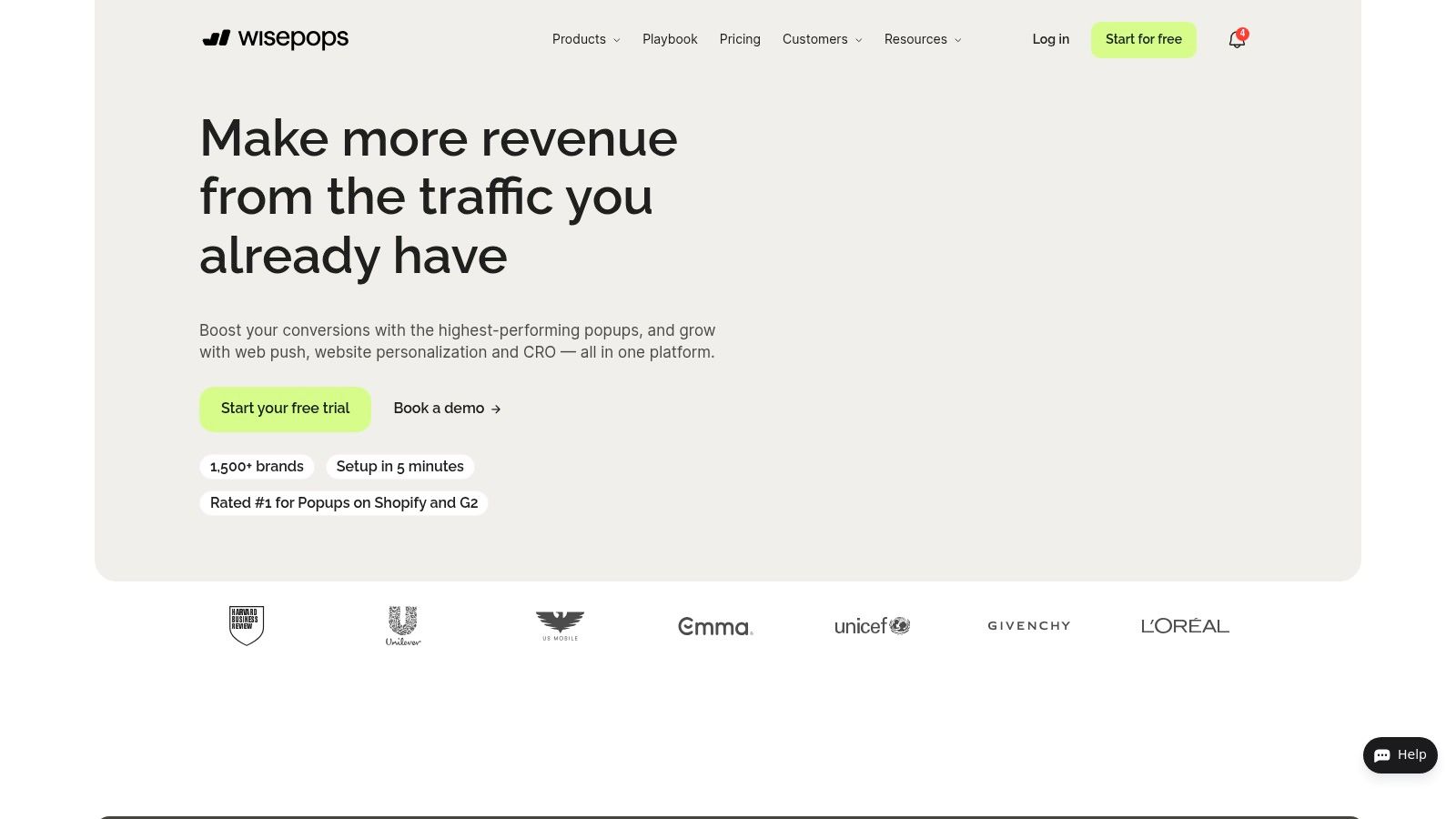
4. Wisepops: The All-in-One Conversion & Inspiration Hub
Wisepops earns its place not as a single pop up advertisement example, but as an extensive platform that provides the tools and inspiration needed to create high-converting campaigns. It moves beyond just pop-ups to offer an integrated suite including embeds, bars, and web push notifications. The platform's real strength lies in its public-facing "Inspiration Hub" and template gallery, which act as a strategic library for marketers.
Unlike platforms focused on a single type of interaction, Wisepops provides a holistic toolkit for conversion rate optimization. This makes it an ideal choice for teams who want to test and deploy various on-site messaging formats without juggling multiple tools. The ability to filter examples by goal (e.g., email collection, cart abandonment) and format (e.g., gamified pop-up, survey) allows brands to quickly find and replicate proven strategies.
Strategic Breakdown
Trigger: The platform supports a full range of behavioral triggers, including on-page scroll, time on site, exit-intent, and on-click actions. This allows for precise targeting based on user behavior, ensuring the right message appears at the optimal moment in the customer journey.
Offer: Wisepops facilitates a wide array of offers, from standard discount codes and lead magnets to more interactive elements like gamified spin-to-win wheels and feedback surveys. This flexibility allows brands to align the on-site experience with broader campaign goals, whether that's list growth, sales, or customer research.
Design & Copy: The drag-and-drop editor and extensive template gallery empower users to create clean, on-brand designs without needing a developer. The Inspiration Hub provides a wealth of copy examples from top e-commerce brands, helping marketers craft compelling headlines and value propositions that resonate with their target audience.
Call-to-Action (CTA): CTAs are fully customizable within the editor. The platform's A/B testing and experimentation features allow for data-driven optimization of CTA buttons, ensuring you identify the copy, color, and placement that drive the highest engagement and conversions.
Actionable Takeaways & Implementation
Use the Inspiration Hub for Competitive Research: Before building a campaign, browse the Wisepops Showcase to analyze how direct competitors or top brands in your vertical are using pop-ups. Filter by goal to find a relevant pop up advertisement example and deconstruct its copy, design, and offer to inform your own strategy.
Go Beyond Email Capture with Multi-Step Pop-ups: Use multi-step forms to segment your audience at the point of capture. For instance, the first step can ask for an email, and the second step can ask for their primary interest (e.g., "Men's" or "Women's" apparel). This data syncs directly to platforms like Klaviyo, enabling immediate personalization of welcome flows.
Integrate with Your Full Tech Stack: Wisepops offers robust integrations with Shopify, Magento, and other major platforms. Connect it with your email service provider (ESP) and analytics tools to create a seamless data flow. This ensures that leads are captured, segmented, and nurtured effectively across all your marketing channels.
This all-in-one approach makes Wisepops a powerful asset for teams looking to build, test, and optimize a wide range of on-site campaigns. You can explore their tools and examples at Wisepops.com.
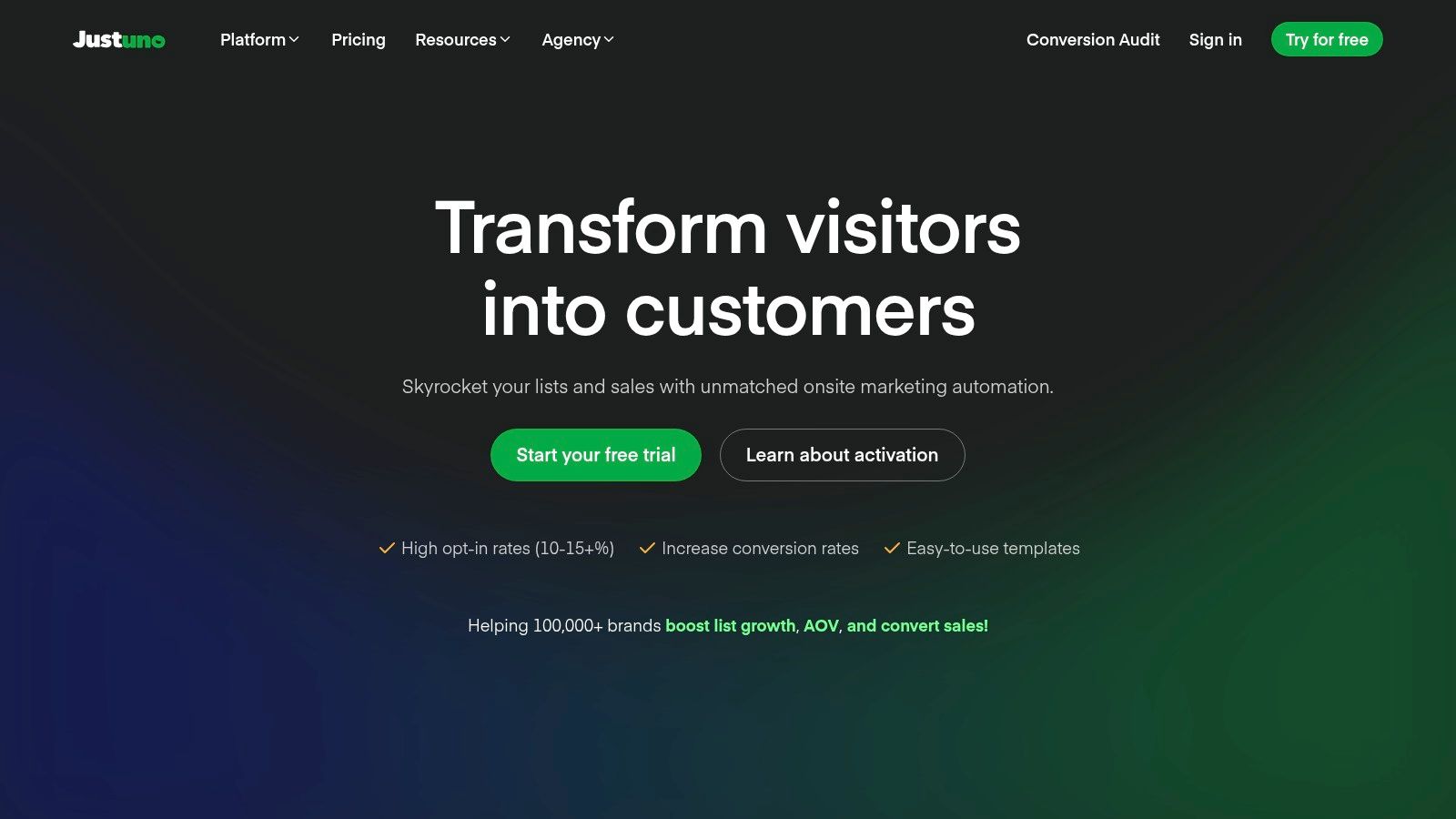
5. The Comprehensive Conversion Suite (Justuno)
This pop up advertisement example represents a full-suite approach to onsite conversion optimization. Justuno moves beyond single-purpose pop-ups to offer a comprehensive toolkit that includes AI-powered product recommendations, advanced audience segmentation, and a vast template library. It empowers merchants to deploy highly targeted promotions based on deep visitor insights.
Unlike basic pop-up builders, this platform allows for the creation of sophisticated, multi-step campaigns that adapt to user behavior in real-time. By syncing with visitor profiles and custom properties, it can deliver truly personalized experiences, such as showing an exit-intent offer for a specific product category a user was just browsing. This positions the brand as helpful and relevant, rather than intrusive.
Strategic Breakdown
Trigger: Justuno offers a robust set of advanced triggers. These go beyond simple exit-intent or timed delays to include scroll depth, referral source, previous on-site behavior, and even custom data from your CRM or email service provider. This allows for hyper-specific targeting, such as showing a pop-up only to first-time visitors from a specific social media campaign.
Offer: The platform supports a wide array of offers, from standard discount codes and free shipping banners to gamified spin-to-win wheels and lead-capture forms for content downloads. Its strength lies in the ability to A/B test these different offers against specific audience segments to identify the highest-performing combination.
Design & Copy: With a large template library, the design process is streamlined. The copy can be dynamically personalized using visitor data. For example, a headline can reference the visitor's location ("Free Shipping to New York!") or the specific item in their cart, creating a powerful 1-to-1 marketing feel that drives action.
Call-to-Action (CTA): CTAs can be customized and tested extensively. You can run multivariate tests on button color, text, and placement to optimize micro-conversions. The goal is to create a frictionless path to conversion that is tailored to the visitor's context and intent.
Actionable Takeaways & Implementation
Leverage the Free Tier for Testing: Use Justuno's generous free plan (for up to 2,000 monthly visitors) as a risk-free testing ground. You can validate common pop-up strategies like exit-intent offers or newsletter sign-ups and gather baseline data before investing in a paid plan for more advanced segmentation.
Segment Beyond New vs. Returning: Go deeper with your audience segmentation. Create pop-ups specifically for visitors who have spent a certain amount, viewed a specific product category, or arrived from a targeted ad campaign. This level of personalization dramatically increases relevance and conversion rates.
Integrate Audience Sync: Connect Justuno with your ESP (like Klaviyo) or CRM. This allows you to sync audience data back and forth, ensuring that a visitor who is already on your "VIP Customer" list doesn't see a "10% Off for New Subscribers" pop-up, protecting both the user experience and your margins.
This platform provides the tools for a data-driven approach to pop-ups, transforming them from simple banners into an intelligent, responsive layer of your website. You can explore its full feature set at Justuno.com.
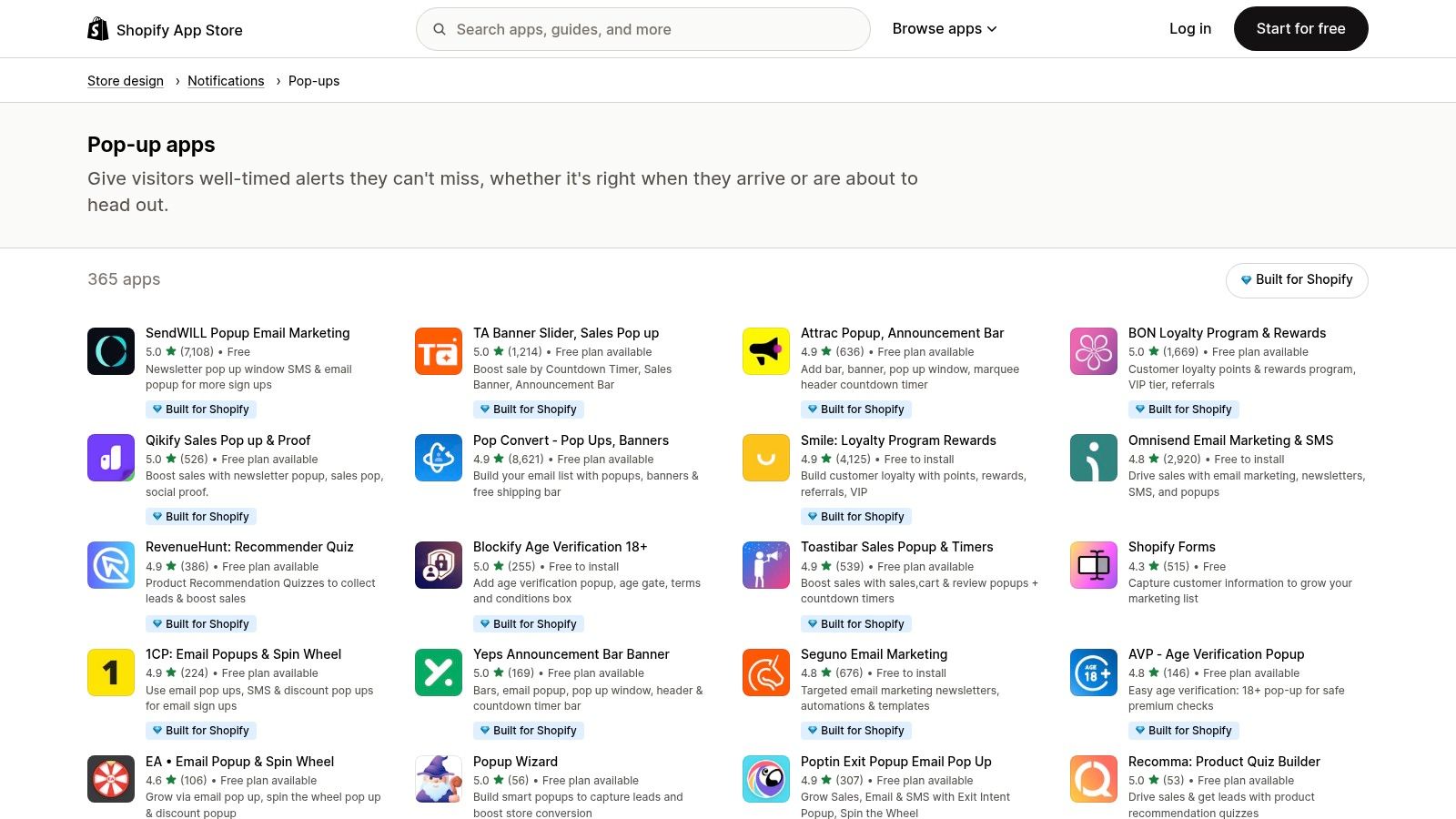
6. Shopify App Store — Pop‑ups Category
Instead of a single pop up advertisement example, this resource is an entire marketplace dedicated to them. The Shopify App Store's pop-ups category serves as a central hub for merchants to discover, compare, and implement hundreds of pop-up solutions. It provides a comprehensive overview of the diverse strategies available, from simple discount modals and spin-to-win games to sophisticated SMS capture and social proof notifications.
This platform is invaluable for Shopify merchants seeking inspiration and vetted tools. It allows for direct comparison based on user reviews, pricing models, and key features, all within the safety of the Shopify ecosystem. The one-click install process removes technical barriers, enabling brands to quickly test and deploy new pop-up strategies to drive list growth and conversions.
Strategic Breakdown
Trigger: The app store itself doesn't trigger pop-ups; rather, it showcases apps that use every conceivable trigger. Merchants can find solutions for exit-intent, time-on-page, scroll-depth, page-visit, and on-click triggers, allowing for highly targeted campaign setups.
Offer: The variety of offers is vast. You can find apps designed specifically for percentage discounts, free shipping bars, BOGO (Buy One, Get One) deals, gamified "spin-to-win" wheels, and simple email or SMS list sign-ups in exchange for a future reward.
Design & Copy: Each of the 300+ apps presents different design philosophies. The store allows you to see screenshots and demo stores, helping you evaluate which visual styles and copy approaches align with your brand. Look for apps with flexible, no-code editors to ensure brand consistency.
Call-to-Action (CTA): The marketplace displays countless CTA examples within app listings. This is an excellent way to research effective CTA copy, from direct commands like "GET 15% OFF" to benefit-driven text like "UNLOCK MY REWARD."
Actionable Takeaways & Implementation
Filter by Specific Need: Use the store's powerful filtering options to narrow your search. Instead of browsing aimlessly, filter by goals like "Reduce cart abandonment," "Build email list," or "Run promotions" to find the most relevant pop up advertisement example for your immediate objective.
Prioritize "Built for Shopify" Apps: Look for apps with the "Built for Shopify" badge. These have been vetted by Shopify for high standards of performance, security, and user experience, ensuring a seamless integration with your store's theme and checkout process.
Validate Your Email List: Many pop-ups focus on capturing emails. To maximize ROI and maintain a healthy list, adhering to email verification best practices is crucial for improving deliverability and protecting your sender reputation from invalid or low-quality contacts.
This platform empowers merchants to move beyond basic pop-ups and discover advanced tools that fit their specific needs. To see how these tools compare, explore our guide to the best pop-ups for Shopify to find the right fit for your brand's growth strategy. You can browse the full collection at the Shopify App Store.
7. Klaviyo Sign‑up Forms (Popups, Flyouts, Full‑screen)
For e-commerce brands deeply integrated into the Klaviyo ecosystem, their native sign-up forms offer a streamlined and data-rich approach to pop-up advertising. This solution eliminates the need for a separate pop-up tool, ensuring that every captured lead flows directly and instantly into your existing email and SMS segments and automated flows. It transforms a simple pop-up into a powerful, integrated part of your customer lifecycle marketing.
This pop up advertisement example is less about gamification and more about efficiency and data integrity. By leveraging Klaviyo's built-in analytics, A/B testing, and pre-built templates, marketers can deploy high-converting forms that are perfectly synced with their entire marketing strategy, from welcome series to abandoned cart reminders. The primary advantage is reducing tech stack complexity while maximizing the value of the data you already collect.
Strategic Breakdown
Trigger: Klaviyo offers a comprehensive suite of targeting and trigger options. Forms can be triggered by time on page, scroll percentage, exit-intent, or based on specific user behavior and segment membership. This allows for hyper-personalized pop-ups shown only to relevant visitor groups, such as non-subscribers or first-time visitors.
Offer: The offers are typically straightforward value exchanges, like a percentage discount (e.g., 15% off your first order) or free shipping in return for an email or phone number. Multi-step forms are a key feature, allowing you to first capture an email and then ask for an SMS sign-up, reducing friction and increasing multi-channel opt-ins.
Design & Copy: The platform provides a library of pre-built, goal-oriented templates that can be customized with a drag-and-drop editor. You can create pop-ups, flyouts, or full-screen takeovers with device-specific styling. The copy is direct and benefit-driven, focusing on the immediate value the user will receive for signing up.
Call-to-Action (CTA): CTAs are clear and action-oriented, such as "GET 15% OFF" or "UNLOCK FREE SHIPPING." Because the forms are natively integrated, a successful submission can automatically trigger a welcome email containing the promised discount code, creating a seamless and immediate customer experience.
Actionable Takeaways & Implementation
Leverage Multi-Step Forms for SMS Growth: Don't try to capture email and SMS in a single step. Use Klaviyo's multi-step form feature to first secure the email address. On the second step, present a compelling reason to subscribe to SMS, such as exclusive text-only offers or early access to sales. This significantly boosts SMS list growth without hurting email conversion.
Use Segment-Based Targeting for Personalization: Avoid showing the same new subscriber pop-up to your loyal customers. Create forms that are targeted to specific segments. For example, show an exclusive offer pop-up only to your VIP segment, or target visitors who have viewed a specific product category with a relevant pop-up.
Analyze In-Platform Performance Benchmarks: Klaviyo provides performance analytics and benchmarks for your sign-up forms. Regularly review your form's view rate and submit rate against these benchmarks to identify underperforming pop-ups. Use the built-in A/B testing feature to test different headlines, offers, and designs to continuously optimize conversion.
For merchants committed to the Klaviyo platform, using their native forms is a strategic move to unify data and streamline marketing automation. You can explore the features at Klaviyo.com.
Top 7 Pop-Up Tools Comparison
Product
Implementation complexity
Resource requirements
Expected outcomes
Ideal use cases
Key advantages
Quikly
Low — no-code Moment Builder, quick previews
Shopify store required; minimal dev; Client Success support for scale
Rapid conversion lifts and subscriber acquisition (reported +32% revenue for participants)
Large template library, public examples, AI-assisted optimization
Sleeknote
Moderate — drag-and-drop with multistep/gamification setup
Visitor/session-based billing; free trial; may cost more for high traffic
Enhanced lead generation and multi-step funnel conversions
Seasonal campaigns, gamified experiences, multistep flows across platforms
Example galleries, unlimited campaigns, strong multistep/gamification tools
Wisepops
Moderate–High — all-in-one setup with experiment configuration
Integrated plan covering many formats; integrations (Shopify, Magento, WP); annual billing common
Unified CRO improvements across popups, embeds, analytics-driven experiments
Teams wanting a single CRO toolkit with analytics and inspiration gallery
Robust analytics/experimentation, broad integrations, public Showcase/templates
Justuno
Moderate — template-driven with advanced segmentation options
Free tier (up to 2k visitors); traffic-tiered paid plans; enterprise features gated
List growth and personalized onsite conversion improvements
Ecommerce teams testing patterns on free plan then scaling segmentation
Always-free entry tier, deep segmentation and personalization at higher tiers
Shopify App Store — Pop-ups Category
Variable — depends on chosen app; one-click installs simplify setup
Requires Shopify store; many free trials; vendor quality and pricing vary
Wide range of popup patterns available quickly; depends on app chosen
Shopify merchants comparing multiple popup solutions and quick installs
Centralized marketplace, reviews/comparisons, easy install and rollback
Klaviyo Sign‑up Forms
Low–Moderate — templates and developer options for custom triggers
Best when already using Klaviyo; native analytics and form templates
Seamless email/SMS capture with direct flow to Klaviyo segments and benchmarks
Teams using Klaviyo who want integrated list capture and automation
Native data flow to Klaviyo, built‑in benchmarks and best‑practice guidance
From Popups to Profits: Implementing Urgency Science in Your Business
Throughout this guide, we've explored a wide spectrum of pop up advertisement example strategies, moving far beyond the conventional email signup form. The key takeaway is clear: the most impactful onsite promotions are not just visually appealing; they are psychologically engineered to tap into core human motivations like scarcity, anticipation, and the fear of missing out (FOMO). We've seen how brands leverage exit-intent technology to recover potentially lost sales, use countdown timers to accelerate purchase decisions, and deploy gamified elements to boost engagement and data collection.
These examples demonstrate a crucial evolution in e-commerce marketing. Instead of interrupting the user experience, the goal is to enhance it by creating timely, relevant, and compelling "Moments" of engagement. The difference between a popup that gets dismissed and one that converts lies in this strategic application of behavioral science. A generic 10% off offer has become background noise; a limited-time, limited-quantity offer tied to a specific action creates genuine urgency and drives immediate revenue.
Your Roadmap to Advanced Onsite Marketing
As you move to implement these strategies, remember that success is built on a foundation of testing, data analysis, and a deep understanding of your customer. Here is your actionable roadmap based on the insights we've covered:
Segment Your Audience: Don't show the same popup to every visitor. Use behavioral data like pages visited, cart value, and referral source to tailor offers. A first-time visitor needs a different message than a loyal, returning customer.
Align Offer with Intent: Match your popup's trigger and offer to the visitor's likely intent. An exit-intent popup on a product page should focus on overcoming purchase objections (like shipping costs), while a slide-in on a blog post can effectively build your email list for content marketing.
Focus on Revenue, Not Just Leads: While list building is valuable, prioritize campaigns that directly impact your bottom line. Use tools that can measure the revenue generated from each pop up advertisement example you deploy, allowing you to optimize for profit, not just conversions.
Automate for Sophistication: Manually managing complex campaigns is inefficient. Leverage tools that offer sophisticated automation and behavioral triggers. This allows you to create dynamic, event-driven experiences that feel personalized and timely without constant oversight.
Choosing the Right Tool for the Job
The market offers a range of tools, from the native Shopify App Store pop-ups and Klaviyo's sign-up forms to dedicated platforms like OptiMonk, Sleeknote, and Wisepops. These are excellent for foundational list growth and basic offers.
However, if your goal is to move beyond simple lead capture and implement the advanced urgency marketing science we've discussed, you need a specialized toolset. This is where Quikly excels. It is purpose-built to transform passive browsing into active purchasing by focusing on revenue-generating events powered by psychological triggers. Instead of just capturing an email, Quikly helps you engineer high-stakes, limited-time campaigns that drive significant sales lifts and protect your profit margins by avoiding deep, site-wide discounts.
Ultimately, the best pop up advertisement example is one that feels less like an ad and more like a valuable, time-sensitive opportunity. By grounding your strategy in consumer psychology and choosing technology that enables sophisticated, automated campaigns, you can turn your website into a powerful engine for growth, converting clicks into customers and browsers into brand advocates.
Ready to move beyond basic popups and implement urgency marketing that drives real revenue? See how Quikly uses the science of consumer psychology to create high-impact campaigns that captivate audiences and accelerate sales. Explore Quikly to see how top Shopify brands are turning fleeting moments of interest into significant profits.
Share this post
Quikly Content Team
The Quikly Content Team brings together urgency marketing experts, consumer psychologists, and data analysts who've helped power promotional campaigns since 2012. Drawing from our platform's 70M+ consumer interactions and thousands of successful campaigns, we share evidence-based insights that help brands create promotions that convert.