

ecommerce conversion
customer experience strategy
digital customer experiences
The moment a customer clicks "buy," their entire mindset shifts. Behavioral economics tells us this is a peak moment of emotional investment and anticipation, making your customer incredibly receptive to your next move. This is why the order confirmation mail isn't just an automated receipt; it's your most powerful marketing asset, landing in their inbox at the exact moment of maximum engagement.
For any Shopify merchant, ignoring this touchpoint is a costly mistake. You're squandering a high-leverage opportunity to turn a single sale into a lasting, profitable relationship. This one email can bridge the gap between a transaction and true brand loyalty, transforming an operational necessity into a high-ROI revenue driver that protects your profit margins and increases customer lifetime value (CLV).
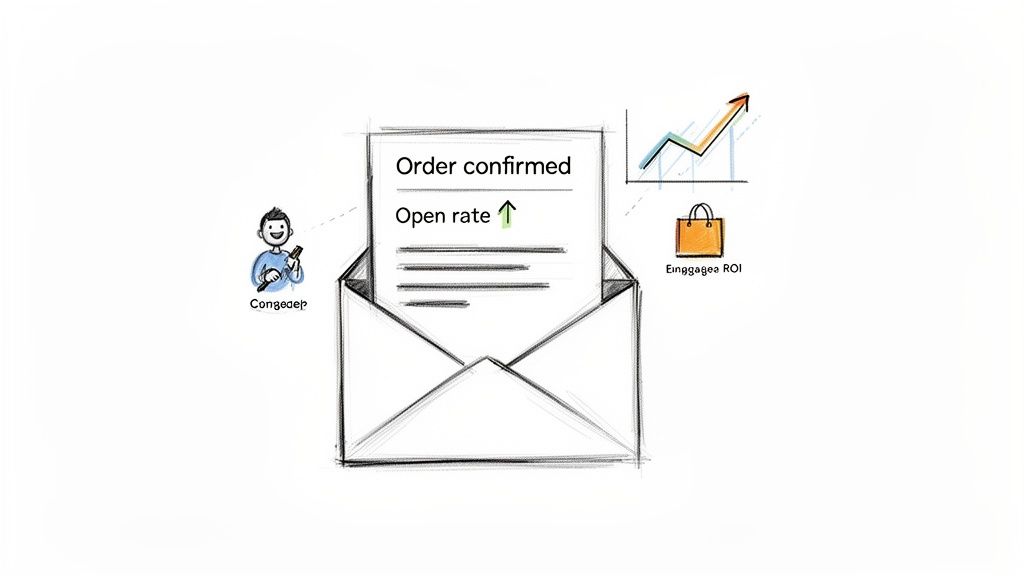
Unlike promotional campaigns that fight for attention against inbox noise, the order confirmation is an email people look for. They don't just open it willingly—they open it eagerly, seeking the psychological reassurance that their purchase was successful. This simple behavioral fact leads to staggering engagement metrics.
To put this into perspective, let's look at a direct comparison. The numbers clearly show where your customers' attention really is.
| Metric | Order Confirmation Emails | Standard Promotional Emails |
|---|---|---|
| Open Rate | ~48-60% | ~15-25% |
| Click Rate | ~10-35% | ~2-5% |
| Conversion Rate | ~1-3% | ~0.1-0.5% |
The data speaks for itself. Order confirmation emails boast open rates that completely dwarf regular promotional blasts. One recent study clocked them at an impressive 48.04% open rate, with a 9.81% click rate and a 1.28% conversion rate. That's not an anomaly. Other analyses show these emails hitting open rates as high as 60% and click-through rates up to 35%, making them 3-4 times more engaging than your average marketing email.
Actionable Takeaway: The anticipation surrounding a new purchase creates a powerful psychological opening. Customers want to hear from you. This makes your confirmation email the perfect opportunity to reinforce their decision and deepen their connection with your brand, setting the stage for the next purchase.
A well-crafted order confirmation strategy delivers real, measurable financial benefits that go way beyond a simple conversion rate. By clearly setting expectations around order processing and shipping times, you proactively answer the #1 customer service question: "Where is my order?"
This simple act of communication dramatically reduces the ticket volume for your support team, which directly protects your profit margins by lowering operational costs.
But it doesn't stop there. This email is the perfect launchpad for boosting customer lifetime value (CLV). Here’s how you can do it:
The goal is to use automation—especially with platforms like Shopify and Klaviyo—to create a seamless post-purchase journey. To dig deeper into using email to build loyalty, including through your order confirmation, this complete guide of Kickstarter email marketing is a great resource. By optimizing this one email, you're not just confirming an order; you're strategically nurturing a customer toward their next purchase and laying the groundwork for lasting loyalty.
Thinking of your order confirmation as just a receipt is the first step toward leaving money on the table. To turn this simple touchpoint into a revenue-generating machine, you need a blueprint—one that perfectly balances "must-have" transactional details with smart, strategic marketing. Every single element, from the sender name to the footer, has a job to do.
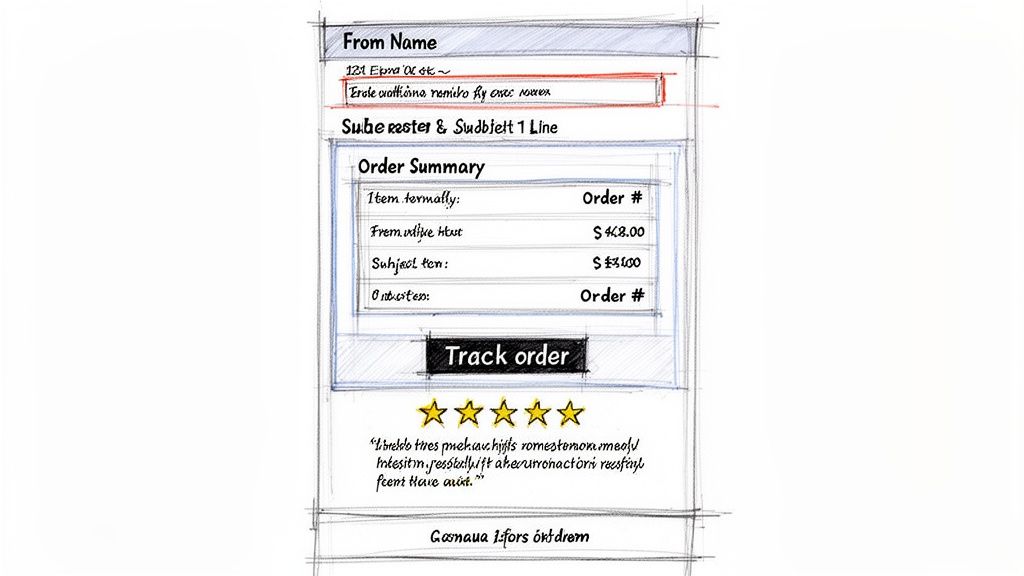
Long before a customer ever opens your email, they see two things: who sent it and what it's about.
The "from" name needs to be instantly recognizable. No strange abbreviations or third-party app names. Stick to your brand name, like "Quikly" or "Quikly Orders." This immediately builds trust and signals that this is the important email they've been waiting for.
The subject line is where you can apply consumer psychology. "Your Order Confirmation" is functional, but it does nothing to build excitement. The goal is to tap into the powerful feeling of anticipation every customer experiences right after they click "buy."
The shift in tone is clear: from purely functional to human and relational. It reinforces the positive emotions associated with their purchase.
Now, let's address the primary function. The core job of this email is to confirm the order and, critically, prevent "Where is my order?" (WISMO) support tickets from flooding your inbox. Getting this part right isn't just good customer service; it directly protects your profit margins by reducing service costs.
Your order confirmation mail must include these key pieces of information, laid out so clearly that anyone can understand them at a glance:
By getting this core information right at the top—in a clean, mobile-friendly design—you answer the customer's most pressing questions first. This builds confidence and makes them far more open to the marketing elements you're about to introduce. For Shopify merchants, all these details can be pulled into email templates automatically using Liquid variables, making it a breeze.
Once the transactional basics are handled, the email can evolve into a seriously powerful marketing tool. This is where you graduate from a simple receipt to a relationship-builder that sets up the next purchase.
Post-purchase dissonance, or buyer's remorse, is a real psychological phenomenon. Your email is the perfect antidote.
For example, if you're a Shopify store using an app like Klaviyo, you can dynamically pull product-specific reviews right into the email. It's an automated, personalized dose of social proof that feels genuine and incredibly reassuring.
Don't just leave them hanging. Guide your customer on what to expect and what they can do while they wait.
By layering your order confirmation mail with this mix of crystal-clear information and smart marketing, you create an experience that doesn't just satisfy—it delights. This is how you turn a one-time buyer into a loyal fan, boosting lifetime value and making a routine email a true cornerstone of your retention strategy.
Once the transactional details are locked in, your order confirmation mail stops being just a receipt. It evolves into a powerful marketing tool, one perfectly positioned to generate immediate ROI. This is the moment you move beyond simple communication and start actively shaping the next part of the customer journey, turning post-purchase excitement into actual revenue.
The secret is tapping into the rich customer data you already have. With seamless integrations between platforms like Shopify and email tools like Klaviyo, you can deploy dynamic content that speaks directly to an individual. Your offers suddenly feel less like a sales pitch and more like a genuinely helpful recommendation—a critical shift away from the generic, one-size-fits-all emails customers have learned to ignore.
Not all customers are the same, so why send them the same post-purchase offers? Smart segmentation is the bedrock of any high-impact upsell strategy. By grouping your audience based on behavior and history, you can serve hyper-relevant offers with a much higher chance of converting.
Here are a few powerful segments to consider:
With segments defined, you can build automated, behavior-driven campaigns that feel both personal and timely. This is where you can lean into consumer psychology, creating offers that tap into natural purchasing patterns.
The classic "customers also bought" cross-sell is a perfect example. Someone buys a pair of running sneakers, and your order confirmation mail dynamically shows them a curated selection of moisture-wicking socks or running belts. This isn't a random product suggestion; it's a value-add that enhances their original purchase. It’s a far more sophisticated approach than a basic pop-up asking for an email, because it’s aimed at immediate revenue generation by solving the customer's next potential problem. To learn more about setting up these kinds of intelligent campaigns, check out our guide on choosing an e-commerce marketing automation platform.
The data is overwhelmingly on our side here. Triggered emails, like order confirmations, perform 3 times better than your standard batch-and-blast campaigns. And with order confirmations driving over 13% of revenue share from clicks, they are a proven channel for generating serious ROI from an already engaged audience.
Your revenue strategy doesn't have to end with a quick upsell. Your confirmation email is also the perfect place to plant seeds for future engagement and boost long-term value. Think of it as the ideal moment to introduce programs that build lasting relationships and increase customer lifetime value (LTV).
For instance, you could use your confirmation email to get customers enrolled in a loyalty program. Something as simple as a stamp card loyalty program can work wonders, encouraging future purchases by rewarding repeat business. This tactic shifts the focus from a single transaction to building a sustainable, long-term relationship. By weaving these strategies into your flow, you turn a standard operational email into a cornerstone of your growth engine, one that consistently drives revenue and fosters real brand advocacy.
Right after a customer clicks "complete purchase," their attention is all yours. But this focus is a fleeting asset. This is your prime opportunity to shift from a simple transactional relationship to one built on anticipation and engagement. By weaving sophisticated urgency marketing directly into your order confirmation mail, you can turn a one-time buyer into an enthusiastic fan, already excited for their next purchase.
This strategy goes far beyond basic countdown timers that create generic pressure. We're talking about leveraging the science of consumer psychology—principles like anticipation and exclusivity—to build genuine excitement. When you tease an upcoming exclusive event or a limited-time product drop, you tap into the powerful principle of anticipation. The customer just made a purchase they feel great about, and now you’re inviting them into an exclusive experience. It makes them feel like an insider.
This is where Quikly's "Moments" redefines post-purchase engagement. Forget simple pop-up apps that just capture an email address. This approach is squarely focused on driving immediate and future revenue. The goal is to create a seamless, automated flow that capitalizes on that peak moment of customer excitement.
For Shopify Plus merchants, automating this is surprisingly simple:
This contrasts sharply with the limitations of basic timer and pop-up apps, which often require manual campaign setup and lack the behavioral triggers needed for true personalization and revenue generation.
The flow chart below shows just how a simple purchase can be transformed into a cycle of repeat business when you nail the post-purchase experience.
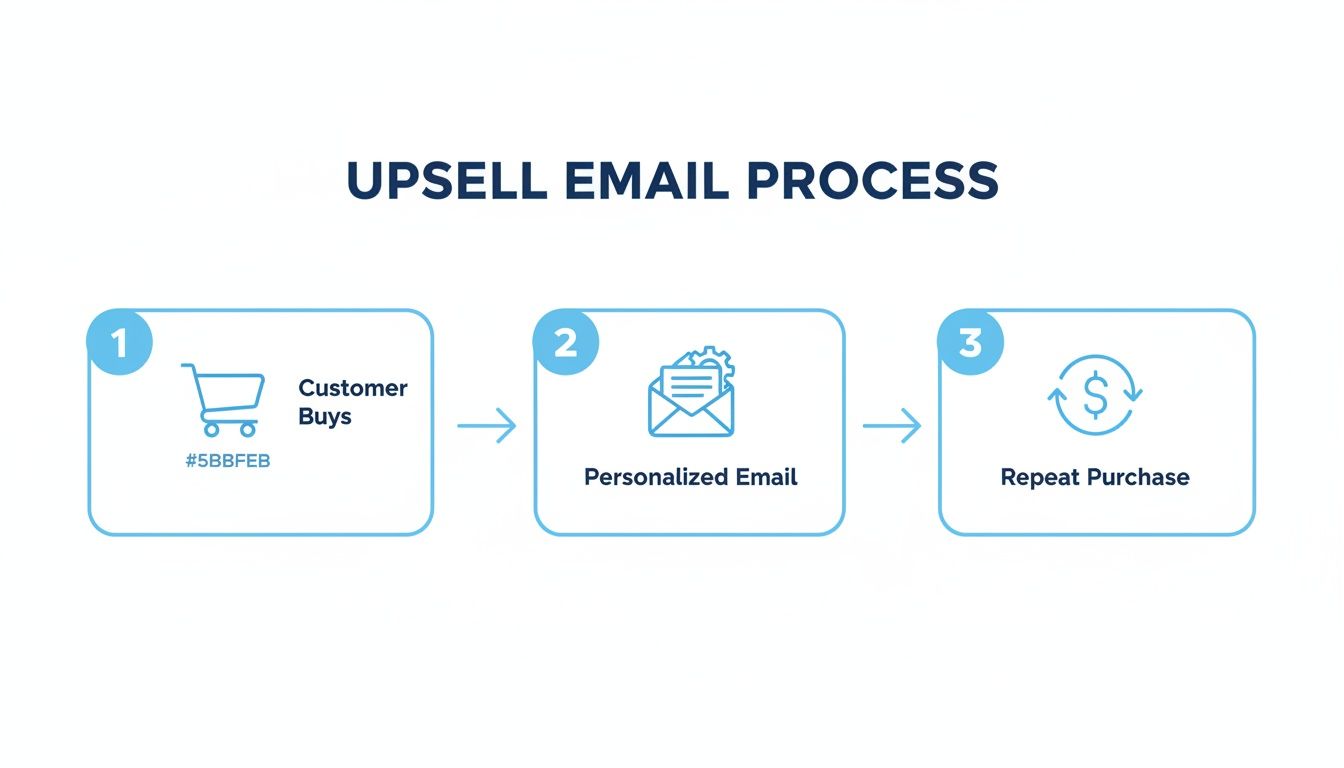
This visual drives home a critical point: the personalized email is the bridge that turns a single transaction into a profitable, long-term customer relationship.
Many e-commerce brands have dabbled in urgency, but often with tools that lack any real depth. A generic countdown timer might create a brief spike in clicks, but it doesn't build a sustainable connection or protect your profit margins from the race-to-the-bottom discounting that often accompanies it.
To show the difference, let's break down how basic timers stack up against a more strategic approach.
| Feature | Basic Countdown Timer Apps | Quikly's Urgency Marketing Science |
|---|---|---|
| Urgency Type | Static, one-size-fits-all countdowns. | Dynamic, personalized urgency based on real-time behavior. |
| Goal | Creates short-term pressure; email capture or clicks. | Drives long-term loyalty and revenue generation. |
| Personalization | Limited; the same timer is shown to everyone. | Highly personalized based on purchase history and engagement. |
| Automation | Often requires manual setup for each campaign. | Fully automated, triggered by customer actions for a seamless flow. |
| Psychological Impact | Can feel generic or manipulative, potentially devaluing the brand. | Builds genuine anticipation and a sense of exclusive access. |
The difference isn't just in the technology—it's in the entire strategy. One is a blunt instrument; the other is a precision tool for building relationships and revenue.
Quikly Moments are designed differently, grounding urgency in proven behavioral economics. The power of a confirmation email is already huge; triggered emails see open rates of 27.05% versus just 7.69% for standard scheduled campaigns. When you combine that incredible visibility with a sophisticated urgency campaign, you create a powerful revenue engine that also builds customer loyalty.
For a deeper dive into the psychological principles at play, you can explore our detailed guide on using urgency psychology to increase email conversions.
By integrating this advanced strategy, your order confirmation mail becomes more than a receipt. It's the first step in a carefully orchestrated journey designed to increase customer lifetime value, manage inventory with controlled demand spikes, and build a thriving community around your brand. This is the evolution of post-purchase marketing—moving from simple automation to intelligent, psychology-driven engagement.
You've transformed your order confirmation mail into a strategic asset. That's a fantastic first step. But the real impact on your bottom line comes from data-driven optimization.
Firing off these emails isn't enough. You must measure what's working and what isn't to see if you're truly driving new revenue. To prove the financial value of your post-purchase strategy, you need to look past surface-level metrics like open rates and dig into the data that moves the needle on profit and growth.
The goal is to build a clear framework connecting every tweak to tangible business results, like higher average order value (AOV) or better customer lifetime value (CLV). This is how you stop guessing and start building a reliable engine for growth.
To get the full picture of your confirmation emails' performance, you need a mix of metrics covering engagement, conversion, and long-term value. If you're on Shopify, you can find much of this in your Shopify Analytics dashboard. For deeper insights, an integration with a platform like Klaviyo is a game-changer.
Here’s what to keep a close eye on:
Shifting your focus to these business-centric metrics changes the entire conversation. You stop asking, "How many people opened the email?" and start asking, "How much revenue and loyalty did this email generate?" It's a critical distinction.
Systematic A/B testing is how you optimize. It’s what separates the pros from the amateurs. Instead of guessing what customers want, you can run controlled experiments, isolate variables, and let their actions reveal what works.
Always start with a clear hypothesis. For instance: "We believe changing the CTA from 'Shop Now' to 'View Your Personalized Recommendations' will boost conversions by 15% because the new copy feels more curated and personal."
From there, you can start testing the key elements of your order confirmation mail:
Properly tracking these tests turns data into decisions. To get this part right, you can dive deeper into how to measure marketing campaign effectiveness with our detailed guide. This disciplined approach ensures your order confirmation emails don't just meet customer expectations—they consistently exceed them.
Optimizing your order confirmation email can feel like a huge task, but a few smart tweaks can make a world of difference. Let's tackle some of the most common questions e-commerce pros are asking.
The short answer? Immediately.
This isn't just a "best practice"—it's a psychological imperative. From the customer's perspective, the moments after hitting "buy" are a mix of excitement and anxiety. An instant confirmation email is the digital equivalent of a reassuring nod. It validates their decision and quiets the voice of buyer's remorse.
A delay introduces doubt: Did the order go through? Did my payment fail? That uncertainty kills the post-purchase high and can lead to a flood of customer service tickets.
Yes, you absolutely can—and you should. The trick is to do it right. The main transactional details need to be front and center, but the high open rates of these emails make them prime real estate for your next move.
A standard promo email has to fight for every click in a crowded inbox. But an order confirmation? That's an email your customer is actively looking for. This is a golden opportunity to mention your loyalty program, suggest a relevant cross-sell, or invite them to your brand community without it feeling pushy.
The single biggest mistake is treating the order confirmation email like a boring old receipt.
When you see it as just a functional document, you end up with a generic, unbranded template that does nothing but confirm a transaction. It's a massive missed opportunity to reinforce your brand, build a real connection with your customer, and drive additional revenue.
An unoptimized email doesn't just feel lazy; it leaves money on the table and wastes a moment of peak customer excitement.
Forget generic discounts for a minute and focus on a much more powerful psychological trigger: anticipation. Instead of just stating facts ("Your order #12345 is confirmed"), use your words to build genuine excitement for what's coming.
Here are a few actionable ideas:
This approach flips the script. A simple confirmation becomes a key part of your brand experience, making the customer feel seen, valued, and genuinely excited for their package to land on their doorstep.
Ready to transform your post-purchase emails from simple receipts into powerful revenue drivers? With Quikly, you can integrate sophisticated, psychology-driven urgency campaigns that build anticipation and foster long-term loyalty. Explore Quikly's Solutions