

ecommerce conversion
customer experience strategy
digital customer experiences
Standard business advertising ideas often fall short, hitting a ceiling on engagement and revenue. The difference between a campaign that merely captures attention and one that drives immediate, profitable action lies in understanding consumer psychology. Principles like scarcity, fear of missing out (FOMO), and anticipation aren't just academic concepts; they are the scientific foundation for modern, high-impact advertising strategies that convert shoppers into customers. This article moves beyond generic advice to provide 12 actionable strategies grounded in behavioral economics, designed to transform conventional advertising into a sophisticated, revenue-generating engine.
You will learn not just what to do, but the psychological why behind each tactic. We will explore how to protect profit margins, manage inventory efficiently, and achieve measurable growth, with a special focus on e-commerce brands and Shopify merchants looking to elevate their marketing beyond basic popups and timers. To truly master high-ROI advertising, it's essential to understand key profitability metrics. For a deeper dive into measuring what matters most for your bottom line, review a clear guide to ROI vs. ROAS.
Each of the business advertising ideas in this roundup is designed to give you a competitive edge. We'll benchmark against industry realities, like the persistent 70% average cart abandonment rate, to demonstrate how these advanced psychological triggers can recapture lost sales and significantly boost your store's performance. Prepare to move from manual, one-off promotions to sophisticated, automated campaigns that create genuine excitement and urgency.
Flash sales are a powerful business advertising idea that leverages the psychological principle of scarcity to drive immediate action. By offering substantial discounts for a very brief period, typically 1 to 24 hours, you create a sense of urgency that shortens the consumer's decision-making process. This tactic capitalizes on the fear of missing out (FOMO), compelling customers to purchase now rather than later, which is crucial for turning browsers into buyers and liquidating excess inventory without deep, prolonged discounts that erode profit margins.
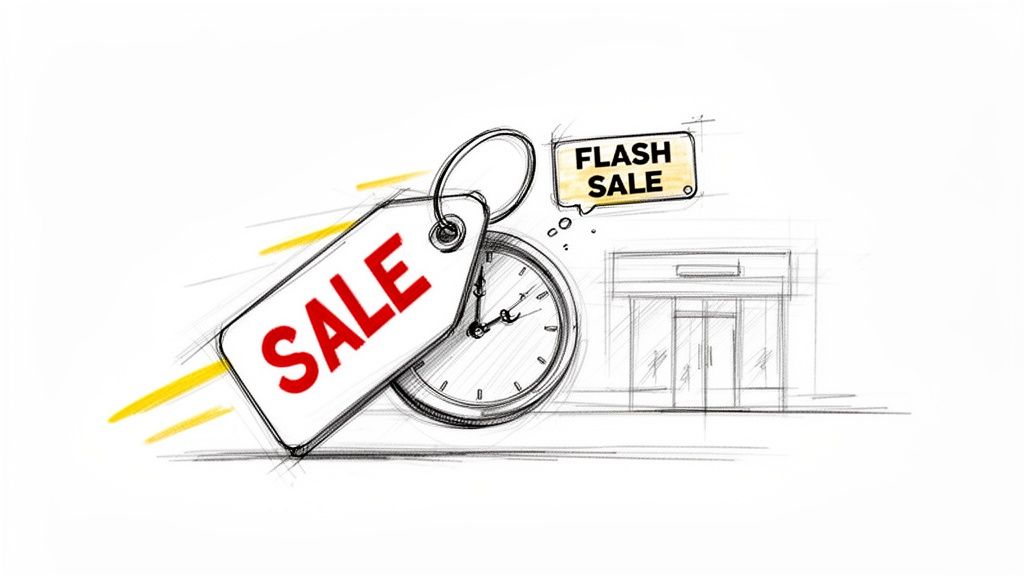
Popularized by e-commerce giants like Amazon, this strategy is highly effective for driving quick revenue spikes and acquiring new customers. The limited window encourages impulse buys and can significantly boost traffic and engagement. To learn more about how this tactic evolved, you can explore the history of flash sales.
Countdown timers are a cornerstone business advertising idea, using visual cues to signal that an offer is temporary. This tactic directly taps into the psychological principle of loss aversion, where behavioral economics research shows the pain of losing something is more powerful than the pleasure of gaining something of equal value. By displaying a ticking clock, you make the impending end of a deal tangible, prompting customers to act immediately to avoid losing out.
However, a simple timer is a basic tool. The real business impact comes from integrating this urgency across the entire shopper journey. Unlike a static "sale ends Friday" banner, a live timer creates a dynamic and persistent reminder of scarcity. It transforms passive browsing into an active decision-making moment, which is critical for reducing cart abandonment and increasing session conversion rates.
Ranked offer campaigns are an advanced business advertising idea that gamifies the shopping experience by rewarding the fastest customers. This strategy displays tiered incentives where participants see their position relative to others, creating a powerful sense of competitive urgency. Instead of a single discount for everyone, the first to respond get the best prize, with rewards diminishing as more people claim them. This capitalizes on loss aversion and the desire for social status, motivating immediate action far more effectively than a standard offer.
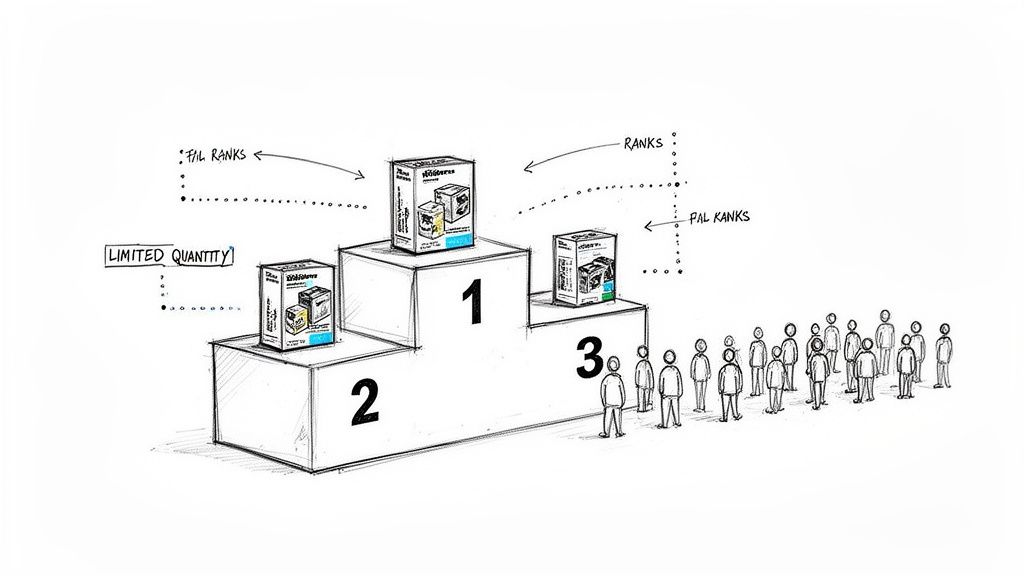
Pioneered by urgency marketing experts like Quikly, this method moves beyond simple scarcity. It creates a memorable brand event that drives massive, predictable spikes in traffic and sales. Ranked offers are ideal for product launches, VIP customer rewards, and holiday promotions where generating buzz and immediate revenue is paramount, contrasting sharply with basic countdown timers that lack competitive excitement.
Email and SMS marketing are direct, high-impact channels that become exceptionally powerful when combined with urgency. This business advertising idea moves beyond standard newsletters by injecting time-sensitive triggers directly into the customer's most personal digital spaces: their inbox and text messages. By embedding countdown timers and limited-offer notifications, you create a direct line from your promotion to immediate consumer action, leveraging the psychological principle of immediacy to cut through the noise and drive conversions.
This strategy is highly effective because it meets customers where they are already engaged. An SMS alert about a flash sale ending in one hour or an email with a live countdown timer for an abandoned cart creates a powerful, personalized nudge. This direct communication is crucial for recapturing attention and converting intent into revenue, especially for time-sensitive promotions where every minute counts. To explore the data behind this, you can review industry benchmarks on email and SMS marketing.
Inventory scarcity is a business advertising idea that leverages the psychological principle of perceived value. By displaying low stock levels, such as "Only 3 left in stock," you signal that a product is in high demand, making it seem more desirable. This creates a natural sense of urgency and triggers a consumer's fear of missing out (FOMO), compelling them to complete their purchase before the item is gone. This tactic is powerful because it drives conversions without discounting, thereby protecting profit margins.
This tactic is famously used by e-commerce leaders like Amazon and Zappos to reduce cart abandonment and accelerate conversions. Unlike manufactured urgency, it is based on genuine supply limitations, making it a highly authentic and effective strategy. To fully understand its impact, you can learn more about scarcity marketing psychology.
Exclusive member or VIP access campaigns are a sophisticated business advertising idea that turns customer loyalty into a powerful sales driver. This strategy rewards your most valuable customers with early access to sales, new product drops, or exclusive deals, creating a tiered system of urgency. It leverages the psychological principle of exclusivity, making members feel valued and creating a powerful fear of missing out (FOMO) among non-members, encouraging them to join the loyalty program.
This approach transforms a simple promotion into a status-driven event, fostering a community around your brand and increasing customer lifetime value. It’s a proven model used by leading retailers like Sephora with its VIB sales and Nike with its member-exclusive product drops, demonstrating its effectiveness in building brand affinity and driving repeat purchases. By creating a distinct advantage for being a member, you incentivize both immediate sales from your loyal base and new sign-ups from aspirational customers.
Live event and drop campaigns are a sophisticated business advertising idea that transforms a product release into a must-see event. This strategy synchronizes customer activity around a specific date and time, creating a powerful sense of communal urgency and anticipation. By making a product available in limited quantities at a predetermined moment, you leverage the psychological principle of scarcity and the fear of missing out (FOMO) on a massive scale.
This approach, perfected by brands like Supreme with their weekly drops and Nike with its SNKRS app, builds a loyal community eager to participate in each launch. The scheduled release generates significant organic buzz and concentrates demand, often leading to instant sell-outs and heightened brand prestige. Unlike a simple sale, a drop campaign is a brand-building exercise that turns a purchase into a competitive, shared experience.
Dynamic pricing is a sophisticated business advertising idea where prices adjust in real-time based on demand, inventory levels, or a pre-set timeline. A popular variation is tiered discounts, which rewards early action by offering progressively better deals to the first groups of buyers. This strategy directly leverages the psychological principles of scarcity and competitive urgency, motivating consumers to act quickly to secure the best possible price.
Instead of a single discount for everyone, this model creates a competitive environment. Customers understand that hesitation means paying more or missing out entirely, which dramatically shortens the path to purchase. This is a common and highly effective tactic seen in airline and event ticket sales, where prices rise as the date approaches, and is equally powerful for e-commerce promotions because it protects overall profit margin by limiting the deepest discounts.
Social proof and live activity notifications are a powerful business advertising idea that leverages the psychological principle of conformity. By showcasing real-time customer actions, such as purchases or sign-ups, you validate your products and create an atmosphere of high demand. This tactic builds trust and taps into the viewer's fear of missing out (FOMO) when they see others actively engaging with your brand, making them more likely to convert.
Displaying these live notifications effectively demonstrates that your store is busy and trustworthy, which is a critical element for turning hesitant visitors into confident buyers. A cornerstone of many high-ROI advertising strategies, particularly those leveraging urgency, is building trust through effective Ecommerce Social Proof. This strategy shows potential customers that they are in the right place and that your products are popular, which can significantly reduce purchase anxiety and cart abandonment.
Retargeting is a highly profitable business advertising idea that focuses on re-engaging users who have previously interacted with your brand but did not convert. Given that approximately 70% of online shopping carts are abandoned, these campaigns are essential for recovering otherwise lost revenue. This strategy works by serving targeted ads and emails to these warm leads, reminding them of the items they left behind and nudging them back toward purchase.
By using dynamic product ads on platforms like Facebook or Google, you can display the exact items a user viewed, creating a personalized and compelling reminder. This tactic directly addresses purchase hesitation by presenting a timely, relevant offer, which significantly boosts conversion rates compared to prospecting new, cold audiences. For an in-depth look at the data, you can read Baymard Institute's research on cart abandonment.
User-generated content (UGC) campaigns are a powerful business advertising idea that transforms your happy customers into your most authentic marketing channel. This strategy involves collecting and showcasing customer photos, reviews, and testimonials to build social proof. When combined with urgency, such as a limited-time offer, it creates a compelling narrative: "Look at all these real people who love our product, and right now, you can get it at a special price." This approach amplifies the psychological principle of social proof, making potential buyers feel more confident and compelled to act quickly.
Consumer psychology studies show that shoppers overwhelmingly trust peers over brands. This tactic doesn't just sell a product; it sells an experience validated by a community. The authenticity of UGC cuts through the noise of traditional advertising, building trust and accelerating the path to purchase. For a deeper look at its impact, explore studies on consumer trust in UGC.
Gamification is a sophisticated business advertising idea that infuses game-like elements into non-game contexts to boost user engagement and drive specific behaviors. By layering reward mechanics with urgency, you create an interactive experience that captivates customers and encourages immediate action. This strategy taps into intrinsic human motivations for competition, achievement, and reward, transforming passive browsing into active participation and significantly increasing revenue.
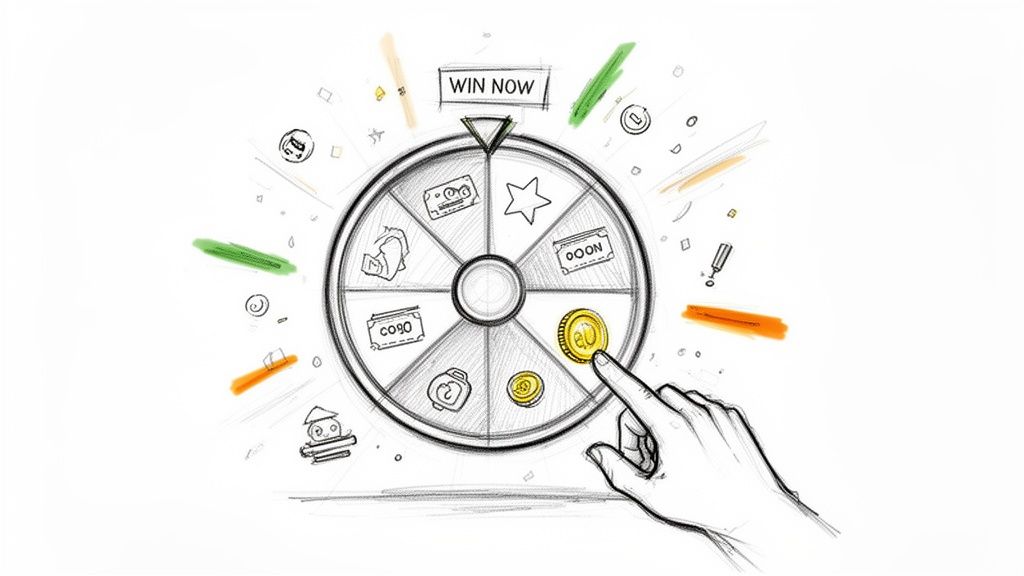
Unlike simple pop-ups focused on email capture, gamified campaigns like "spin-to-win" wheels or digital scratch cards turn discounting into an exciting event, generating revenue instead of just leads. This approach builds brand affinity and can generate higher-quality leads by requiring active engagement. To explore the psychology behind this, you can learn more about what gamification in marketing is and how it influences consumer decisions.
| Tactic | Implementation complexity | Resource requirements | Expected outcomes | Ideal use cases | Key advantages |
|---|---|---|---|---|---|
| Flash Sales & Limited-Time Offers | Medium — setup timers, promos, inventory sync | Moderate — marketing, real-time tracking, inventory planning | Immediate revenue & conversion spikes; rapid inventory clearance | Overstock clearance, holidays, short promos | Fast revenue, high visibility, measurable ROI |
| Countdown Timers & Visual Urgency Indicators | Low — embed and customize timers | Low — design and minor development | Conversion lift (5–30%), reduced cart abandonment | Time-limited sales, bookings, seasonal promotions | Easy to implement, consistent uplift |
| Ranked Offer Campaigns | High — real-time ranking and queue systems | High — engineering, notification systems, monitoring | Increased AOV and competitive purchase behavior | Limited-quantity drops, VIP queues, product launches | Leverages competition, protects margins, builds excitement |
| Email & SMS Urgency Campaigns | Medium — segmentation, automation flows | Moderate — CRM, copywriting, compliance management | High ROI ($30–40 per $1), drives immediate traffic | Cart recovery, last-minute reminders, VIP outreach | Direct, personalized reach; measurable performance |
| Inventory Scarcity Marketing | Low–Medium — inventory sync and display rules | Low — accurate stock data and syncing | 15–25% lift when combined with urgency tactics; preserves margins | Low-stock items, product pages, limited editions | Authentic urgency without discounting; prevents oversell |
| Exclusive Member/VIP Access Campaigns | Medium — membership tiers and access controls | Moderate — loyalty systems, targeted communications | Higher LTV; repeat purchase rate +20–40% | Loyalty programs, early-access product launches | Rewards loyalty, builds exclusivity and retention |
| Live Event & Drop Campaigns | High — logistics, scalability, multi-channel sync | High — infrastructure, staffing, customer support | Large traffic spikes (10–50x), strong launch impact | Major product launches, limited drops, live shopping | Generates buzz, concentrated sales, social momentum |
| Dynamic Pricing & Tiered Discounts | High — pricing algorithms and automation | High — data, monitoring, policy controls | Revenue increase 15–35% depending on sensitivity | Early-bird offers, time-based promotions, demand-driven sales | Maximizes revenue, protects margins over campaign |
| Social Proof & Live Activity Notifications | Low — widget integration and feed setup | Low — activity stream, moderation | Conversion lift 5–15% when combined with other tactics | New visitors, product pages, trust-building contexts | Builds trust, demonstrates popularity in real time |
| Retargeting & Cart Abandonment Campaigns | Medium — pixel setup, ad & email flows | Moderate — ad spend, tracking tech, creative | Recovers ~10–30% of abandoned carts | Abandoned carts, browse retargeting, win-back offers | Cost-effective revenue recovery, highly targeted messaging |
| User-Generated Content & Community Urgency Campaigns | Medium — UGC collection, moderation, display | Moderate — content curation tools and incentives | Conversion lift 20–50% with high-quality UGC | Social brands, visually driven products, community-led campaigns | Authentic trust signal, SEO benefits, strong engagement |
| Gamification & Reward Urgency Mechanics | High — interactive elements and rules engine | High — development, creative assets, prize fulfillment | Engagement lift 40–60%, higher revenue than email capture | Engagement drives, repeat visits, social acquisition | High engagement and shareability; boosts repeat interactions |
The journey from a blank marketing calendar to a high-performing advertising strategy can feel daunting, but it doesn't have to be. The comprehensive list of business advertising ideas we've explored moves beyond generic advice, offering a tactical playbook grounded in the proven principles of consumer psychology. We've seen how flash sales, limited-time offers, and inventory scarcity marketing tap into the powerful motivator of scarcity. We've delved into how social proof, user-generated content, and live activity notifications leverage our inherent trust in peer behavior.
At the heart of these modern advertising tactics is the ethical and strategic application of urgency. This isn't about creating false pressure; it's about aligning your marketing moments with the natural cadence of consumer decision-making. By understanding the science behind FOMO (Fear of Missing Out) and anticipation, you can transform a passive browsing session into an active, engaging experience that drives immediate revenue.
Moving from theory to practice is the most critical step. As you refine your advertising approach, focus on these core pillars:
The digital landscape is saturated with basic pop-ups and simple countdown timers. While these tools can offer a minor lift, they often fail to capture the full potential of urgency marketing science. They primarily focus on lead capture or generic discounts, missing the opportunity for significant revenue generation and brand engagement.
The true evolution in advertising lies in adopting dynamic, behavior-driven systems. Think of the difference between a static banner and a gamified ranked offer campaign that rewards the first 100 buyers with the best discount. The former is a passive announcement; the latter is an interactive event that creates genuine excitement and brand loyalty. This is the new frontier for e-commerce businesses, especially for Shopify Plus merchants managing complex marketing ecosystems. By automating these sophisticated psychological triggers, you free up your team to focus on strategy, not manual campaign setup.
Ultimately, the most successful business advertising ideas are those that create a win-win scenario. The customer feels they've secured a valuable, exclusive opportunity, and you achieve your revenue and inventory goals. By thoughtfully implementing the strategies outlined in this guide, you can build a more resilient, engaging, and profitable brand that not only attracts customers but inspires them to act.
Ready to move beyond basic timers and activate a true urgency marketing strategy? See how Quikly helps the world's top Shopify brands deploy sophisticated, gamified campaigns that drive revenue and build brand excitement. Explore Quikly to see how our platform transforms advertising ideas into automated, high-ROI marketing moments.