

ecommerce psychology
brand loyalty
best brand experiences
Gamification in marketing is the application of game-design elements—points, badges, leaderboards, progress bars—in non-game contexts to influence shopper behavior, drive urgency, and boost revenue. By tapping into psychological triggers like scarcity, FOMO, social proof, anticipation, and loss aversion, brands guide customers through a structured, playful journey that delivers measurable ROI.
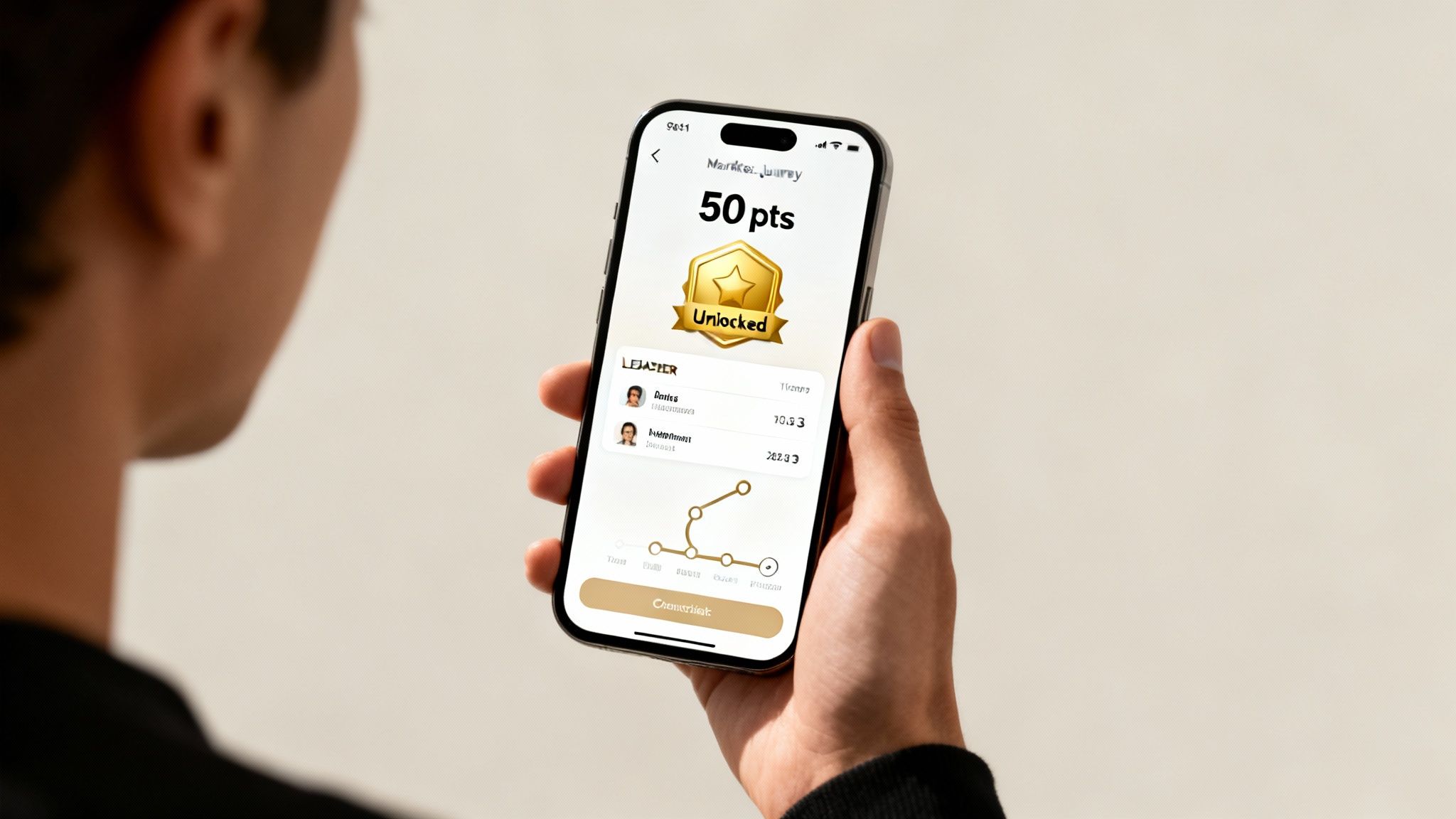
At heart, gamification blends simple game rules with marketing goals. It’s like adding a treasure hunt to your storefront—customers earn clues and prizes as they move through each step. Behavioral economics research by Tversky and Kahneman shows that loss aversion and the Zeigarnik effect (uncompleted tasks nagging the mind) can boost engagement up to 80%.
Let’s break down the most popular mechanics and when they shine:
| Game Mechanic | Purpose | Example |
|---|---|---|
| Points | Incentivize repeat actions | Loyalty points on a Shopify store |
| Badges | Signal achievement | Fitness app achievement badges |
| Leaderboards | Foster competition | Top referrer ranking |
| Challenges | Drive active participation | Spin-to-win popup feature |
Companies are pouring resources into these tactics. Between 2019 and 2025, the gamification market leaps from $6.33 billion to over $30.7 billion (double-digit CAGR). Learn more about market trends on Beeliked.
Industry benchmarks show a 70% cart abandonment rate and a 2.5% average conversion rate across e-commerce. Introducing gamification can recover abandoned carts and lift conversions by 15–25%, protecting profit margins and optimizing inventory turnover.
“Integrating gamification can lift conversion rates and deepen loyalty when tied to real-time triggers.”
Actionable Takeaways:
For hands-on tips, check out our guide on gamifying marketing efforts.
Picture gamification as a three-piece puzzle: mechanics, dynamics, and aesthetics. Together, they create campaigns that feel like play, not promotion.
A Shopify store might offer a product quiz (mechanic), adapt questions based on past purchases (dynamic), and celebrate correct answers with a burst animation (aesthetic). Brands using this blend often see a 15% uplift in click-through rates.
North America holds a 42.97% share of the global gamification market. Retailers invested $1.11 billion in quizzes, loyalty programs, and AR experiences to drive repeat purchases. Learn more on SafetyCulture.
“The North American market shows how brands transform loyalty programs into revenue drivers.”
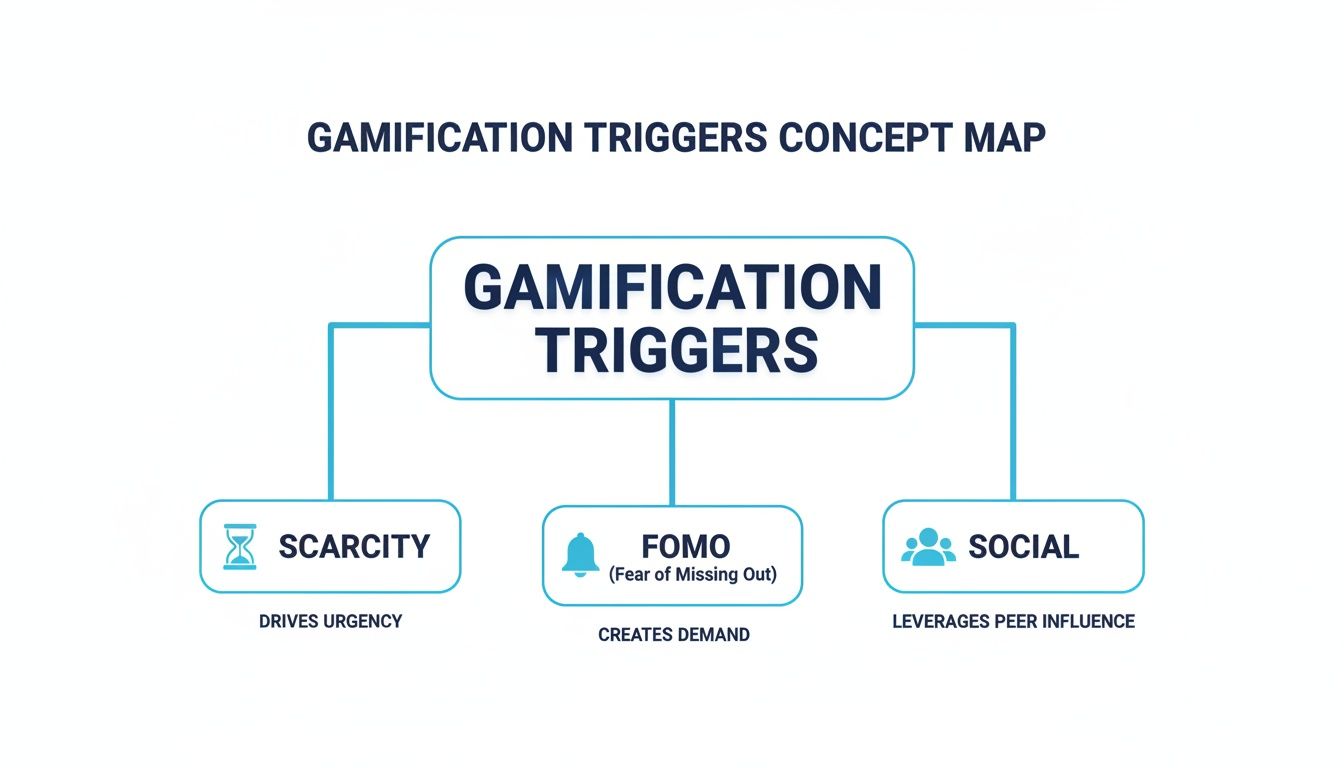
Scarcity, FOMO, social proof, anticipation, and loss aversion are proven levers in consumer psychology. A flash badge drop mimics a limited-edition collectible, triggering loss aversion so buyers act fast. Progress bars tap the Zeigarnik effect—studies show they can boost completion rates by 80%.
Key psychological triggers:
Basic 10-minute countdowns that reset on reload erode trust. Quikly’s Moments read live inventory and shopper behavior, delivering accurate, dynamic urgency that:
“Real-time urgency boosted our flash sales revenue by 22% while keeping stock levels in check.”
Actionable Takeaway:
Frame tiered challenges where rewards grow with cart totals, blending anticipation and social proof into one compelling journey.
For deeper context, explore key consumer needs in our detailed guide.
Mechanics like points, badges, levels, and spin wheels transform a routine browse into an interactive journey.
Key mechanics shape how brands spark FOMO, celebrate progress, and build communities.
Match your objective—email list growth, AOV, loyalty—to each element:
Comparison of Gamification Mechanics
| Mechanic | When to Use | Expected Outcome |
|---|---|---|
| Points | Ongoing purchases and loyalty programs | Increased repeat orders and AOV |
| Badges | Milestone achievements and social sharing | Enhanced brand advocacy and referrals |
| Levels | VIP tiers with exclusive perks | Higher spend to reach new tiers |
| Leaderboards | Community contests and referral challenges | Growth in engagement and social proof |
| Streaks | Daily logins or repeat buys | Improved retention and CLV |
| Challenges | Flash sales and clearance promotions | Urgent conversions and inventory turnover |
| Spin Wheels | First-time discounts or exit-intent popups | 30% lift in new signups and leads |
Shopify merchants layer tactics to hit multiple goals:
Start small, measure performance, then expand. Align triggers with inventory levels and revenue targets.
Three Shopify merchants moved beyond basic timers to behavior-driven offers using Quikly’s Moments and ranked-offer features.

Tiered milestones at $50, $100, $200 unlocked badges, deluxe samples, and free shipping. Klaviyo email flows and SMS nudges synced with live inventory checks in Quikly:
A checkout spin wheel delivered 10–30% off codes via SMS and Klaviyo:
Learn more on Rhapsody Media and our guide: The Benefits of Adding Gamification to Your Email Marketing
A 7-day streak challenge with a live leaderboard delivered tiered discounts:
Automated SMS and Shopify Plus flows kept momentum high—no manual updates.
Every gamified campaign begins with crystal-clear objectives: conversion lift, repeat purchase rate, and AOV. With baseline metrics in place, map mechanics to ROI.
| Variant | Description | Primary Metric |
|---|---|---|
| Control | Standard checkout without games | Conversion Rate |
| Points Variant | 10 points per $10 spent | Repeat Purchase Rate |
| Badge Variant | Unlock badge at checkout | AOV |
Automate reporting through Klaviyo and SMS analytics.
Embed Quikly Moments in your Shopify Plus theme:
theme.liquid Quikly Moments read live inventory and behavior—boosting conversions by 15% compared to static timers.
Tie reward tiers to margins and inventory:
“We adjusted tiers in minutes via Quikly analytics, protecting margins while raising AOV by 12%.”
Final Checklist:
What Is Gamification In Marketing And Why Does It Work?
Gamification sprinkles friendly competition—points, badges, progress bars—into campaigns. It leverages scarcity, FOMO, and social proof to deliver 48% more engagement.
How Do You Measure Success In A Gamified Campaign?
Set clear targets—conversion lift, repeat rate, AOV—then run A/B tests. Tools like Klaviyo or SMS analytics track performance by channel and segment.
Which Mechanics Deliver The Best Results On Shopify?
Can Gamification Scale Without Eroding Margins?
Yes—tie rewards to tiered thresholds and live stock via Quikly Moments. Automate margin-based tiers so incentives stay profitable.
Drive sales with Quikly: https://hello.quikly.com