

ecommerce conversion
customer experience strategy
digital customer experiences
Organic lead generation is the practice of attracting potential customers through unpaid, value-driven channels like search engines, content marketing, and social media. It's a strategy centered on earning attention, not buying it. This approach builds a durable business asset that consistently delivers high-intent customers who are already searching for the solutions you provide.
In e-commerce, relying solely on paid advertising is like building a business on rented land. The moment you stop paying, the traffic disappears.
Organic lead generation, in contrast, is the methodical process of building an asset you own. It's a long-term strategy that continuously attracts your ideal customers, reducing dependency on escalating ad costs. For Shopify and Shopify Plus merchants, this is the engine that powers sustainable growth and protects profit margins.
The approach is rooted in a powerful value exchange. Instead of interrupting potential customers with ads, you draw them in by solving their problems, answering their questions, and establishing your brand as a trusted authority. This creates a powerful flywheel where your SEO, content, and brand credibility work in concert to deliver a steady stream of qualified leads.
The benefits of a robust organic strategy extend far beyond traffic volume. For e-commerce brands, it directly impacts the bottom line and enhances operational efficiency.
Ultimately, the goal isn't just to attract visitors—it's to convert them into customers. This is where psychology-driven tactics become essential. While your foundational organic strategies bring people to your store, you still need to translate that interest into action. This critical step is often overlooked in basic lead generation guides. You can explore how these foundational activities create interest by learning more about the principles of demand generation marketing, which sets the stage for capturing leads.
This shift from renting traffic to owning an audience is fundamental. It transforms your marketing from an ongoing expense into a compounding asset that grows in value over time.
This isn't about placing a simple email pop-up on your site; it’s a more sophisticated, integrated approach. To understand the full potential, consider how a chatbot for lead generation can function as a growth engine, converting anonymous visitors into qualified prospects. By mastering organic lead generation, you build a predictable growth engine fueled by genuine customer interest, not just your ad budget.
A truly effective organic lead strategy isn't built on a single tactic. It's a system of three interconnected pillars working together to create a steady, sustainable growth engine. Each pillar addresses a different stage of the customer journey, from initial discovery to long-term loyalty.
When these three pillars work in harmony, you create a robust system for attracting, engaging, and nurturing future customers.
SEO is the foundation of your entire strategy. It makes your digital storefront visible on the world's busiest high street: the search engine results page. When a potential customer actively seeks a solution you offer, strong SEO ensures your brand is there to meet them.
This goes beyond simply inserting keywords. It involves maintaining a technically sound website, ensuring fast page load times, and optimizing product collections to signal quality and authority to search engines.
The business impact is significant. For 27% of marketers worldwide, organic search is their top lead generator. Furthermore, 35% report it as the source of their highest-quality leads. The data supports this: organic search has a 14.6% close rate, which far surpasses the 1.7% seen with traditional outbound methods.
If SEO ensures discoverability, then Value-Driven Content is the magnet that draws your ideal audience closer. This is where you transition from selling to solving problems, answering questions, and educating potential customers. By creating insightful guides, tutorials, and articles, you position your brand as a trusted expert.
This approach effectively counters ad fatigue and helps build genuine relationships. For a Shopify store, this could be a blog post on "How to Choose the Right Skincare for Oily Skin" or a short video demonstrating five ways to style a scarf. You attract individuals with genuine interest who may not be ready to purchase immediately, establishing your brand as a helpful resource.
This top-of-funnel engagement is crucial for filling your pipeline with qualified prospects. For more ideas on leveraging different content types, there are excellent practical insights on integrating video into your lead generation efforts.
This diagram illustrates how unpaid channels like search and content fuel the organic lead generation machine.
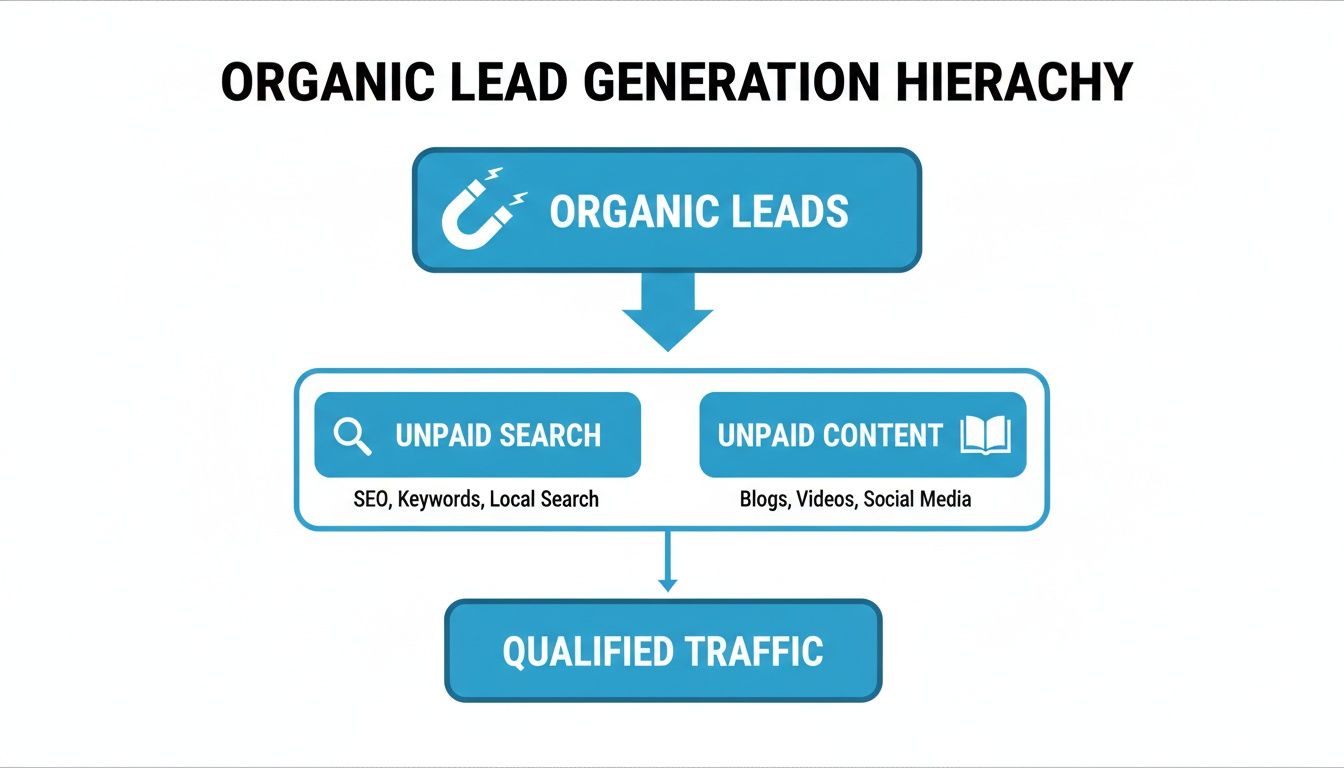
As shown, organic leads are the direct result of strategic efforts in these unpaid channels, creating a clear pathway from discovery to conversion.
The final pillar, Community Building, transforms one-time visitors into a loyal tribe. This involves using social media, forums, and your email list to foster real conversations and build relationships—not just to broadcast sales pitches. It’s about creating a space where customers feel heard and valued.
A strong community acts as a powerful form of social proof, where engaged followers become brand advocates who naturally promote your products to their own networks.
This is where you nurture the leads acquired through SEO and content. For Shopify brands, this could mean:
The goal is to remain top-of-mind and build a relationship that extends beyond a single transaction. A well-maintained email list provides a direct line to your most engaged audience, and we have a complete guide on building an email list.
By integrating these three pillars, you create a comprehensive organic lead generation strategy that delivers a consistent flow of high-quality leads and drives sustainable business growth.
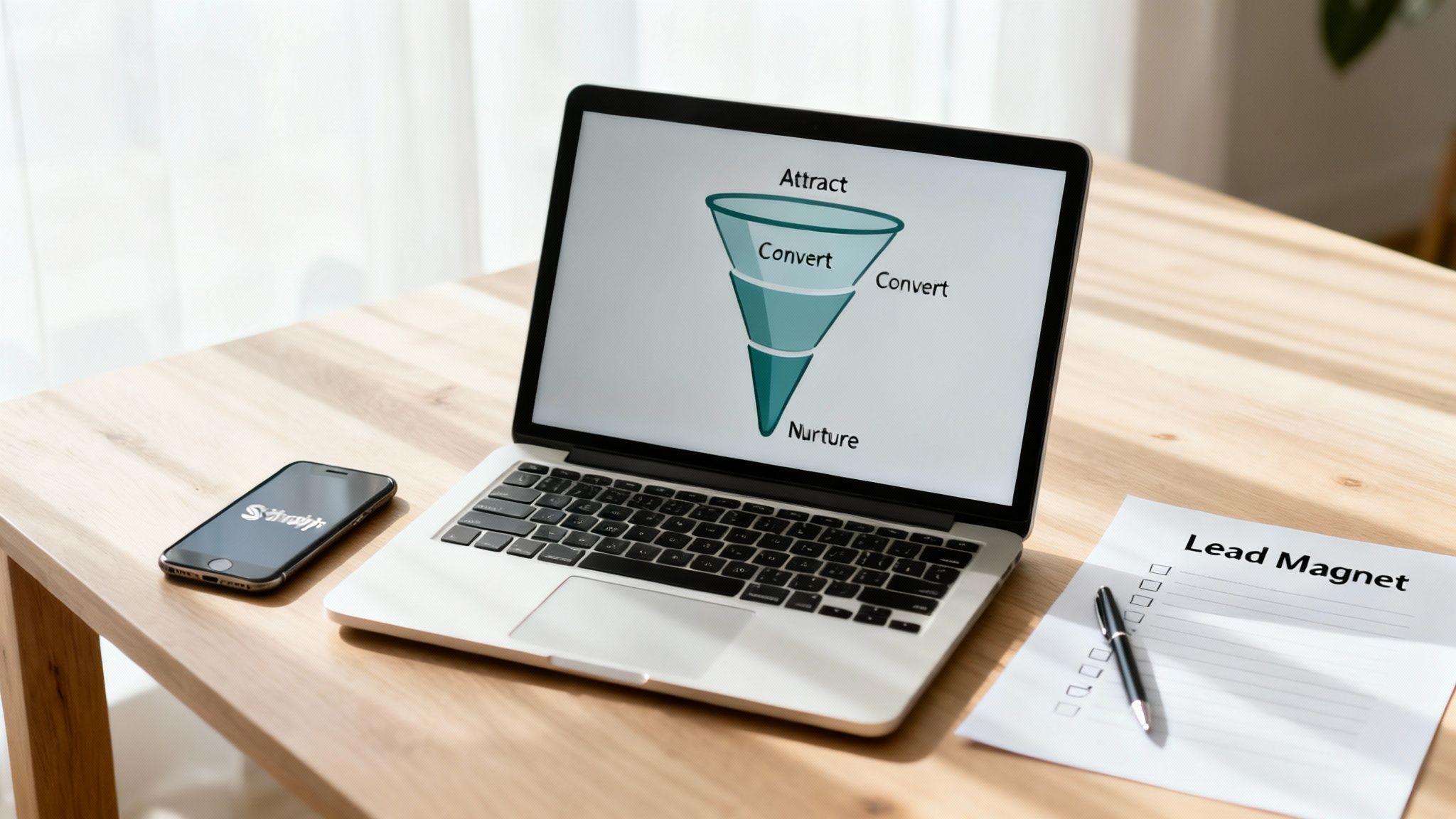
Converting anonymous website visitors into a predictable revenue stream requires a system—an organic lead generation funnel. For merchants on Shopify, integrating this funnel directly into your store is how you regain control over your audience and prevent rising ad costs from eroding your profits.
Think of it as a guided journey that moves someone from "just browsing" to becoming a qualified lead. You start by attracting the right people, offer them something of value in exchange for their contact information, and then nurture that new relationship. This framework transforms your store from a simple product catalog into a powerful lead-capturing machine.
The top of your funnel is all about discoverability. Your objective is to attract visitors who are actively searching for solutions your products provide. For this, your Shopify blog is an invaluable tool.
The key is to create SEO-optimized content that answers the specific questions your ideal customers are typing into Google. Use a quality keyword research tool to identify long-tail keywords—longer, more specific phrases like "how to choose..." or "best [product type] for..."—that signal purchase intent.
This isn't just about traffic; it's about positioning your brand as the go-to expert. For example, a skincare brand could publish "A Step-by-Step Guide to Building a Skincare Routine for Dry Skin," immediately attracting people with a problem your products are designed to solve.
Actionable Takeaway: Identify five common questions your customers ask. Turn each one into a long-form blog post optimized for relevant search terms.
Once visitors are on your blog, the next step is to convert them into leads. This is the middle of the funnel, where you must provide a compelling reason for them to share their email address. Standard "Subscribe to our newsletter" pop-ups are no longer effective because they offer no clear value to the user.
This is where lead magnets are a game-changer. A lead magnet is a valuable, free resource offered in exchange for an email. The key is to make it directly relevant to the blog post the visitor is reading.
Effective lead magnets for Shopify stores can be simple:
To deliver these, use a Shopify app that integrates seamlessly. Look for tools that allow for targeted pop-ups or forms based on user behavior, such as exit intent or time on page. This captures attention without disrupting the shopping experience.
Actionable Takeaway: For your most popular blog post, create a simple one-page PDF checklist that helps readers implement your advice. Offer it via an embedded form within the article.
Securing an email address is just the beginning. The bottom of the funnel is where you guide that new lead toward their first purchase. For growing merchants, a direct integration with an email service provider like Klaviyo is essential.
By connecting your lead capture forms directly to your email platform, you can trigger an automated welcome series the moment someone signs up. This immediate follow-up is crucial for maintaining their initial interest.
Your welcome flow should do more than just sell. The first email must deliver the promised lead magnet and reinforce your brand's value. Subsequent emails can share your brand story, feature social proof like customer testimonials, and then present a compelling, time-sensitive offer to encourage their first purchase.
This automated process is how you transform a "cold" organic lead into a warm prospect who is ready to become a customer.
Actionable Takeaway: Set up a 3-part automated email welcome series in your email platform (like Klaviyo or an SMS tool). Email 1: Deliver lead magnet. Email 2: Share your brand story. Email 3: Offer a first-time buyer discount.
Attracting an organic lead to your site is a significant achievement, but it's only half the battle. The real success comes when that initial interest converts into a sale. Many organic strategies falter at this stage; they build trust with great content but fail to create the impetus needed to close the deal.
The solution isn't another generic email pop-up. It's about ethically applying principles of behavioral psychology to create timely, relevant triggers that feel like a natural part of the shopper's journey.
An organic lead arrives on your Shopify store with a high degree of pre-established trust. They sought you out actively. To convert them, you must honor that trust while providing a compelling reason to act now. This is where the science of urgency marketing comes in, moving beyond basic countdown timers to leverage sophisticated behavioral triggers.
Here’s how to apply key psychological principles:
This is not manipulation; it is the application of consumer psychology. By aligning urgency with a user's specific journey and intent, you enhance their path to purchase, making it feel more intuitive and compelling.
Applying these principles delivers a measurable impact on your bottom line that basic timer apps cannot replicate. The goal is to drive revenue, not just capture an email for a list.
This sophisticated approach directly counters the industry's staggering 70% average cart abandonment rate. By giving shoppers a powerful reason to act immediately, you shorten the sales cycle and capture revenue from visitors who might have otherwise left and forgotten your brand. Our guide on how to turn email subscribers into customers provides deeper strategies for nurturing these leads.
For merchants on Shopify and Shopify Plus, implementing these psychological triggers can be fully automated. Platforms like Quikly integrate directly with your store and connect with tools like Klaviyo or popular SMS platforms. This enables sophisticated automation flows that are far beyond the capabilities of basic apps.
For example, you could trigger a "Moment" based on referral source, pages viewed, or past purchase history. This level of personalization makes the urgency feel earned and relevant. It also protects your profit margins by helping you move specific inventory without resorting to site-wide discounts.
The global lead generation solutions market is projected to reach $9.6 billion by 2028, driven by effectiveness. Nurtured leads not only convert more frequently but also make 47% larger purchases. When you combine your hard-won organic traffic with psychologically-grounded urgency, you create a powerful system that maximizes the value of every visitor. You can discover more insights about these lead generation statistics to see the full financial picture.
It's one thing to see traffic numbers climb and keyword rankings improve, but those metrics don't directly reflect profitability. To truly prove the value of your organic lead generation efforts, you must look beyond surface-level wins.
The critical question is: how much revenue and profit are your SEO and content strategies generating? Answering this requires directly connecting your organic activities to your bottom line.
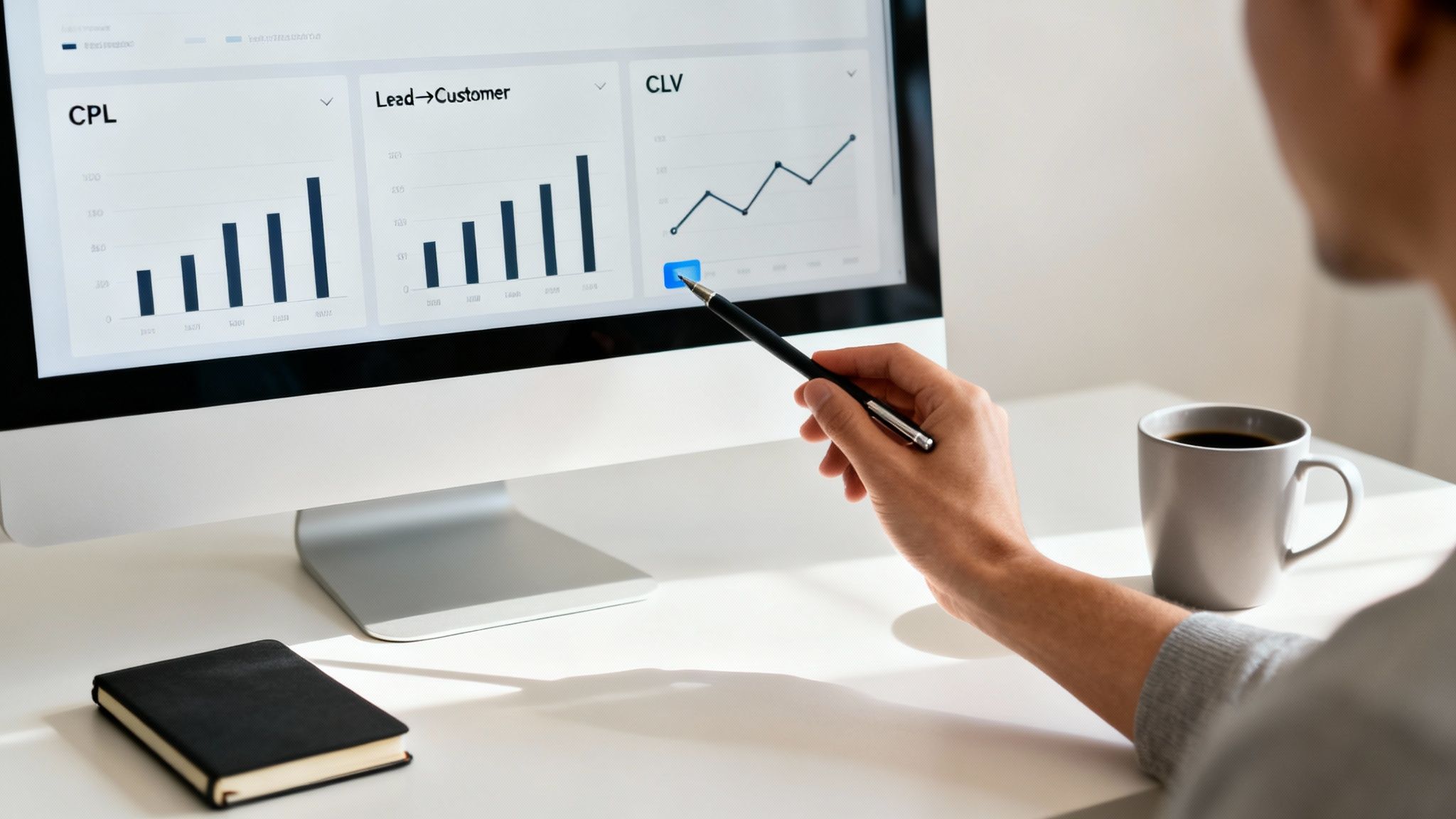
This analysis allows you to identify which channels and content pieces attract your most profitable customers. It enables smarter investment decisions and provides concrete proof of your strategy's impact.
Your Shopify Analytics and Google Analytics dashboards are rich with data. The key is to focus on the metrics that paint a clear financial picture.
Instead of focusing solely on sessions, monitor these KPIs:
Accurate measurement depends on proper attribution—giving credit where it's due. Configure your analytics to trace sales back to their original organic sources.
In Google Analytics 4 (GA4), utilize multi-touch attribution models. These models reveal the entire customer journey, not just the final click. You might discover a customer was first introduced to your brand through a blog post, re-engaged on social media, and then completed their purchase via a direct visit. Proper attribution ensures that the initial organic touchpoint receives the credit it deserves for initiating the relationship.
A data-driven approach transforms your organic strategy from a cost center into a predictable revenue engine. By connecting content efforts to CLV, you can definitively prove which initiatives are driving long-term, profitable growth.
When you optimize your organic lead generation, the impact on profitability is substantial. High-quality leads not only convert more frequently but are also less expensive to acquire.
Recent analysis shows that as the quality of organic leads increases, sales conversion rates can rise dramatically while the cost-per-lead drops. This is where organic truly excels, consistently outperforming the cost of acquisition from other channels. You can learn more about how organic strategies are driving B2B growth and reducing acquisition costs.
By diligently tracking these metrics, you shift the conversation from "How much traffic did we get?" to "How much profitable revenue did our content generate?" This positions you to build a truly sustainable growth model for your store.
Embarking on organic lead generation can seem daunting, but it's the key to building a resilient e-commerce brand. Let’s address some of the most common questions from Shopify merchants to help you build a smarter, more sustainable growth strategy.
The honest answer is that organic growth is a long-term investment, not an overnight solution. It's about building a durable asset for your business.
Think of it like planting a tree. You won't get shade tomorrow, but with consistent care, it grows stronger every year. Generally, you can expect to see initial positive signals—such as improved keyword rankings or a modest increase in organic traffic—within 3-6 months of consistent effort.
More significant results, like a predictable stream of qualified leads and a clear impact on revenue, typically materialize after the 6-12 month mark. The advantage is that unlike paid ads, which cease when you stop paying, your organic efforts compound. The authority, content, and trust you build become a permanent asset that continues to generate leads, insulating your profits from volatile ad costs.
The primary difference lies in intent (how a customer finds you) and long-term cost-effectiveness. These factors significantly influence lead quality.
An organic lead discovers your brand on their own terms. They had a problem, actively searched for a solution, and found your helpful content. They chose to engage because they perceive you as a credible expert, arriving with higher intent and a foundational level of trust.
A paid lead, conversely, results from you interrupting their activity with an ad. While it's a powerful way to gain visibility quickly, the relationship is transactional. The moment you pause the ad spend, the leads stop.
Think of it this way: paid lead generation is like renting an audience—you have access as long as you keep paying the rent. Organic lead generation is about building an asset you own outright, one that appreciates in value over time.
Absolutely. A motivated Shopify owner can initiate and manage their own organic strategy. The key is to start small and maintain consistency, rather than trying to become an expert in everything at once.
The best starting point is to focus on one high-impact channel. For most e-commerce stores, this means creating genuinely useful blog content that answers the questions your ideal customers are searching for.
Here’s a simple game plan to start:
The most crucial ingredients are a genuine desire to help your audience and the discipline to consistently provide value.
Urgency marketing is the catalyst that converts the high-intent traffic from your organic efforts into sales. After months of building trust and attracting the right audience, you need an intelligent method to encourage them to move from "interested" to "purchased."
This isn't about generic countdown timers. Sophisticated urgency marketing creates personalized conversion "Moments" based on a visitor's specific journey. This is where a platform like Quikly excels by applying behavioral science.
Imagine a visitor lands on your blog post about "eco-friendly cleaning tips." Instead of a generic popup, they encounter a unique, time-sensitive offer specifically for your sustainable cleaning kit. This is effective because it leverages powerful psychological triggers:
This intelligent approach bridges the gap between the trust built organically and the final purchase decision. It is a direct countermeasure to the industry's 70% cart abandonment rate, giving your best leads a compelling, psychologically-backed reason to buy now and dramatically increasing the ROI of your entire organic funnel.
Ready to convert more of your hard-earned organic traffic into revenue? Discover how Quikly uses the science of urgency marketing to turn browsers into buyers and maximize the value of every visitor. Learn more and see how it works.