

ecommerce psychology
brand loyalty
best brand experiences
In e-commerce, driving immediate action is the difference between a browse and a buy. While the average cart abandonment rate hovers around a staggering 70%, the most sophisticated brands aren't just relying on basic countdown timers to close the gap. They are deploying psychologically-grounded urgency tactics that tap directly into consumer behavior. This article moves beyond generic success stories to dissect 10 elite marketing campaigns examples, providing a strategic blueprint for e-commerce leaders.
We will break down precisely how giants like Nike, Glossier, and Amazon leverage principles like Fear of Missing Out (FOMO), scarcity, and anticipation to create high-impact purchasing events. You will learn not just what they did, but the behavioral science why behind their success. The focus is on strategies that directly boost ROI, protect profit margins, and solve complex inventory management challenges, distinguishing these methods from simple pop-ups designed only for email capture.
Each example provides a replicable framework with actionable takeaways you can implement immediately. For Shopify Plus merchants and enterprise brands, we will explore how to automate these powerful 'Moments' in the customer journey, turning fleeting interest into decisive revenue. Forget surface-level descriptions; this is a deep dive into the science of urgency and how to ethically apply it to your marketing for measurable business impact.
Amazon Prime Day is a masterclass in leveraging time-based scarcity and anticipation to drive massive sales volume. This annual event, exclusively for Prime members, transforms a typical shopping day into a global retail holiday by creating a high-stakes, time-sensitive environment. The core of this strategy lies in behavioral psychology, specifically the principles of scarcity and Fear of Missing Out (FOMO).
By offering thousands of "Lightning Deals" that are available for a limited time or until stock runs out, Amazon shortens the customer's decision-making window. This forces shoppers to act decisively, driving impulse purchases and significantly boosting conversion rates. For example, Prime Day 2023 generated a staggering $12.7 billion in global sales, demonstrating the immense ROI of this urgency-focused model.
The campaign's success isn't just about discounts; it's a sophisticated psychological trigger system. Real-time countdown timers on product pages and within the app serve as constant visual reminders of dwindling opportunity. This creates a sense of controlled panic, encouraging immediate action to avoid the negative feeling of a missed deal. Amazon builds anticipation for weeks, teasing top deals and creating a pre-event buzz that ensures massive day-one traffic.
Beyond large-scale events like Prime Day, individual Amazon sellers also utilize various strategies and tools to optimize their sales, including leveraging specialized geo tools for Amazon sellers to target specific markets and customer segments effectively.
While matching Amazon's scale is difficult, any e-commerce brand can adopt the core principles:
Glossier perfected a community-first marketing model that combines the power of social proof with the psychological pull of scarcity. Instead of traditional advertising, the brand relies on limited edition product drops, announced and amplified primarily through a curated network of influencers. This approach turns a product launch into an exclusive, must-have cultural event, leveraging social proof and exclusivity to drive immediate, sell-out demand.
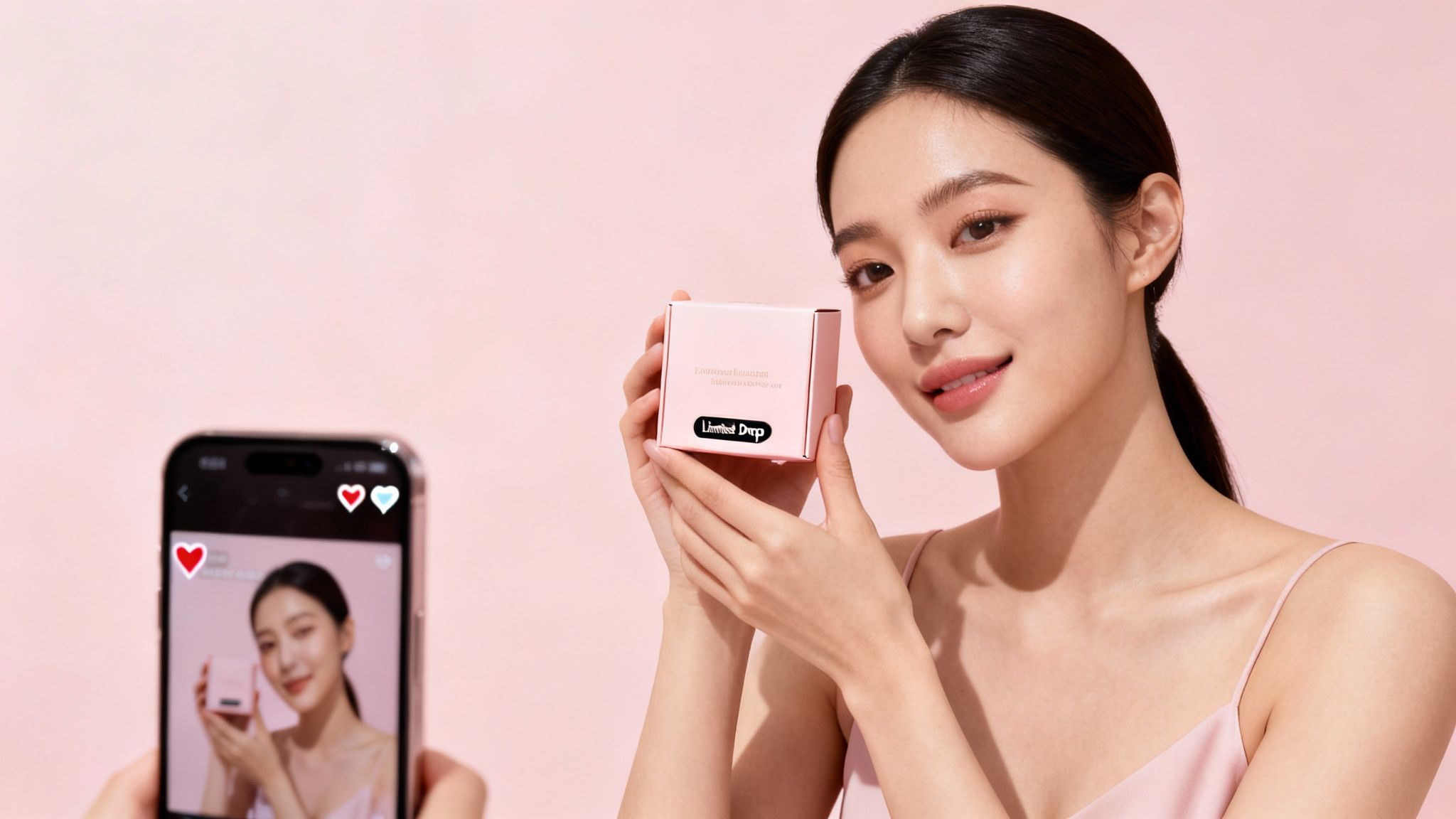
This strategy hinges on making consumers feel like insiders who are part of an exclusive community. When popular creators unbox a new, limited-run item, it validates the product's desirability and creates a powerful sense of FOMO. For example, their seasonal packaging collaborations and collection drops often sell out within hours, with influencer campaigns generating engagement rates reportedly over 300% higher than industry benchmarks. This model generates massive ROI by minimizing ad spend and maximizing organic, user-generated buzz.
Glossier's success is a masterclass in engineered hype. By giving influencers early access, they transform authentic creators into a distributed and trusted launch team. This strategy bypasses audience skepticism towards traditional ads, as the recommendation comes from a relatable source. The limited quantity is key; announcing that only a certain number of units are available frames the purchase not just as a transaction, but as an opportunity to acquire something rare and coveted. This turns customers into brand advocates who proudly share their "win."
Any brand can integrate influencer-driven scarcity to create similar high-impact marketing campaigns examples, even without Glossier's scale:
Nike has perfected the art of product hype and manufactured scarcity with its SNKRS app, a platform dedicated to high-demand, limited-edition sneaker releases. This mobile-first strategy transforms a simple product purchase into a high-stakes cultural event. The app's success is rooted in the powerful psychological principles of exclusivity, scarcity, and the endowment effect, where users feel a sense of ownership even before purchasing.
By using "Draws," which are essentially lotteries for the chance to buy, and "Shock Drops" (unannounced releases), Nike creates an environment of intense competition and anticipation. For example, high-profile collaborations like the Travis Scott Jordan 1 can generate over 500,000 app opens in minutes, with the 10-minute purchase window creating immense pressure. The real-time "Sold Out" badges that appear immediately after a release amplify FOMO, reinforcing the value of the next drop and keeping users engaged with the platform.
The SNKRS app is more than a sales channel; it's a community-building tool that gamifies the shopping experience. The platform uses push notifications not just for sales, but to share stories behind the sneakers, building a deeper brand connection. This content-driven approach ensures users open the app daily, not just on release days. The app's mechanics, like requiring users to be physically present at certain locations for a release (geofencing), turn a digital transaction into a memorable real-world experience, further solidifying brand loyalty.
This strategy is a prime example of turning a standard e-commerce transaction into an engaging brand moment. The scarcity isn't just about limited stock; it's about a limited opportunity to be part of an exclusive club, a powerful motivator that drives both sales and long-term brand equity.
While creating a dedicated app may be a long-term goal, any e-commerce brand can deploy these high-urgency tactics:
Ticketmaster's pricing strategy is a powerful example of using dynamic urgency that combines both time and inventory scarcity to maximize revenue. Instead of a fixed price, tickets for high-demand events often increase as the event date approaches or as availability dwindles. This model capitalizes on the psychological principles of loss aversion and social proof, compelling consumers to purchase sooner rather than later to avoid paying more or missing out entirely.
This dual-scarcity approach is one of the most effective marketing campaigns examples for high-demand products. For instance, concert tickets might see a 30-50% price increase in the final weeks before a show. Ticketmaster enhances this effect with real-time messaging like "Only 3 seats remaining at this price" or visual maps showing rapidly disappearing seats. This creates a tangible sense of a shrinking opportunity, which powerfully accelerates the buyer's decision-making process.
The strategy works by making the cost of waiting explicit. Consumers can see both the clock ticking down and the available inventory shrinking in real time, creating a high-pressure yet transparent purchasing environment. Unlike a simple sale, this time-decay model frames the current price as the best possible offer, anchoring its value against a future, higher price. This reframes the purchase not as an expense, but as a smart, timely investment.
The key is to transparently communicate the factors driving the price changes, which helps build trust and justifies the urgency. By understanding the core drivers behind this strategy, businesses can learn how to effectively create urgency in sales without resorting to manipulative tactics.
While complex dynamic pricing algorithms may be out of reach for many, e-commerce brands can simulate this time-decay model:
Shopify's annual Black Friday Cyber Monday (BFCM) campaign is a powerful meta-strategy, where the platform itself educates and empowers its merchants to leverage urgency. Rather than just a single campaign, it's an ecosystem of guides, data-driven benchmarks, and integrated tools designed to maximize merchant success during the most critical retail period of the year. The core principle is teaching merchants how to harness social proof and anticipation on a massive scale.
By sharing aggregate data and highlighting successful case studies, Shopify creates a competitive yet collaborative environment. Merchants are shown tangible proof of what works, such as the 2023 BFCM data showing merchants who used countdown timers saw a 25% higher Average Order Value (AOV). This data-backed approach transforms urgency from a vague marketing tactic into a proven, high-ROI business strategy, making it one of the most effective marketing campaigns examples for e-commerce enablement.
The genius of Shopify's campaign lies in its use of authority and data to drive merchant behavior. By releasing its annual BFCM global sales figures (a record $9.3 billion in 2023), it builds immense social proof and FOMO among its own user base. Merchants see the massive opportunity and are motivated to adopt the best practices Shopify promotes, such as using real-time inventory displays, which have been shown to reduce cart abandonment by up to 18%. It's a self-reinforcing loop: Shopify provides the tools and insights, merchants implement them, collective sales grow, and the platform's authority is further solidified.
While you may not be a platform, any brand can become a leader in its niche by educating its audience and leveraging data:
Streetwear giant Supreme mastered the art of habitual urgency with its iconic "weekly drop" model. By releasing a limited collection of new products at the exact same time every Thursday, the brand trained its audience to anticipate and act with incredible speed. This strategy perfectly blends temporal scarcity (a fixed release time) with artificial scarcity (intentionally low inventory), creating a powerful purchasing frenzy.
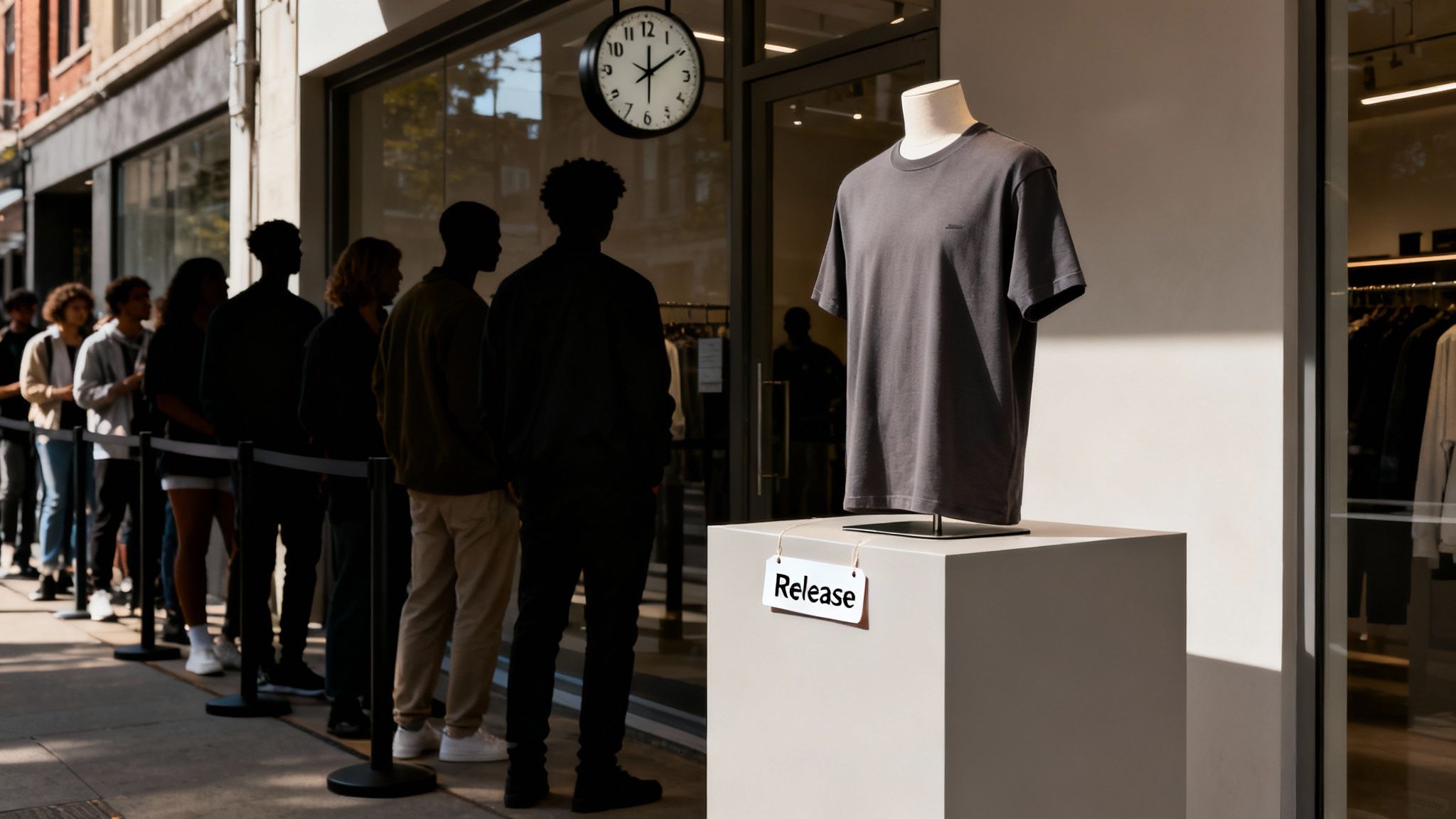
The result is a cultural phenomenon where items sell out in minutes, if not seconds. The intense demand fuels a massive secondary market, with products reselling for 300-500% above retail, which in turn reinforces the perceived value and exclusivity of the original drop. This model transforms a simple product release into a high-stakes cultural event, driving immense brand loyalty and turning customers into advocates.
Supreme's success lies in weaponizing anticipation and conditioning consumer behavior. The predictable schedule builds a weekly ritual for loyal fans, while the extreme scarcity triggers a powerful sense of FOMO (Fear of Missing Out). Unlike a random flash sale, the drop model creates a consistent, high-traffic event that the business can plan for. Every Thursday at 11 AM EST becomes a guaranteed revenue spike.
This approach is one of the most effective scarcity marketing examples in modern retail. You can learn more about the psychology behind Supreme's drop model on hq.quikly.com and how it creates perceived value. This consistency ensures the brand is always part of the cultural conversation without relying on constant discounts.
Any brand can adapt the drop model to create its own high-demand product launches:
Peloton expertly transformed inventory shortages and high demand into a powerful marketing tool by mastering the waitlist and early access model. Instead of frustrating potential buyers, this strategy harnessed the psychological principles of exclusivity and anticipation to build a highly engaged and motivated customer base, making the eventual purchase feel like a rewarding achievement.
This approach flips the script on scarcity. Rather than just a supply chain issue, limited inventory becomes a lever for creating a tiered, VIP experience. By offering newsletter subscribers exclusive, time-limited windows to purchase high-demand products like the Bike+, Peloton created a powerful incentive for users to join their marketing lists, turning a logistical challenge into a list-building and conversion opportunity.
Peloton's campaign is a prime example of using controlled access to drive both immediate sales and long-term loyalty. When the Bike+ launched, early access for waitlisted subscribers reportedly generated an 85% conversion rate from that segment. This was achieved by sending emails with clear, urgent calls-to-action and 48-hour access windows, triggering a potent sense of FOMO.
The strategy also served as a powerful data collection tool, allowing Peloton to gauge true demand and manage customer expectations transparently. This approach increased newsletter subscriber growth by 40% during these scarcity periods, as consumers eagerly signed up for a chance to get ahead of the line. For more inspiration on building pre-launch excitement, explore different strategies for creating effective coming soon pages.
Even without Peloton's scale, any brand facing high demand or launching a new product can leverage this model:
Lululemon masterfully combines exclusivity with urgency through its members-only flash sales, transforming a standard promotion into a high-engagement event. This strategy targets its most loyal customers with time-sensitive offers, creating a powerful sense of community and privilege. The campaign is built on the psychological principles of exclusivity and anticipation, driving action not just through discounts but through the value of being an insider.
By limiting access to its free-to-join "Lululemon Membership" program, the brand pre-qualifies its audience, ensuring promotions reach shoppers who are already highly engaged. These flash sales, typically lasting only 24-48 hours, create a concentrated burst of activity. For instance, Lululemon has seen member flash sales generate 3x more engagement than standard promotions, with app push notifications reportedly driving up to 65% of the sales revenue during these events.
The success of this campaign hinges on its multi-channel, psychologically-driven execution. Lululemon uses its mobile app and email list as the primary channels for announcing these events, often with little advance warning to amplify the feeling of spontaneity and urgency. In-app notifications and email countdowns serve as constant reminders of the limited time window, triggering FOMO and accelerating the decision-making process.
This approach not only drives immediate revenue but also strengthens the brand's loyalty program. It gives customers a tangible, high-value reason to join and stay engaged with the membership, turning a simple sales tactic into a powerful retention tool. This is a prime example of how effective marketing campaigns can nurture long-term customer relationships.
Any brand with a loyalty or membership program can adapt Lululemon's model to boost engagement and sales:
Dyson's approach to launching new products is a masterclass in using phased scarcity to maximize revenue and consumer desire. Instead of a single, large-scale release, Dyson often introduces new colorways or models in highly limited, time-gated batches. This strategy taps into the psychological principles of exclusivity and anticipation, transforming a simple product launch into a high-demand event.
This staged approach allows Dyson to create multiple peaks of consumer interest for a single product. The initial limited release sells out quickly, generating social proof and a powerful sense of FOMO for those who missed out. For example, some of Dyson’s limited-edition V15 vacuum cleaner colors have been known to sell out in as little as 18-24 hours, creating a wave of anticipation for the subsequent wider release. This method has been shown to generate up to 35% higher total revenue compared to a traditional full-scale launch.
Dyson's campaign brilliance lies in its communication and precise execution of scarcity. The company clearly communicates the limited nature of the initial drop across all touchpoints, from website banners to targeted email campaigns. They utilize on-page countdown timers to signal the exact moment a product becomes available and then use inventory depletion messaging to showcase its rapid sell-through rate.
This creates a powerful feedback loop: scarcity drives urgency, urgency drives sales, and rapid sales validate the product's desirability for the next phase. Emails sent during these campaigns that include urgency messaging and countdowns have seen click-through rates up to 28% higher than standard announcements, proving the effectiveness of this manufactured demand.
Even without Dyson's engineering prowess, any e-commerce brand can adopt this phased-release model to build excitement and drive sales:
Sephora masterfully combines time-based promotions with its loyalty program to create high-impact, short-duration sales events. By offering flash perks like free express shipping or double loyalty points for just 24-48 hours, Sephora creates a potent mix of incentive scarcity and time scarcity. This strategy is designed to activate its most loyal customers and drive immediate, concentrated purchasing behavior.
The psychological trigger here is the fear of missing out on enhanced value. Customers who are already part of the Beauty Insider program feel a strong pull to capitalize on benefits that aren't always available. This approach has proven incredibly effective, with some flash events reportedly driving 40-50% traffic increases within the 24-hour window and email countdowns generating 3.5x higher click-through rates.
Sephora’s campaign is a multi-channel execution of urgency. Countdown timers are embedded directly into emails and across its website, visually reinforcing the limited time frame. The most powerful element is the use of tiered communication, often granting loyalty members exclusive early access. This not only rewards existing members but also serves as a powerful incentive for new customers to join the program, boosting long-term customer value.
Furthermore, Sephora leverages SMS alerts for last-chance messaging in the final hours of the promotion. This tactic is highly effective at converting procrastinators and has been shown to generate as much as 25% of the total revenue for a flash event, demonstrating the power of a well-timed nudge.
Any brand with a loyalty program can adapt this model to drive impressive results. This is one of the most effective marketing campaigns examples for boosting customer engagement.
| Campaign | Implementation Complexity | Resource Requirements | Expected Outcomes | Ideal Use Cases | Key Advantages |
|---|---|---|---|---|---|
| Amazon Prime Day Flash Sales Campaign | High — large-scale backend and scaling needs | Extensive engineering, logistics, inventory planning, marketing spend | Massive short-term revenue spikes and traffic surges | Large retailers, membership platforms, seasonal mega-sales | High revenue, efficient inventory clearance, member retention |
| Glossier's Influencer-Driven Limited Edition Drops | Medium — coordination with influencers and small-run logistics | Influencer relations, social content creation, limited production runs | Viral social buzz, rapid sell-outs, elevated brand prestige | DTC beauty, niche/luxury products, brand-building launches | Social amplification, exclusivity, high margins on limited SKUs |
| Nike's SNKRS App Flash Releases | High — app features, anti-bot and allocation systems | Mobile app infrastructure, push notifications, anti-bot measures | Strong app engagement, hype-driven sales, secondary market value | Premium/resell-driven product drops, app-first brands | Drives app adoption, first-party data, high customer excitement |
| Ticketmaster's Dynamic Pricing with Time-Decay Urgency | Very high — algorithmic pricing and legal/regulatory considerations | Pricing engines, real-time inventory systems, data science team | Revenue maximization and optimized seat sell-through | Events, concerts, time-sensitive inventory with variable demand | Demand-based pricing, automated optimization, inventory yield management |
| Shopify's Black Friday Cyber Monday Benchmark Campaign | Low–Medium — template-driven with merchant support | Templates, guides, testing frameworks, merchant education | Improved merchant conversions and standardized best practices | SMBs and merchants preparing seasonal urgency campaigns | Lowers implementation barrier, proven templates and guidance |
| Supreme's Weekly Drop Strategy | Medium — predictable schedule with bot mitigation needs | Limited production, queue systems, marketing cadence | Habitual customer behavior and rapid sell-outs with resale value | Streetwear, collectible releases, cult brands | Builds ritualized demand and strong brand exclusivity |
| Peloton's Waitlist and Early Access Campaign | Medium — CRM and tiered access mechanics | Email/SMS systems, waitlist management, loyalty segmentation | High conversion from engaged leads and newsletter growth | High-demand products, limited inventory launches | Rewards loyalty, manages scarcity, predictable waitlist conversions |
| Lululemon's Members-Only Flash Sale Campaign | Medium — loyalty tiers and app integration | Mobile app, loyalty program infrastructure, inventory segmentation | Increased app engagement and higher member lifetime value | Loyalty-focused retailers and membership programs | Increases retention, targeted offers, higher member spend |
| Dyson's Limited Color/Model Release Strategy | Medium–High — phased production and fulfillment coordination | Staged production scheduling, pre-orders, marketing across phases | Multiple demand peaks and more efficient inventory management | High-end product launches, staged rollouts to manage supply | Smooth production pacing, repeated urgency peaks, reduced surplus |
| Sephora's Flash Shipping & Double Points Events | Medium — multi-channel coordination and logistics | Logistics capacity, loyalty point systems, email/SMS/app comms | Short-term AOV uplift and high cross-channel engagement | Retail promotions, loyalty incentive events, time-limited offers | Incentive-driven urgency, multi-channel reach, drives loyalty enrollment |
Throughout this deep dive into powerful marketing campaigns examples, a clear pattern emerges. Success isn't about using a generic countdown timer; it's about the sophisticated application of consumer psychology. Giants like Nike, Amazon, and Sephora don't just create urgency, they orchestrate entire customer experiences built on foundational behavioral principles like scarcity, social proof, and anticipation.
These brands understand that the most effective campaigns feel less like a promotion and more like an exclusive event. They've moved beyond basic popups that merely capture emails and have embraced multi-channel strategies that generate significant, measurable revenue. The key takeaway from their success is the shift from manual, one-off promotions to automated, psychologically-driven 'Moments' that feel authentic to the brand and compelling to the customer.
As we've analyzed campaigns from Supreme's legendary drops to Peloton's masterful use of waitlists, several core strategies stand out as essential for e-commerce brands looking to replicate this success:
Translating these high-level examples into tangible results for your store requires a strategic, phased approach. Instead of overhauling your entire marketing calendar, start by implementing one focused tactic and measuring its impact.
Mastering these strategies is no longer optional; it's a competitive necessity. In a landscape where the average cart abandonment rate hovers around 70%, creating compelling reasons for customers to complete their purchase now is paramount. Understanding the 'why' behind a campaign's success is just as important as the 'what'. Beyond just seeing what works, understanding why an ad works (or doesn't) is crucial for effective implementation. For deeper insights, explore these real-world ad analysis examples to sharpen your strategic thinking. By moving from simple tactics to sophisticated psychological engagement, you can transform your promotional efforts from a cost center into a powerful revenue engine.
Ready to move beyond basic countdown timers and implement the sophisticated urgency strategies used by top brands? Quikly is the marketing platform designed to turn these psychological principles into automated, revenue-driving 'Moments' for your store. Integrate seamlessly with your Shopify setup and orchestrate next-generation campaigns that captivate your audience and drive immediate sales.