

ecommerce conversion
customer experience strategy
digital customer experiences
Think about the last time you had a truly fantastic online shopping experience. What made it stand out? Was it just the product? Probably not. It was likely the entire journey—from how you found the site to the checkout process and even the email that landed in your inbox afterward.
That entire feeling, that complete journey, is what we call the customer experience. And actively making it better is what customer experience optimization (CXO) is all about.
Customer experience optimization (CXO) is the strategic process of designing and refining every interaction a customer has with a brand to be as seamless, positive, and valuable as possible. This includes everything from website navigation and checkout to post-purchase support, with the goal of increasing customer loyalty and lifetime value.
In a world where you can find a dozen look-alikes for any product with a quick search, the battlefield for customer loyalty isn't price or features anymore. It's the experience. The single greatest way to stand out is to make your customers feel seen, understood, and valued.
This is more than just having a fast website or a decent return policy. CXO is a holistic strategy. It’s the art and science of intentionally designing every single touchpoint to not just meet, but exceed expectations. Done right, it directly fuels your bottom line by increasing customer lifetime value (CLV), boosting conversion rates, and turning one-time buyers into passionate brand fans.
Shifting your focus to CXO means you stop playing the price-cutting game—a race to the bottom that eats away at your profits. Instead, you compete on the value and connection you provide. When customers feel that connection, they don't just buy more; they're often willing to spend more.
Here's how that plays out in real numbers:
Many brands confuse customer service with customer experience. Service is just one piece of a much larger puzzle. Service is reactive—it's what happens when something goes wrong. A great experience is proactive—it's designed to prevent things from going wrong in the first place, grounded in the principles of user experience design.
Customer experience is the grand total of every interaction a customer has with your company. It starts with the first ad they see and continues through their post-purchase support and beyond. Optimization is about actively shaping all those interactions to be as positive and seamless as possible.
This proactive mindset separates market leaders from the laggards. Instead of just waiting to solve problems, you anticipate your customers' needs. You map out their entire journey, find the friction points, and engineer "wow" moments that build a real emotional connection. That's how you build an e-commerce business that lasts.
To put it in perspective, let's look at the difference in outcomes between a standard approach and a strategic one.
This table shows the tangible business outcomes of implementing a robust CXO strategy versus just maintaining a basic customer service approach.
| Business Metric | Basic Customer Service Focus | Strategic CXO Focus |
|---|---|---|
| Customer Loyalty | Transactional; customers leave for better prices. | High retention; customers are loyal to the brand experience. |
| Revenue Growth | Slow and reliant on new customer acquisition. | Accelerated growth from repeat business and higher CLV. |
| Brand Perception | Seen as a commodity or just another option. | Perceived as a premium, customer-first brand. |
| Marketing Costs | High CAC; heavy reliance on paid advertising. | Lower CAC due to strong word-of-mouth and referrals. |
| Average Order Value | Stagnant; focused on single-item purchases. | Increased AOV through personalization and upselling. |
As you can see, the difference isn't subtle. A strategic focus on the entire customer journey doesn't just make customers happier—it builds a more profitable and resilient business from the ground up.
To master customer experience optimization, you need to break the complex customer journey into smaller, manageable pieces. The best way to do this is by focusing on four foundational pillars that tap into the core psychological needs of today's shoppers: Personalization, Convenience, Speed, and Emotion.
By auditing your Shopify store against these four pillars, you can move beyond just selling products and start building an unforgettable experience that grows revenue and creates die-hard fans.
The map above drives the point home. CXO isn’t a one-and-done task; it’s about nurturing a customer from their very first visit until they become an enthusiastic advocate for your brand.
Personalization is about making each customer feel like an individual—not just another number in your analytics dashboard. This goes way beyond sticking their first name in an email. We're talking about delivering product recommendations that feel like they were picked by a friend, showing relevant content, and sending offers that reflect their browsing and purchase history. It taps into a fundamental human need to be seen and understood.
For Shopify merchants, especially those on Shopify Plus, this is your secret weapon. As shoppers expect more, generic, one-size-fits-all experiences just don't cut it. In fact, research shows that 74% of consumers expect better personalization when they hand over their data, and a massive 88% of CX leaders see it as non-negotiable for retention.
You need a real strategy here, not just basic segmentation. It's worth seeing how the pros do it by checking out these examples of personalizing the customer experience from top brands.
Convenience is the art of removing friction. Every extra click, every confusing menu, every unnecessary form field adds a tiny bit of mental effort. That effort builds up and is a huge reason why the industry average cart abandonment rate is nearly 70%. The goal is to make the path from "I want that" to "It's on its way" as smooth as possible.
From a psychological standpoint, our brains are hardwired to save energy. When a task gets too complicated, we bail and look for an easier way. In ecommerce, that "easier way" is usually your competitor's website.
For Shopify stores, this means getting the basics right:
In the modern world, speed isn't a feature; it's a basic expectation. This applies to everything from how fast your pages load to how quickly your support team answers a question. We live in an age of instant gratification, and any delay creates frustration and chips away at trust.
Slow-loading pages are a top reason for high bounce rates. If a customer has to wait more than a few seconds for a product page to pop up, they’re gone. They'll leave before your amazing product even gets a chance to shine. It's about respecting your customer's time.
This is the final and most powerful pillar. The other three are mostly about function, but this one is about connection. Emotion is what turns a simple transaction into a memorable experience. It’s what transforms a customer into a loyal advocate.
Emotionally connected customers have a 306% higher lifetime value and are 71% more likely to recommend a company. Creating positive emotional moments is a direct investment in your long-term bottom line.
This isn't just about brand storytelling. It’s about strategically creating moments of delight. Urgency marketing, when grounded in psychology, is a perfect example. Instead of a generic countdown timer that can feel manipulative, a well-designed product drop—like those powered by a platform like Quikly—creates a shared feeling of anticipation and excitement. That "moment" becomes a powerful emotional trigger, elevating the shopping journey from boring to thrilling. And that directly boosts revenue while protecting your profit margins on high-demand items.
You can't optimize what you don't understand. When it comes to your store's customer experience, making assumptions is a fast track to nowhere. If you want to improve the customer journey, you have to measure it first—with cold, hard data, not just gut feelings.
A proper audit of your Shopify store gives you that crucial starting line. It's how you spot the friction points causing people to leave and uncover hidden gems that can drive real growth. The goal is to get past surface-level numbers like website traffic and dig into the data that tells you about the quality of the experience you're providing. This means blending quantitative data (the "what") with qualitative insights (the "why").
The numbers tell a story about user behavior at scale. You can find most of what you need right inside your Shopify Analytics and Google Analytics dashboards. The trick is to focus on the metrics that are directly tied to the customer experience and your bottom line.
To get a handle on the numbers that move the needle, it helps to understand the core sales performance metrics that drive e-commerce growth.
While the numbers tell you what is happening, qualitative insights tell you why. This is where you get to the human side of the equation—the emotional triggers and frustrations that drive people's actions.
An audit without qualitative feedback is like reading a map without a compass. The data shows you the roads, but the stories from your customers tell you which direction to go.
To get this vital context, you need to roll up your sleeves and do some digging:
To put all of this together, a structured audit is your best friend. A good E-Commerce User Experience Audit Checklist can walk you through every touchpoint, making sure you don't miss anything. When you combine the hard data with real human feedback, you create a powerful foundation for making changes that not only improve satisfaction but directly boost your bottom line.
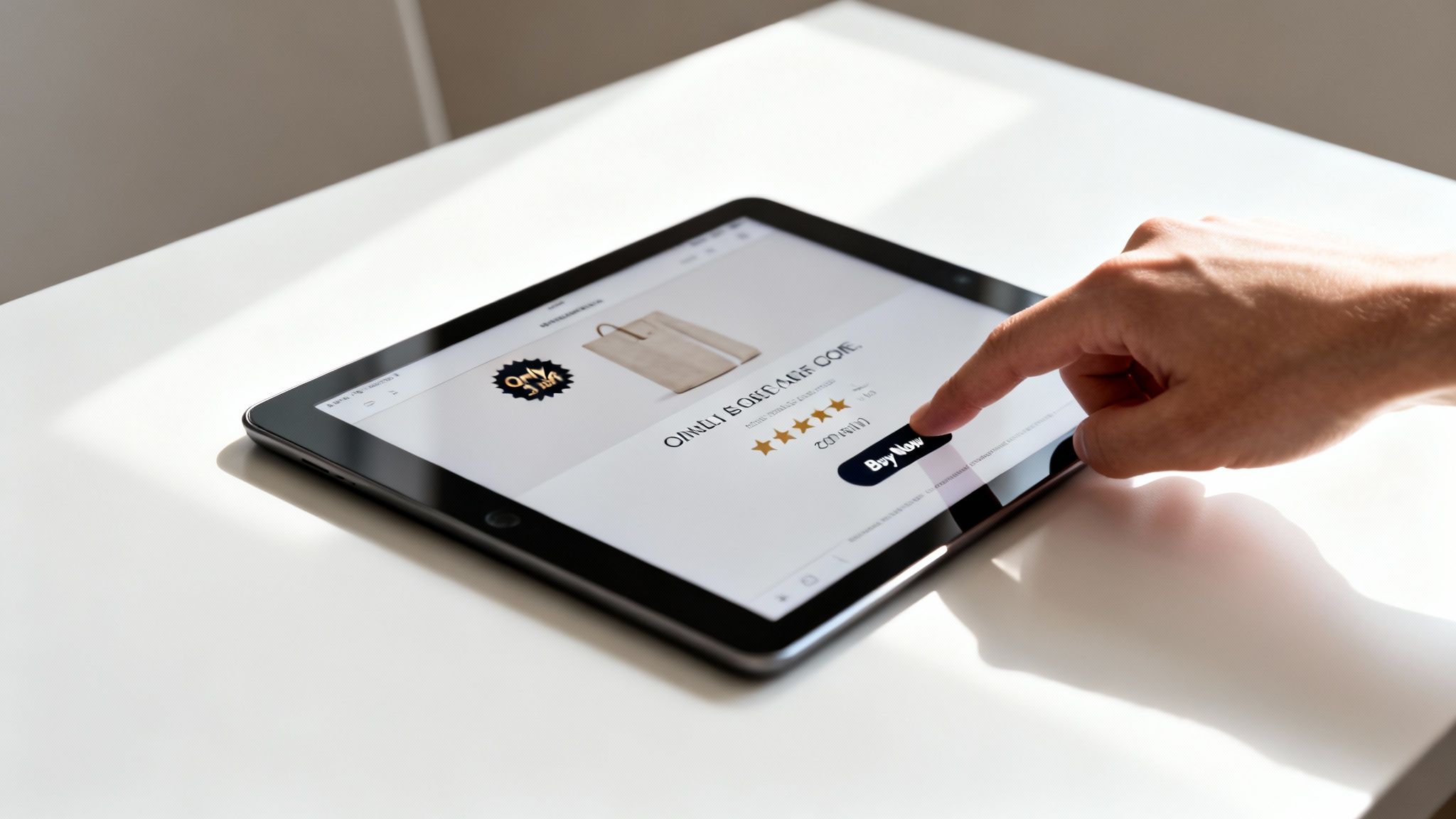
Customer experience optimization is about more than a slick checkout process. The real magic happens when you shape the entire shopping journey into something engaging—even memorable. And one of the most powerful, yet frequently misunderstood, tools in your arsenal is the psychology of urgency.
This isn't about slapping up a countdown timer and creating fake pressure. It’s about ethically applying principles from behavioral economics to help guide customers, cut through decision paralysis, and turn a simple transaction into an event. When you get the science of urgency right, you elevate the customer experience.
The basic countdown timer and the generic "low stock" alert are so common they've become white noise. They lack the context or personal touch to make a real connection. Truly sophisticated urgency, on the other hand, taps into deep psychological drivers that add genuine value to a customer's journey.
It boils down to three core principles from consumer psychology:
By weaving these elements together, brands can create what we at Quikly call "Moments"—high-energy, focused events that capture an audience. This approach flips urgency from a basic trigger into a helpful service that assists customers in making confident decisions. You can see a detailed breakdown of these strategies in our guide to effective Shopify urgency tactics.
When you apply these psychological triggers correctly, the impact on your bottom line and operational efficiency is direct and measurable. This goes beyond just lifting conversion rates; it impacts the core health of your business.
By framing a purchase within a specific, exciting timeframe, you help customers overcome the 'paradox of choice.' This focus not only boosts immediate sales but also protects profit margins by reducing the need for broad, margin-killing discounts.
In the fast-paced world of e-commerce, creating a sense of urgency has proven to be a game-changer for customer experience optimization, directly turning browsers into buyers. Globally, 89% of businesses now compete primarily on CX over price, and with 3 in 4 consumers willing to spend more for great experiences, urgency optimization positions retail brands for revenue surges while optimizing inventory. To dive deeper into these trends, you can read the full analysis of recent CX findings.
The difference between old-school urgency and modern CXO comes down to personalization and relevance. A generic pop-up with a timer is impersonal and annoying. But an automated, behavior-triggered campaign inviting a loyal customer to an exclusive flash sale? That feels like a VIP reward. This is the difference between manipulation and sophisticated psychology.
For Shopify Plus merchants, this level of sophistication is critical for managing high-traffic product drops without crashing the site and ensuring fair access to limited inventory. By integrating with tools like Klaviyo, Postscript, and other SMS platforms, these campaigns stop being one-off tactics and become part of a cohesive, personal conversation with the customer.
This smart automation doesn't just drive sales—it builds brand affinity. Customers who take part in an exciting, well-run event are far more likely to share their experience and come back for the next one. This is how you transform a simple purchase into a memorable brand interaction, the ultimate goal of customer experience optimization.
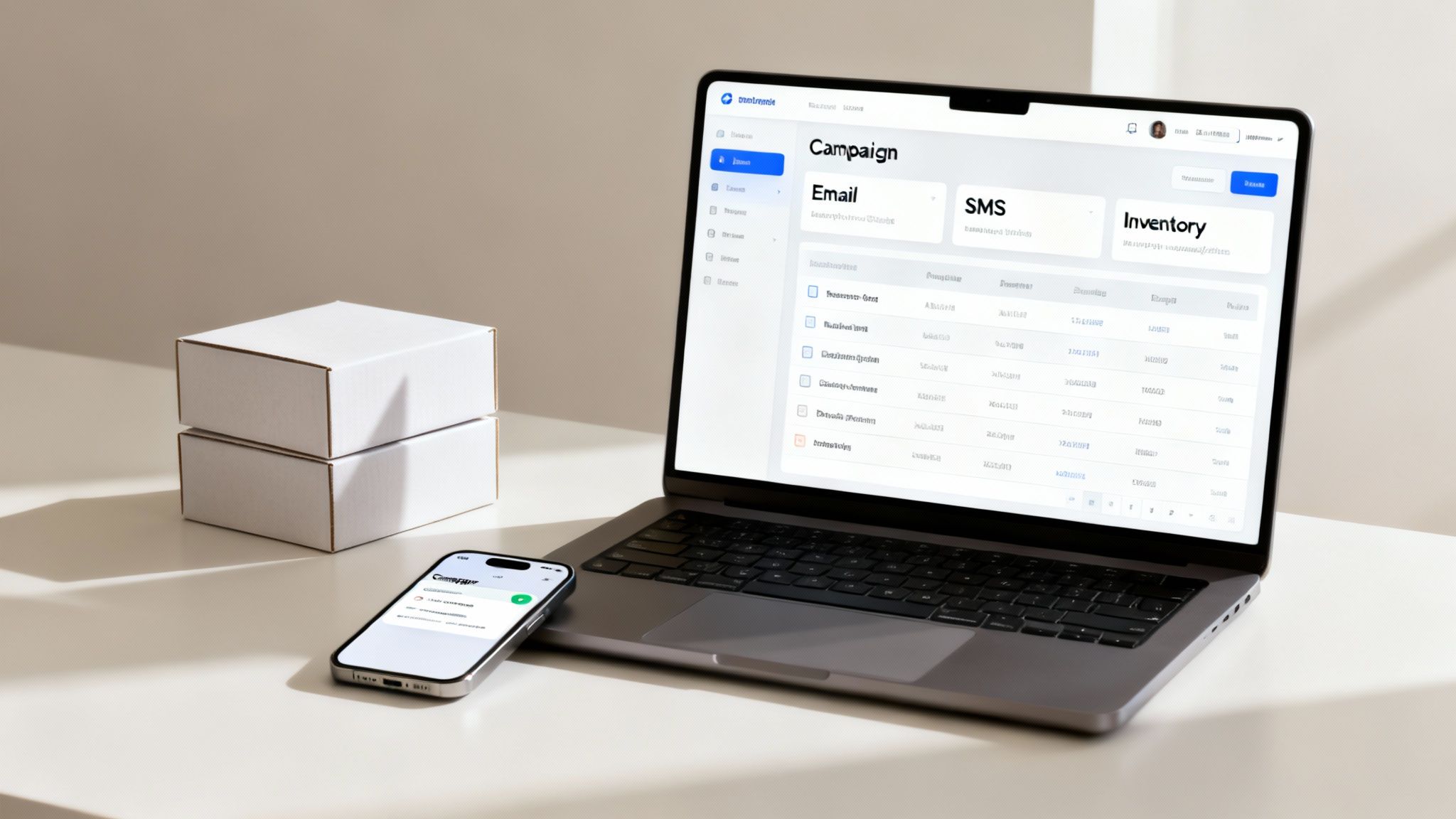
Understanding the principles of customer experience optimization is one thing. Putting them to work to generate revenue is another. For Shopify store owners, this is where the rubber meets the road.
It’s time to move beyond basic pop-ups and timers. We’re talking about deploying sophisticated, psychology-driven campaigns that create memorable moments—moments that drive both sales and genuine loyalty. This means treating high-impact events like flash sales or product drops not as simple discounts, but as engaging experiences. A well-run campaign should feel less like a sales pitch and more like an exclusive invitation, tapping into powerful human drivers like anticipation and the fear of missing out.
The goal here is to engineer excitement from the very first announcement all the way to the final seconds of the sale. This demands a multi-channel approach that plugs right into your marketing stack, ensuring every single touchpoint builds momentum toward that final click.
An effective urgency campaign is a carefully choreographed event. It's about building suspense and giving your customers a clear, valuable reason to be excited. This is a world away from generic timers that just create pressure without adding value.
Let's walk through how to build a campaign that not only drives serious ROI but actually makes the customer journey better.
Actionable Takeaway: Step-by-Step Campaign Execution
Announce the "Moment": Start teasing your campaign 3-5 days in advance across all channels. Instead of a flat "Sale starts Friday," try something like, "Something big is coming Friday. Sign up for early access." This builds anticipation and makes the event feel like a can't-miss opportunity.
Segment and Personalize Your Audience: Don't send the same message to everyone. Dig into your Shopify data and use tools like Klaviyo to create targeted segments. For example, create a VIP segment of repeat buyers who get a 15-minute head start. This small touch makes your best customers feel seen and rewarded.
Deploy Multi-Channel Reminders: Weave your campaign into email and SMS platforms like Postscript or Attentive. A coordinated messaging flow is absolutely key:
Drive to a Centralized Experience: Funnel all traffic to a specific landing page on your Shopify store. This page needs to clearly state the rules (e.g., "While supplies last," "Offer ends at midnight") and feature dynamic elements like a live countdown timer. This creates a focal point for all that excitement.
If you're running a brand on Shopify Plus, the stakes are much higher. You’re wrestling with massive traffic spikes, complex inventory for limited-edition drops, and the need to deliver a flawless experience at scale. This is where advanced customer experience optimization becomes non-negotiable for protecting your margins and maximizing revenue.
For Shopify Plus stores, managing a high-traffic product drop is as much about operational excellence as it is about marketing. A crashed site or oversold inventory can instantly destroy brand trust built over years. Advanced urgency tools are designed to manage this influx, ensuring a smooth, fair, and profitable event.
Here’s how Shopify Plus merchants can take their campaigns to the next level:
By putting these practical, psychology-backed tactics into play, you can turn standard promotions into powerful, revenue-generating events that strengthen your brand and leave your customers thrilled.
When you're running a Shopify store, turning big ideas like customer experience optimization into real-world action can bring up some questions. Let's tackle the most common ones with clear, straightforward answers you can use right away.
The absolute first step is to audit your current customer journey. You can't improve what you don't measure, so before you dream up new strategies, you need a data-driven baseline. Start by literally mapping out every single touchpoint a customer has with your brand, from the first ad they see all the way to the post-purchase thank you email.
Dive into your Shopify Analytics and Google Analytics to pinpoint where people are dropping off. Are bounce rates sky-high on certain product pages? Is your cart abandonment rate creeping up? A high abandonment rate, which often hovers around the 70% industry average, is a massive red flag signaling friction in your process.
But numbers only tell half the story. You have to layer that quantitative data with qualitative insights. Spend time reading customer support tickets, live chat logs, and product reviews. This is where you'll uncover the why behind the numbers—the real frustrations, hesitations, and desires of your audience. This initial audit gives you the roadmap you need to prioritize changes that will actually move the needle on both customer happiness and your revenue.
When executed correctly, urgency marketing improves the customer experience by providing clarity and reducing decision fatigue. This isn’t about manipulative tricks; it's about applying well-researched psychological principles like scarcity (limited stock) and FOMO (Fear of Missing Out) to give the shopper helpful context. It turns a standard purchase into a memorable event.
A live countdown for a limited-edition product drop helps an interested customer make a decisive move, saving them from the disappointment of seeing that dreaded "sold-out" sign later. This is worlds away from a generic, always-on timer that just feels fake and erodes trust.
Sophisticated urgency marketing, rooted in behavioral economics, is a service to the customer. It makes the value proposition crystal clear and creates an exciting "moment" that not only drives an immediate conversion but also builds a much stronger emotional connection with your brand. That connection is the bedrock of long-term loyalty.
Measuring the return on your CXO efforts is critical, and it comes down to tracking a mix of metrics that tie directly to your bottom line. It’s not just about making people feel good; it’s about building a healthier, more profitable business.
For starters, track the immediate revenue drivers during specific campaigns or after you've made a change. These include:
But the real magic of CXO shows up over the long term. You need to monitor the metrics that reflect customer loyalty and retention—these are the true indicators that your strategy is working.
By connecting your initiatives—like launching a high-engagement flash sale or smoothing out your checkout flow—to real improvements in these numbers, you can draw a straight line from a better customer experience to a healthier bottom line.
Ready to turn your promotions into high-impact events that don't just sell products but build your brand? See how Quikly uses the science of urgency to create unforgettable customer experiences that drive sales now and build loyalty for the long haul. Explore Quikly's solutions for your Shopify store.