

ecommerce psychology
brand loyalty
best brand experiences
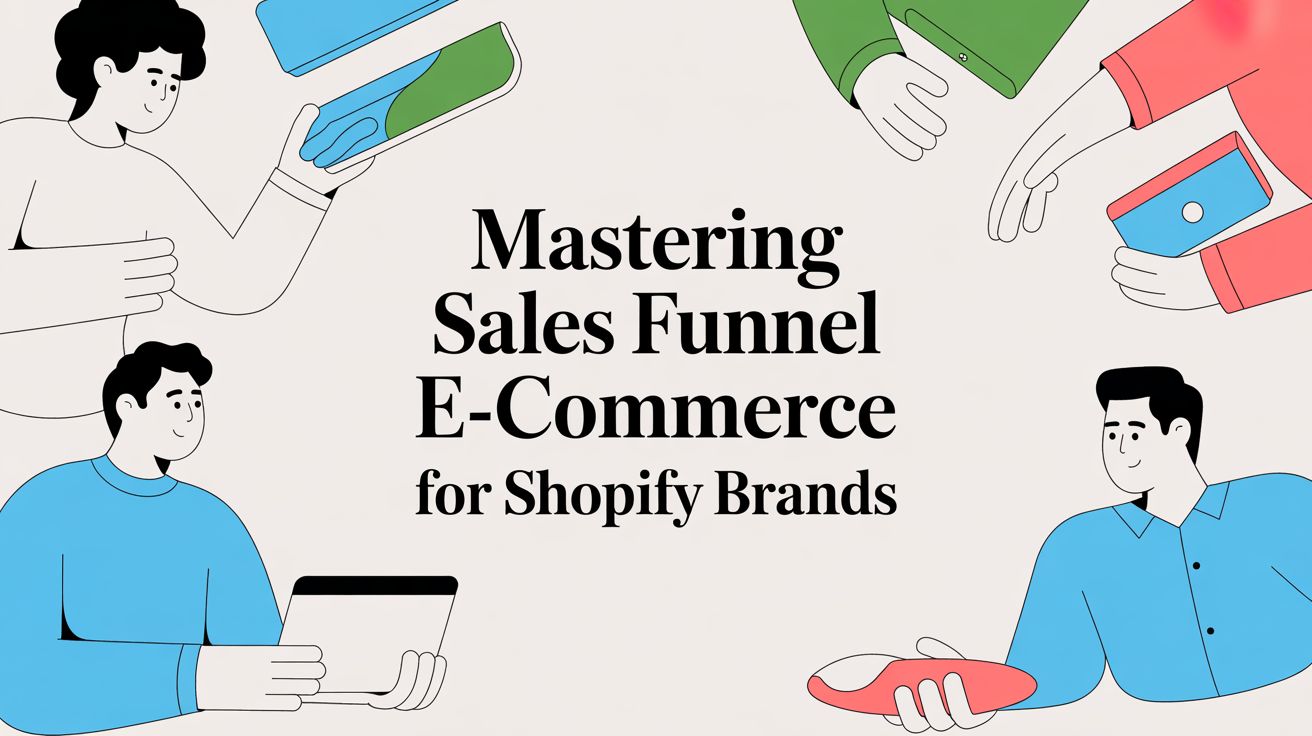
You have a Shopify store and traffic is starting to trickle in. That's a great first step, but it's only half the battle.
The real challenge? Turning those casual visitors into loyal, repeat customers. This is precisely where a well-built sales funnel comes in. It’s far more than just a marketing buzzword; it’s a strategic blueprint that transforms your efforts from random shots in the dark into a predictable system for revenue growth.
Think of it as a map of your customer's journey, guiding them from their very first interaction with your brand all the way through to making a purchase.
Without a structured funnel, you're essentially flying blind. It's like having a physical store where, for every 100 people who walk in, only the industry average of two or three actually buy something. You'd want to know why the other 97 left, right?
The same logic applies online. Research shows that 68% of companies struggle to even measure success without a defined funnel, and a staggering 23% miss revenue targets simply because of gaps in their customer journey. Optimization isn't just a nice-to-have; it's the core of how you scale a business, protect profit margins, and manage inventory in today's crowded market.
The real magic of a sales funnel is that it mirrors the psychological path a shopper takes before clicking "buy." Each stage has a completely different goal and requires its own set of tactics to be effective. If you’re looking for a deep dive, there are some great resources out there on how to create a sales funnel that converts from the ground up.
This diagram breaks down the process into its three fundamental phases.
As you can see, the audience naturally narrows as it moves from one stage to the next. This is completely normal, but it highlights just how critical it is to use targeted strategies every step of the way.
To give you a clearer picture, here’s a quick breakdown of each stage, its primary objective, and a key performance indicator (KPI) you should be tracking.
| Funnel Stage | Primary Goal | Key Metric (KPI) |
|---|---|---|
| Awareness (Top of Funnel) | Grab the attention of your target audience and introduce them to your brand. | Website Traffic / Reach |
| Consideration (Middle of Funnel) | Nurture interest and build trust by showing why your product is the solution. | Add-to-Cart Rate / Email Signups |
| Conversion (Bottom of Funnel) | Close the deal by encouraging immediate purchase and overcoming final hesitations. | Conversion Rate / Average Order Value |
Understanding these distinct stages is the first step toward plugging the leaks in your own funnel and driving more consistent sales.
By figuring out exactly where shoppers are dropping off, you can deploy specific tools—like an urgency-driven countdown timer or a personalized exit-intent popup—to keep them engaged and moving toward checkout. It’s all about applying the science of consumer psychology to protect your profits.
Ultimately, a strong funnel isn't just about boosting a single conversion number. It's about building a sustainable revenue engine. By implementing the right strategies and finding the best apps for your Shopify store, you can systematically improve performance from the very first click to the final sale and beyond.
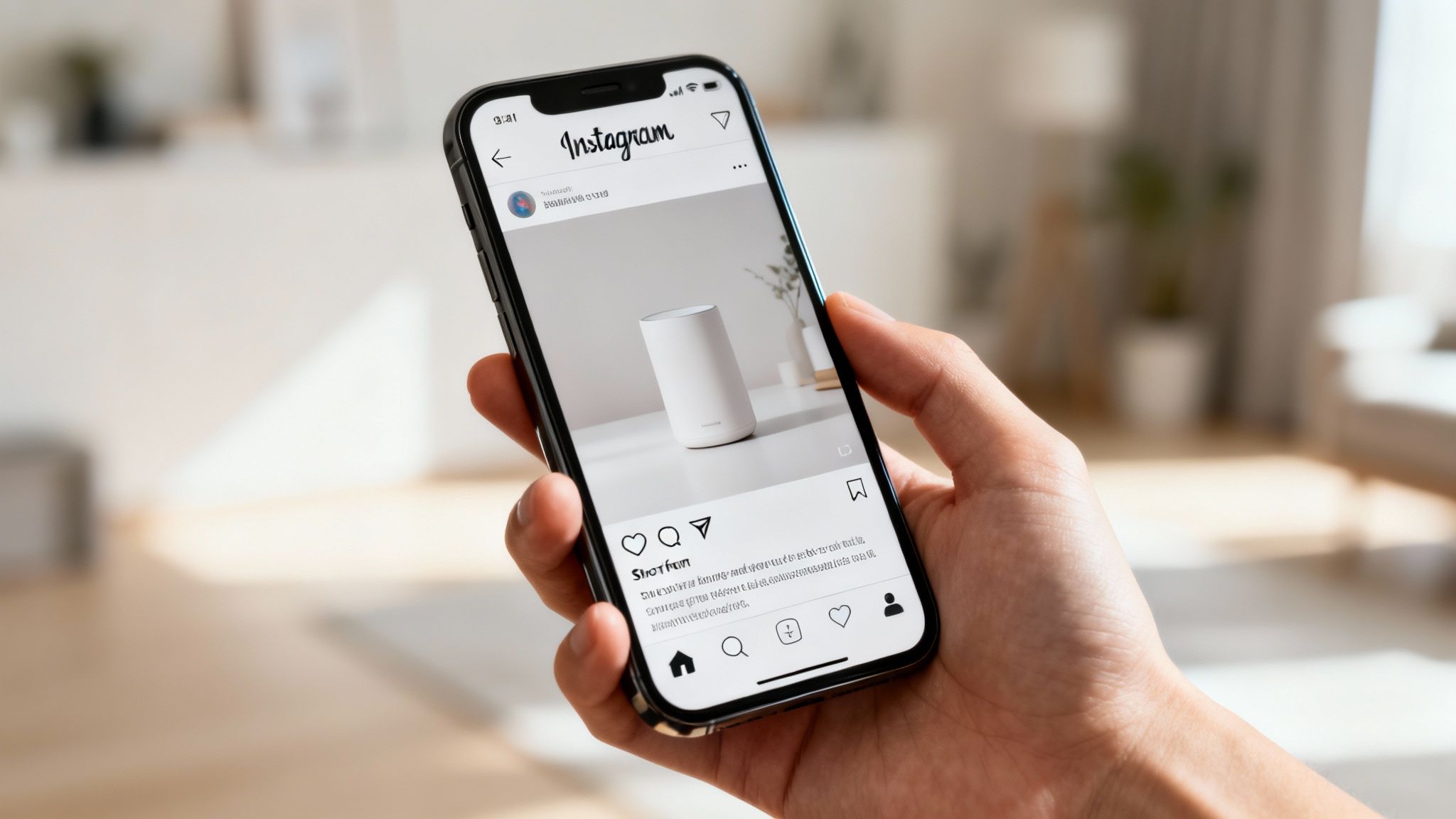
This is where it all begins. The top of the funnel is that critical first touchpoint, the moment a potential customer goes from not knowing you exist to being genuinely curious. The goal here isn't to make a sale—not yet. It's about pulling in the right kind of traffic.
Forget casting a wide, expensive net and hoping for the best. Success at this stage is all about attracting high-intent visitors who are actually interested in what you have to offer. This sets you up for much smoother conversions down the line. It all boils down to a core psychological principle: reciprocity. You have to give value before you can expect to get anything in return.
The absolute best way to fill the top of your funnel is to stop acting like a retailer and start being a resource. This means creating content that speaks directly to your ideal customer's problems, questions, and goals.
When you lead with content, you build a foundation of trust. The people entering your funnel are already pre-qualified because their interest in your content signals a need for your product.
Organic content is the long game, but paid ads give you immediate, scalable traffic. The trick is to stop running generic campaigns that burn through your budget. You need to focus on attracting visitors who are actually likely to buy.
On platforms like Instagram and Meta, this means getting smart with lookalike audiences. Build them based on your existing high-LTV customers, and you'll put your ads in front of people who share traits with your very best buyers.
Actionable Takeaway: A common mistake is optimizing ad campaigns for clicks or traffic. Don't do it. Instead, set your campaign objectives to "Add to Carts" or "Initiate Checkouts." This tells the algorithm you want people who take action, not just casual browsers. You'll get much higher-quality traffic flooding your funnel.
Imagine a Shopify Plus merchant selling premium pet food. They could target lookalike audiences of past buyers and then layer in interests like "organic pet food" or "dog subscription boxes." The ad creative shouldn't just be a picture of the bag; it needs to tell a story about the benefit—a healthier, happier pet.
You've got their attention. Now what? The next step is to get them to take a small, low-commitment action. So many brands jump the gun here and immediately push for a sale. That’s a huge mistake. The real goal is to get a micro-commitment, like an email address.
Traditional pop-ups can feel disruptive, often just capturing an email with a generic discount. But you can be much more sophisticated. This first interaction is your chance to build excitement.
Platforms like Quikly turn a standard lead capture into an engaging brand moment, going beyond simple email capture to drive revenue. Instead of a boring "10% off" offer, you could use a dynamic popup to announce an upcoming limited-time product drop, inviting people to sign up for early access. This leverages the powerful psychological trigger of anticipation, making a simple signup feel like an exclusive event. For a deeper dive, exploring advanced strategies for using popups on Shopify can give you a serious edge.
This approach doesn't just build an email list; it builds a high-quality list of engaged fans, perfectly primed for the next stage of the funnel.
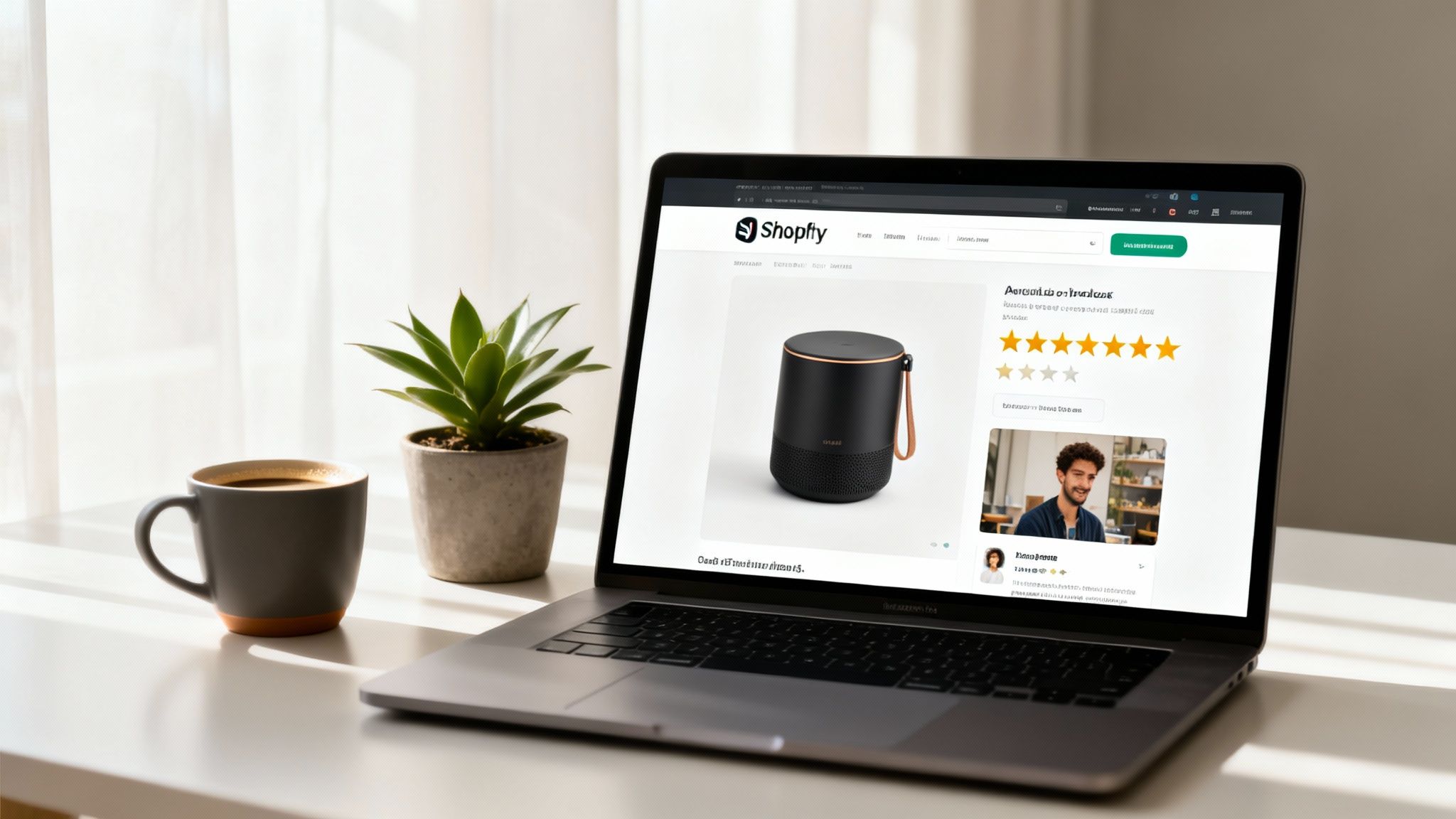
You've snagged their attention. Someone who was just scrolling is now clicking through your product pages. This is that critical middle ground where casual browsing has the potential to turn into a real desire to buy.
The goal now is to shift gears. You're no longer just listing features and showing prices; you’re building unshakable trust and showing them why your product is the only option that makes sense.
This is where you have to get inside your customer's head. They're weighing their options, comparing you to others, and asking themselves a dozen questions. Your product page needs to answer every single one, erase any doubt, and forge a connection that makes hitting "add to cart" feel like a no-brainer.
Your product pages are where the magic happens in the middle of the funnel. But they can't just be a digital catalog. They need to tell a story—and the most convincing storyteller is always another happy customer. This is why social proof is your most powerful tool.
Behavioral science tells us that people are deeply influenced by what others do, a phenomenon known as social proof. When a potential buyer sees that tons of other people have already bought and loved your product, it quiets that little voice of doubt in their head. It lowers the perceived risk and makes them feel confident in their choice.
Actionable Takeaway:
The middle of the funnel is the perfect spot to create urgency, but you have to be smart about it. Basic countdown timers that just reset every time you refresh the page don't just feel cheap; they actively erode trust. This is a tactic, not a strategy.
Sophisticated urgency marketing isn't about manipulation. It's grounded in proven psychological drivers like scarcity and the Fear of Missing Out (FOMO). This means moving beyond basic pop-ups to create genuine, time-sensitive events that drive revenue without devaluing your brand.
At Quikly, we are experts in the science of urgency marketing. Our platform helps brands create automated, personalized "Moments" that weave urgency based on behavioral triggers into the shopper's journey, driving immediate revenue without feeling forced.
Think beyond the tired "Sale Ends in 24 Hours" banner. Try these instead:
This smarter approach also protects your profit margins since you're not relying on deep, store-wide discounts. Plus, it helps you manage inventory by creating predictable sales spikes you can plan for.
Not everyone who makes it this far is ready to buy on the spot. They might need more info, more time, or just another gentle nudge. This is where your automated email and SMS flows, powered by a platform like Klaviyo and integrated with your Shopify store, become your secret weapon.
Once a visitor shows clear interest—maybe they've viewed a product three times, added it to their cart, or signed up for your newsletter—you can kick off an automated nurturing sequence. The trick is to provide value, not just a constant sales pitch.
A killer nurturing flow could look something like this:
By setting these sequences up to run automatically, you stay top-of-mind and methodically guide people from just considering to actually converting.
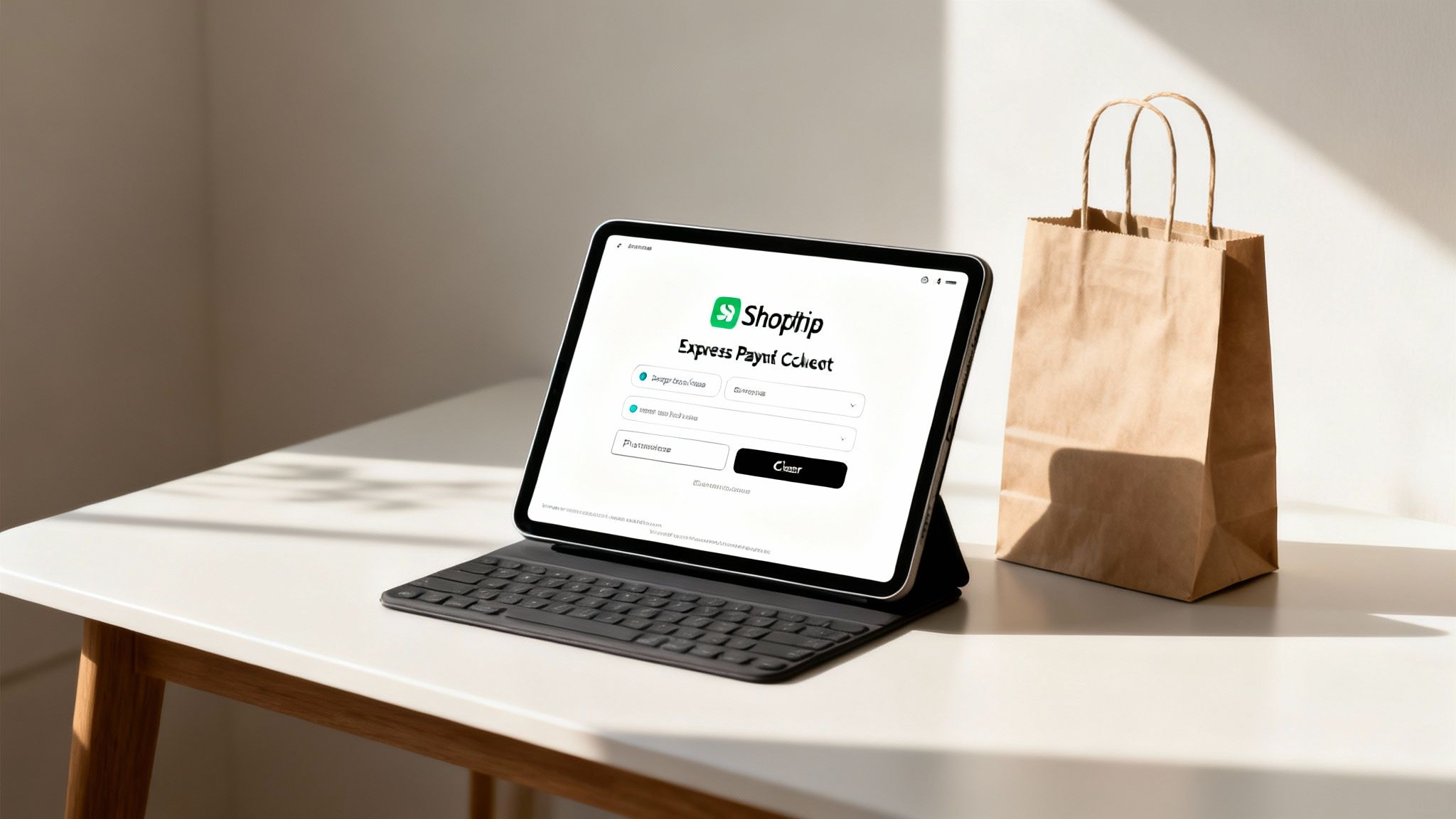
This is the moment of truth. You’ve guided a potential customer all the way through your funnel, they’ve added a product to their cart, and they’re one click away from becoming revenue.
But this is precisely where most sales completely fall apart. The industry benchmark for cart abandonment hovers around a painful 70%. That number makes this final step the single most critical place to optimize if you want to protect your profit margins.
Why the massive drop-off? It often comes down to pure consumer psychology. Any last-minute friction, an unexpected cost, or even a flicker of doubt can trigger what behavioral economists call "loss aversion"—the fear of making a bad decision suddenly feels stronger than the potential joy of the purchase. Your job is to stamp out every bit of friction and build overwhelming confidence.
A clunky, complicated checkout is the number one revenue killer in e-commerce. Every extra field they have to fill out, every unnecessary click, and every confusing step adds to their cognitive load and gives them an excuse to leave. The goal should be to make paying you feel completely effortless and secure.
Actionable Takeaway: Here’s how to build a frictionless checkout experience on Shopify:
Even with a flawless checkout, some people will still hesitate. This is where automated recovery sequences and smart exit-intent offers become your highest ROI activities. It's so much cheaper to convert a shopper who's this close to buying than it is to go find a new one.
To get the most out of your bottom-funnel efforts, you should explore proven strategies to increase e-commerce conversion rates.
Instead of a generic "Don't Go!" popup, you can use more sophisticated behavioral triggers. Quikly's platform, for example, can deploy dynamic "Moments" based on what a user is doing—like an offer that reserves a popular item in their cart for just 10 minutes. This creates a powerful sense of scarcity and personal urgency that a basic countdown timer just can't match.
For those who do leave, an automated abandoned cart flow is absolutely non-negotiable. Connect your Shopify store with tools like Klaviyo or your favorite SMS platform to trigger a multi-touch sequence.
This automated system works for you 24/7, clawing back revenue you would have otherwise lost. You can dive deeper into these tactics in our guide to reducing cart abandonment for Shopify.
Your e-commerce sales funnel doesn't end when the payment goes through. The post-purchase experience is a golden opportunity to increase Customer Lifetime Value (LTV) and turn a one-time buyer into a loyal fan.
The thank you page is one of the most underused assets in all of e-commerce. Think about it: a customer who just bought something is in a peak state of buying confidence. Use this moment to show them a compelling, one-time upsell or cross-sell offer. A simple "Customers who bought this also loved..." with an easy add-to-order button can do wonders for your Average Order Value (AOV).
Beyond that, get new customers enrolled in your loyalty program right away. This builds a sense of belonging and gives them a reason to come back for their next purchase, creating a profitable retention loop that fuels your brand's long-term growth.
A sales funnel without data is really just expensive guesswork. Building the stages is one thing, but actually knowing what’s happening inside them? That's where you find the profit. If you want to optimize your funnel, you have to look past the superficial “vanity metrics” and drill down into the KPIs that directly affect your bottom line.
This means you’ve got to stop obsessing over website traffic and social media followers. Instead, turn your attention to the numbers that reveal the true health of your customer journey and, by extension, your business.
It’s tempting to get excited about big traffic numbers, but if those visitors aren't converting, you're just pouring money into a leaky bucket. The real goal is to measure how efficiently your funnel works at each and every stage. Doing this uncovers exactly where you're bleeding cash and where your biggest opportunities are hiding.
To do this right, you need to draw a hard line between the metrics that feel good and the metrics that actually drive growth.
It's a classic finding from behavioral economics: what we measure, we manage. When brands get fixated on top-of-funnel traffic, their optimization efforts stop right there. The minute you start measuring profitability drivers like CAC and LTV, you align your entire strategy with sustainable growth, not just fleeting spikes in attention.
Let's break down how to separate the signal from the noise.
You can think about your metrics in two camps: the ones that actually help you make smart decisions and the ones that just stroke your ego. Focusing on the right ones is crucial.
| Metric Type | Examples | Why It Matters |
|---|---|---|
| Actionable KPIs | Customer Lifetime Value (LTV), Customer Acquisition Cost (CAC), Conversion Rate by Funnel Stage, Average Order Value (AOV) | These metrics tie your marketing spend directly to revenue and profit. They tell you point-blank if your business model is sustainable and where you should put your money for the best return. |
| Vanity Metrics | Total Website Traffic, Social Media Likes, Page Views, Number of Email Subscribers | While these might show brand reach, they have no direct link to sales. In fact, tons of traffic with low conversions is usually a flashing red light signaling a problem with your audience targeting or on-site experience. |
Sticking to the actionable KPIs helps you focus on what really moves the needle instead of getting sidetracked by numbers that don't translate to sales.
To get a clear, honest look at your funnel’s performance, you only need to track a handful of key indicators. You can find all of this in tools like Shopify Analytics and Google Analytics 4 (GA4), but you need to know what you're looking for.
Data shows you what is happening. A/B testing tells you why it's happening and how to fix it. This kind of continuous experimentation is the engine that drives funnel optimization. Forget about making random tweaks and hoping for the best. Use your KPIs to create a hypothesis and test it like a scientist.
Let’s walk through a real-world scenario.
Your analytics show a great add-to-cart rate, but then a gut-wrenching 75% of those carts are abandoned.
When you adopt this data-first approach, your sales funnel stops being a static, one-and-done setup. It transforms into a dynamic system that constantly learns and improves, driving profitable and predictable growth for your brand.
It's a story seen play out too many times: a brand invests serious time and cash into a sophisticated sales funnel, only to watch it fall flat because of a few easily avoidable stumbles. Getting a handle on these common pitfalls is the first real step to building a customer journey that actually turns a profit.
One of the most jarring mistakes is creating a disjointed customer experience. Think about it. A shopper sees a killer, high-energy ad on Instagram that gets them excited, but when they click, they land on a bland, generic product page. That disconnect instantly kills the vibe and shatters any trust you just built, leading to an immediate bounce. You have to keep your messaging, branding, and tone locked in and consistent at every single touchpoint—from the first ad impression all the way to the final thank-you email.
Another massive blunder is treating the mobile experience as an afterthought. We're living in a mobile-first world now. With over 70% of e-commerce traffic coming straight from smartphones, a clunky or slow mobile site is basically a welcome mat for your competitors. If your customers have to pinch and zoom just to read a product description or get frustrated trying to tap tiny buttons, you can bet they're gone.
Behavioral science tells us that friction is the enemy of conversion. A confusing mobile checkout process piles on the cognitive load, which triggers a customer's sense of loss aversion. Suddenly, the fear of making a mistake is stronger than their desire for the product. Streamlining your mobile checkout isn't just a nice UX tweak; it's a direct strategy for protecting your revenue.
Finally, so many funnels just stop once the purchase is made. That's a huge mistake. The post-purchase phase is an absolute goldmine for boosting Customer Lifetime Value (LTV).
When you don't follow up with engaging content, smart, personalized recommendations, or a loyalty program, you’re literally leaving money on the table. The real goal isn't just to make a single sale. It's to build a retention loop that turns a one-time buyer into a loyal advocate for your brand—that’s how you fuel real, sustainable growth.
It’s tempting to say it’s all about the bottom of the funnel—the conversion stage. And from a pure ROI perspective, you’re not wrong. Optimizing your checkout to chip away at that staggering 70% average cart abandonment rate gives you the fastest, most direct bump in monthly revenue. You see the results almost immediately.
But focusing only on the checkout is a classic case of short-term thinking. If you’re not feeding the top of your funnel with a steady stream of qualified traffic, you're essentially starving your business of future growth. A weak top-of-funnel strategy means you’ll have a much smaller, less-invested audience actually making it to that crucial final step.
So, while every stage is vital, think of it this way: fix the bottom of the funnel for immediate cash flow, but build the top of the funnel for long-term, sustainable success.
You can assemble a basic funnel in a week. Hook up a traffic source to your Shopify store, set up a few automated emails, and call it a day. But a successful funnel? That's a different story.
Building a truly optimized system is an ongoing process, not a one-and-done project. You should plan to spend the first 1-3 months just getting your channels dialed in, collecting enough clean data to establish a baseline, and running your first round of A/B tests. Real success isn't about the launch; it's when data-driven optimization becomes a core rhythm in how you run your marketing.
Absolutely. Throwing money at paid ads is a great way to accelerate growth, but it's not the only way. In fact, starting with organic, budget-friendly tactics can build a much stronger foundation for your brand.
The secret is to ground your whole strategy in reciprocity. Instead of just paying for attention, you have to earn it by giving away massive value first. This builds a layer of trust that makes the eventual sale feel like a natural next step, not a hard pitch.
Get started by focusing on these cost-effective strategies:
These methods create a powerful, organic engine. Then, when your budget is ready, you can pour gasoline on that fire with paid ads, knowing every dollar is being spent on an audience that already knows and trusts you.
Ready to transform your sales funnel with urgency marketing grounded in behavioral science? See how Quikly can help you create high-impact campaigns that drive revenue and protect your profit margins. Learn more and get started today.