

ecommerce psychology
brand loyalty
best brand experiences
The average e-commerce cart abandonment rate hovers around 70%, representing a significant loss in potential revenue. While many brands deploy generic pop-ups for email capture, they often miss the true opportunity: leveraging behavioral psychology to convert abandoning visitors into profitable customers. This isn't about manipulation; it’s about understanding the science of urgency and consumer behavior. Principles like scarcity, social proof, and Fear of Missing Out (FOMO) are powerful motivators when applied correctly.
This guide moves beyond basic timers to explore sophisticated, psychology-driven pop up ads example strategies that not only boost conversion but also protect profit margins and improve inventory velocity. We will dissect 10 distinct, high-performing examples, from exit-intent offers to VIP-exclusive access campaigns. For each example, you’ll find actionable copy templates, strategic A/B testing ideas, and specific implementation tips for platforms like Shopify. To truly succeed with pop-ups, understanding how they contribute to your overall efforts to improve website conversion rate is essential.
Our analysis focuses on the ROI and revenue impact, contrasting advanced behavioral triggers against the limitations of basic pop-up apps. The goal is to show you how to transform simple banners into powerful, revenue-generating 'Moments' in the shopper's journey. By grounding your tactics in proven behavioral economics, you can position your brand’s urgency marketing as a sophisticated and effective growth strategy. Let's explore the examples that turn fleeting interest into immediate sales.
Exit-intent pop-ups are a powerful tool in urgency marketing, triggering precisely when a user's cursor behavior indicates they are about to abandon your website. This technology detects mouse movements toward the browser's close or back buttons, presenting a last-chance offer at the most critical moment of the customer journey. For e-commerce stores, this is a final, highly effective opportunity to re-engage a departing visitor and recover a potentially lost sale.
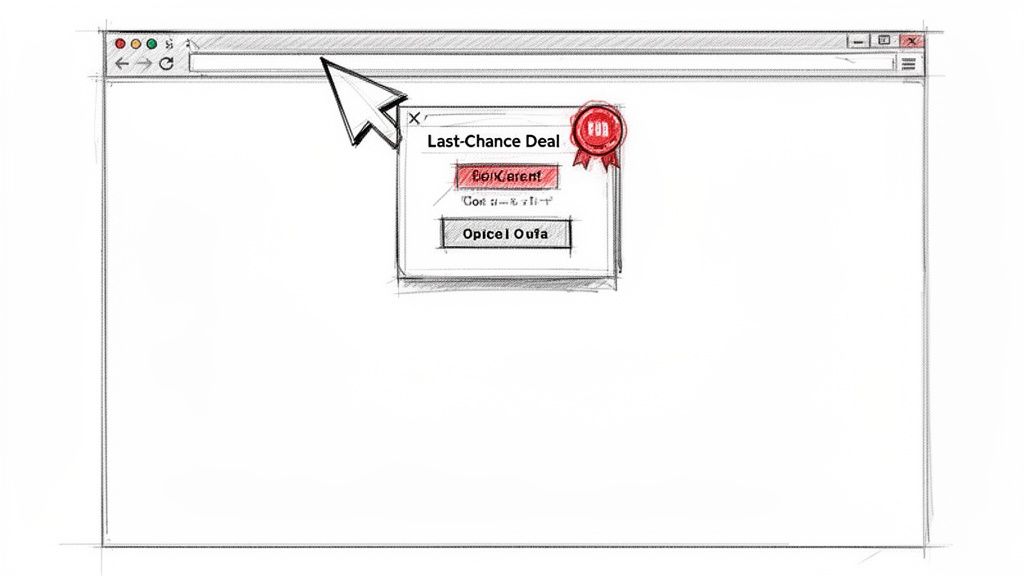
This type of pop up ads example capitalizes on the psychological principle of loss aversion. By presenting a compelling offer just as a visitor decides to leave, you reframe their departure as a missed opportunity. Instead of simply closing a tab, they are now actively turning down a tangible benefit, a psychologically more difficult decision to make.
An effective exit-intent strategy goes beyond a simple "Don't Go!" message. It must provide immediate and undeniable value.
Countdown timer pop-ups are a cornerstone of urgency marketing, leveraging the psychological principle of scarcity to compel immediate action. By displaying a real-time clock ticking down, these pop-ups create a tangible sense of a disappearing opportunity. This tactic is exceptionally effective for driving conversions on limited-time offers, flash sales, or special promotions, turning passive browsing into active purchasing.
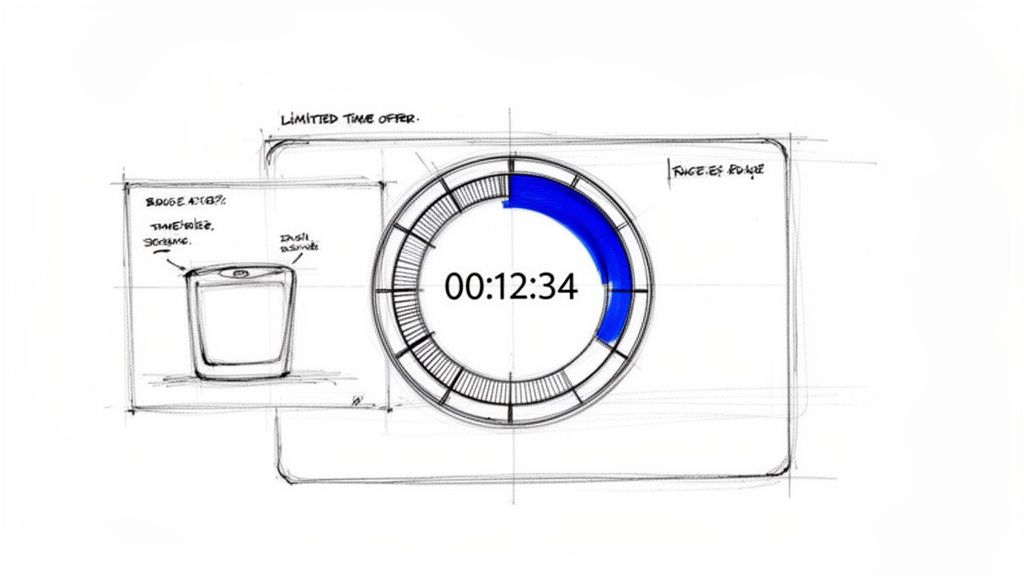
This pop up ads example transforms a standard promotion into an urgent event. The visual cue of the timer heightens the customer's fear of missing out (FOMO), making the offer feel more valuable and exclusive. Instead of thinking "I'll come back later," the customer is prompted to decide immediately, significantly shortening the path to purchase and reducing the likelihood of cart abandonment. This is a core feature for platforms like Quikly, which specialize in turning this psychological trigger into a revenue-generating machine.
An effective countdown timer does more than just display time; it creates a compelling narrative around the offer that demands a response.
Spin-to-win pop-ups transform lead capture and discount delivery into an engaging game. By presenting visitors with an interactive prize wheel, you gamify the experience, making them an active participant rather than a passive recipient of an offer. This approach leverages the psychology of anticipation and variable rewards, making the process of sharing an email address feel exciting and less transactional. For e-commerce brands, it's a dynamic way to boost engagement and email sign-ups simultaneously.
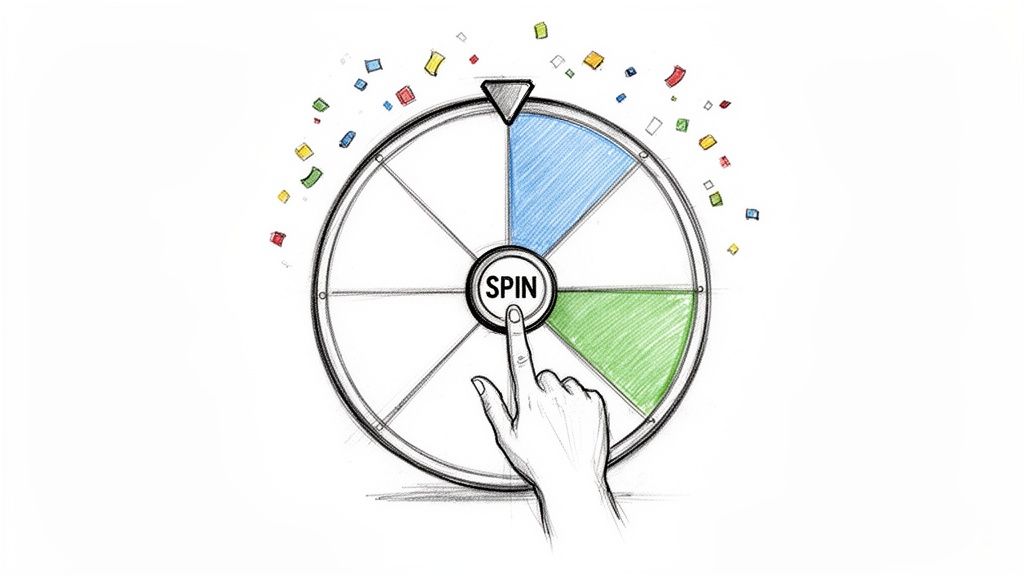
This type of pop up ads example taps into the powerful human desire for play and the thrill of winning. The uncertainty of the outcome keeps users engaged, and receiving a prize, even a small discount, triggers a positive emotional response associated with your brand. This initial positive interaction can significantly increase the likelihood of a first-time purchase and foster long-term customer loyalty.
A successful gamified pop-up is more than just a spinning wheel; it's a carefully calibrated conversion tool. It must feel fair, deliver real value, and seamlessly integrate into the customer journey.
Limited-time offer (LTO) pop-ups are a cornerstone of urgency-driven marketing, creating a powerful incentive for immediate action. These pop-ups announce special pricing, exclusive product access, or unique bundles that are only available for a specific, predetermined duration. By clearly defining an endpoint, they leverage the psychological principle of the scarcity heuristic, where consumers place a higher value on items that are less available. This is a core function of platforms like Quikly, which specialize in managing these time-bound promotional events.
This type of pop up ads example creates a sense of controlled urgency. Unlike a generic sale, an LTO makes the offer feel like a special event, prompting customers to prioritize their purchase decision. It transforms passive browsing into active participation, which is critical for driving immediate revenue and clearing inventory.
An effective LTO pop-up needs to be more than just a timer; it must communicate value and exclusivity clearly and convincingly.
Email capture pop-ups are a foundational strategy for e-commerce, designed to convert passive website traffic into a long-term marketing asset: your email list. These pop-ups typically offer an immediate incentive, such as a discount or exclusive content, in exchange for a visitor's email address. This tactic serves a dual purpose by both encouraging an immediate purchase with the offered discount and building a direct communication channel for future marketing efforts.
This type of pop up ads example leverages the principle of reciprocity. By offering a tangible benefit first (e.g., "Get 15% off your first order"), you create a psychological impetus for the visitor to reciprocate by providing their email. It transforms the interaction from a simple request into a fair value exchange, dramatically increasing opt-in rates and building brand goodwill from the first touchpoint.
An effective email capture pop-up must present an offer that is too good to ignore while remaining incredibly simple to complete.
Flash sale pop-ups are designed to inject a powerful dose of adrenaline into the shopping experience. They announce immediate, time-sensitive discounts on specific products or entire collections, leveraging the psychological principle of Fear Of Missing Out (FOMO) to drive a rapid surge in demand. This tactic is exceptionally effective for clearing out seasonal inventory, launching new products, or re-engaging a customer base with an exciting, can't-miss event.
This type of pop up ads example transforms passive browsing into active participation. When a visitor encounters a flash sale, the decision-making window is drastically shortened, compelling them to act now or risk losing the deal forever. Pioneers like Rue La La and Gilt Group built their empires on this model, demonstrating its power to create brand excitement and habitual visitor traffic.
A successful flash sale is more than just a discount; it's a well-orchestrated marketing event that must be executed flawlessly to maximize revenue and protect the customer experience.
Cart abandonment recovery pop-ups are a crucial tool for e-commerce brands, specifically targeting users who added items to their cart but did not complete the purchase. This strategy addresses the staggering industry average cart abandonment rate of nearly 70%. These pop-ups trigger on a user's subsequent visit, reminding them of the items they left behind and often presenting a compelling incentive to finalize their order.
This type of pop up ads example leverages the psychological principle of cognitive dissonance. By re-presenting the items a shopper previously desired, it reminds them of their initial purchase intent. Introducing a limited-time incentive, powered by platforms like Quikly, creates urgency and helps resolve the friction that originally caused them to abandon the cart, significantly increasing the likelihood of recovering the sale.
An effective cart abandonment strategy is more than a simple reminder; it must be timely, relevant, and persuasive to convert a hesitant shopper into a customer.
Product launch and exclusive access pop-ups are a strategic tool for generating hype and driving demand for new or limited-edition items. These pop-ups announce upcoming products and offer VIP access to specific, high-value customer segments. This approach harnesses the psychological power of exclusivity, making customers feel like insiders and creating a powerful incentive to purchase immediately. For brands launching sought-after collections, this is the premier method for managing demand and rewarding loyal customers.
This type of pop up ads example turns a simple product release into a must-attend event. It capitalizes on the fear of missing out (FOMO) and the principle of anticipation. By creating a tiered access system, as seen with Nike's SNKRS app or luxury brand drops, you build a sense of privilege and urgency. Customers are not just buying a product; they are gaining access to something not everyone can have.
An effective launch strategy transforms a pop-up from a simple notification into a critical part of the sales funnel. It must build excitement and convert that energy into revenue.
First-time buyer welcome pop-ups are designed to greet new visitors with a compelling offer, aiming to convert them on their very first visit. This strategy capitalizes on the initial interest of a potential customer by immediately presenting a clear incentive, such as a percentage discount or free shipping, in exchange for an email signup or simply as a welcome gesture. For e-commerce brands, this is a critical first touchpoint to reduce bounce rates and accelerate customer acquisition.
This type of pop up ads example leverages the psychological principle of reciprocity. By offering a gift upfront, you create a sense of obligation for the visitor to engage further, often leading to a purchase they might have otherwise postponed. It transforms a passive browsing session into an active transactional opportunity, making the visitor feel valued from the moment they arrive.
An effective welcome pop-up does more than just offer a discount; it initiates a relationship and drives immediate action.
VIP or loyalty member pop-ups are a sophisticated strategy for rewarding your most valuable customers, thereby increasing retention and lifetime value. These pop-ups trigger exclusive offers, early access to sales, or unique content specifically for logged-in members of your loyalty program. For e-commerce brands, this is a crucial tool to foster a sense of community and acknowledge the customers who contribute most to your revenue.
This pop up ads example leverages the psychological principle of reciprocity and exclusivity. By providing special treatment, you make your top customers feel recognized and valued, which strengthens their emotional connection to your brand. It transforms a transactional relationship into a relational one, making these customers less price-sensitive and more likely to act as brand advocates.
An effective VIP pop-up strategy goes beyond a simple "Thanks for being a member" message. It must deliver tangible, exclusive value that reinforces the benefits of their loyalty.
| Tactic | Implementation complexity | Resource requirements | Expected outcomes | Ideal use cases | Key advantages |
|---|---|---|---|---|---|
| Exit-Intent Pop-ups | Medium — requires cursor/behavior detection and desktop tuning | Moderate — front-end tracking, testing, Quikly integration; mobile adjustments needed | Higher engagement at exit; reduces cart abandonment | Recover abandoning visitors; last-chance discounts at checkout | Captures users at abandonment moment; highly relevant timing |
| Countdown Timer Pop-ups | Medium — real-time timers and server-side synchronization | Moderate — backend sync, design, cross-device testing | Increased urgency and immediate conversions for limited windows | Flash sales, time-limited drops, promotions tied to deadlines | Drives action via scarcity; clear visual urgency |
| Spin-to-Win Pop-ups (Gamified Offers) | High — interactive mechanics, personalization, prize logic | High — front-end animation, prize management, legal/compliance checks | Large engagement lift; higher email capture; variable conversion impact | List-building, first-time offers, engagement-focused campaigns | Highly engaging and fun; strong email capture and personalization |
| Limited-Time Offer (LTO) Pop-ups | Medium — timers, stock indicators, checkout links | Moderate — inventory sync, campaign automation, design | Clear conversion lift; predictable short-term sales | Time-bound promotions, product drops, inventory clearance | Simple, direct messaging; aligns with urgency-driven conversions |
| Email Capture Pop-ups (Newsletter Signup) | Low — simple form and basic targeting | Low — form, CRM integration, discount code delivery, compliance | Significant subscriber growth; immediate discount-driven conversions | Grow email lists; incentivize first purchase; build remarketing audience | Low friction; builds CRM lists for future campaigns |
| Flash Sale Pop-ups | Medium-High — live timers, product feeds, heavy-traffic readiness | High — inventory, backend scaling, cross-channel coordination | Large short-term sales spikes; rapid inventory movement | Major sales events, coordinated multi-channel promotions | Drives immediate purchases and clears inventory quickly |
| Cart Abandonment Recovery Pop-ups | High — cross-device cart tracking and personalization | Moderate-High — cart/session tracking, integrations, segmentation | Recover ~10–15% of abandoned cart value; higher conversion among intent users | Abandoned carts, high-value checkout reminders, retargeting | Targets high-intent users with personalized incentives |
| Product Launch / Exclusive Access Pop-ups | Medium — segmentation, tiered access rules, countdowns | Moderate — segmentation data, inventory planning, messaging | High engagement among targeted segments; pre-sales and buzz | New product drops, VIP early access, limited releases | Creates anticipation; rewards loyal customers; tests demand |
| First-Time Buyer Welcome Pop-ups | Low — simple targeting for new visitors | Low — discount delivery, basic tracking, email capture | Increased first-purchase rate (typically 5–15%) | Convert new visitors; onboard first-time buyers | Low friction; boosts first-order conversion and acquisition |
| VIP / Loyalty Member Exclusive Pop-ups | High — CRM integration, tiered benefit logic, personalization | High — robust customer data, program management, integrations | Higher lifetime value and retention among members | Loyalty programs, VIP offers, retention/upsell campaigns | Strengthens loyalty; increases customer lifetime value through personalization |
We've explored a comprehensive array of high-performing pop up ads example scenarios, moving from basic email captures to sophisticated, behaviorally-triggered moments. The core lesson is clear: effective pop-ups are not intrusive annoyances but precision-engineered tools for driving specific business outcomes. They are the frontline of a modern urgency marketing strategy, grounded in the science of consumer psychology.
By deconstructing examples like cart abandonment recovery, flash sale announcements, and VIP exclusives, we see that the most successful implementations share a common DNA. They leverage deep-seated psychological principles such as Fear of Missing Out (FOMO), scarcity, and social proof to create authentic and compelling reasons for a customer to act now.
The journey from inspiration to implementation requires a strategic mindset. Generic countdown timers and basic email forms are no longer enough to cut through the digital noise, especially for high-growth Shopify Plus merchants. The true opportunity lies in elevating your approach from simple interruption to intelligent interaction.
Translating the insights from each pop up ads example into tangible results for your store begins with a clear plan. Instead of randomly deploying a spin-to-win or an exit-intent offer, start by analyzing your customer journey and identifying key friction points or moments of opportunity.
Ultimately, mastering the art and science of pop-up advertising is about transforming a single moment of interaction into a catalyst for profit. By applying these psychological principles and strategic frameworks, you can turn your website's pop-ups from a passive tool into an active, revenue-generating engine that enhances the shopper's journey and strengthens your bottom line.
Ready to move beyond basic pop-ups and implement a truly sophisticated urgency marketing strategy? Quikly provides the advanced behavioral triggers and automation needed to turn every pop up ads example in this guide into a reality for your brand. Discover how our platform can help you drive revenue, protect margins, and build a more engaging customer experience at Quikly.