

ecommerce psychology
brand loyalty
best brand experiences
At its core, a customer retention program is a strategic plan designed to keep your existing customers returning. It's a deliberate shift from the constant, expensive pursuit of new buyers toward nurturing the relationships you've already established.
The primary objective is to encourage repeat business, build genuine loyalty, and ultimately, increase the lifetime value of every customer you've worked so hard to acquire. For Shopify merchants, this is the difference between a transactional business and a sustainable brand.
While acquiring new customers provides a top-line boost, the true engine of sustainable growth and profitability for an e-commerce brand is retention. This isn't a vague, feel-good metric; it's a direct lever for boosting ROI, protecting profit margins, and building a more resilient business.
This approach effectively moves your brand from a simple transactional model—"they bought something once"—to a relational one, where that first sale is just the beginning of a long and profitable journey.

This strategy is grounded in consumer psychology. Your existing customers have already overcome the most significant barrier: trusting you enough to make an initial purchase. This established trust makes them far more likely to buy again and more receptive to your future marketing efforts.
The economic case for retention is incredibly compelling, especially as the cost to acquire a new customer (CAC) continues to climb. Acquiring a new customer can cost up to 7x more than retaining an existing one—a significant drain on profit margins.
Behavioral economics research consistently shows that even minor improvements in retention have a disproportionately large impact on the bottom line. A mere 5% increase in customer retention can boost profits by an astounding 25% to 95%.
Why? Loyal customers spend more over time and are 50-67% more likely to try your new products. This directly increases their Customer Lifetime Value (LTV) and lowers your blended marketing costs.
By focusing on the customers you already have, you are investing in your most valuable asset. These are individuals who have proven their interest and are primed to become brand advocates, amplifying your marketing efforts through word-of-mouth.
Let's analyze the direct revenue and profit implications of focusing on acquisition versus retention. The numbers tell a clear story.
| Metric | Customer Retention Focus | Customer Acquisition Focus |
|---|---|---|
| Cost | Significantly lower; up to 7x cheaper | High and often rising |
| Conversion Rate | High (60-70% probability) | Low (5-20% probability) |
| Profitability Impact | A 5% boost can increase profits by 25-95% | Lower initial profitability due to high CAC |
| Average Order Value | Tends to increase over time | Typically lower on the first purchase |
| Marketing Efficiency | Higher ROI, leverages existing trust | Lower ROI, requires breaking through noise |
The table makes it obvious: a retention-focused strategy creates a healthier, more predictable business model, especially for Shopify and Shopify Plus merchants.
When you implement a structured retention program, you unlock several compounding financial advantages.
Ultimately, focusing on retention transforms your customer list from a record of one-off transactions into a powerful, revenue-generating community. For a closer look at building out your own plan, check out these tips on maximizing customer retention with small business loyalty programs.
Selecting the right customer retention program isn't about adopting the most popular option; it's a strategic decision that must align with your specific business goals, product type, and the psychological triggers that motivate your customers.
The motivation for a monthly coffee subscription differs vastly from a referral for a luxury fashion brand. The most successful Shopify stores understand this and often layer multiple strategies to engage different customer segments. The key is to match the program's function to a desired business outcome—be it higher purchase frequency, increased AOV, or winning back at-risk customers.
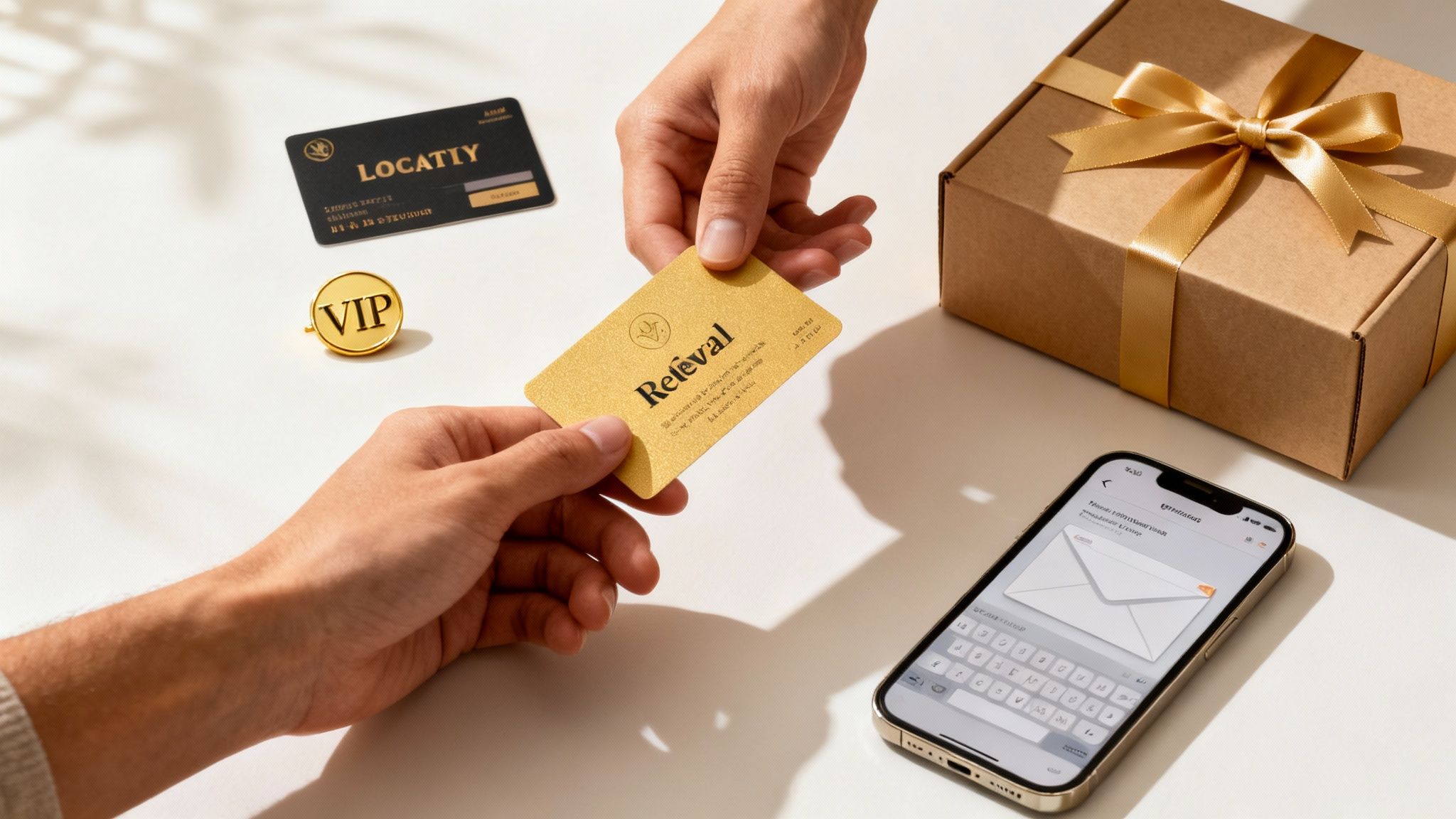
Loyalty programs are often the first strategy considered, and for good reason. They operate on a simple psychological loop of positive reinforcement: a customer performs a desired action (e.g., a purchase) and receives a reward (points), encouraging repetition of the behavior. It’s a straightforward, transactional relationship that’s easy to understand and implement.
This model is highly effective for businesses with frequent repeat purchases, such as beauty, CPG, or pet supply brands. The goal is to make returning to your store an automatic decision. A dedicated loyalty program can quickly become the backbone of your entire retention effort.
For Shopify merchants, apps like Smile.io or LoyaltyLion integrate seamlessly, automating point tracking and redemption. To really dig into the mechanics, this guide to loyalty programs is a great resource for structuring one that gets results.
VIP programs tap into powerful psychological drivers: the human desire for status and exclusivity. These programs go beyond simple points, rewarding your best customers with special access, recognition, and perks unavailable to others. This fosters a sense of being in an "inner circle," forging a deeper emotional connection to your brand.
This strategy is exceptionally effective for lifestyle, fashion, or high-end brands where social status is a key purchase driver. The goal isn’t just to get more purchases; it’s to turn your top 10-20% of customers into genuine brand evangelists.
By creating tiers—think Bronze, Silver, Gold—you’re basically gamifying the shopping experience. This plays on a psychological bias called the "endowed progress effect," where people are far more motivated to finish something once they feel like they've already made some headway.
From a retention perspective, subscriptions are the gold standard. They are built on the principles of convenience and consistency, making repeat business the default setting rather than an active choice. This model is perfect for consumable products that require regular replenishment—vitamins, skincare, coffee, and more.
From a business standpoint, the objective is crystal clear: maximize Customer Lifetime Value (LTV) and build a predictable, stable revenue stream. For stores on Shopify, apps like Recharge or Skio make it incredibly easy to manage recurring payments and turn a standard e-commerce shop into a subscription powerhouse.
Referral programs leverage two potent psychological forces: social proof and reciprocity. A recommendation from a trusted friend is infinitely more powerful than any advertisement. By rewarding both the referrer and the new customer, you create a self-perpetuating, win-win growth loop.
This is a crucial strategy for brands with passionate communities or products that naturally generate conversation. Your primary goal here is to reduce your Customer Acquisition Cost (CAC) by turning your existing customers into your most effective marketing channel. You can even automate the whole process by integrating your program with email and SMS platforms like Klaviyo or Attentive to ask for referrals at just the right moment.
Finally, you need a plan for customers who are disengaging. Win-back campaigns are your tool for re-engaging customers on the verge of churning. These campaigns rely heavily on urgency and compelling offers to cut through the noise. The core psychological trigger is often loss aversion—the fear of missing out on a valuable opportunity can be a powerful motivator to act.
However, a generic "we miss you" email is no longer sufficient. A sophisticated win-back campaign, especially one powered by a platform like Quikly, can create a time-sensitive "event" around a high-value offer. This transforms a passive discount into an exciting, immediate experience, driving revenue while recovering a valuable customer.
Launching a customer retention program without tracking the right metrics is like flying blind. To truly understand the ROI of your efforts, you must focus on the key performance indicators (KPIs) that reveal the true story of customer behavior and its impact on your store's financial health.
These are not vanity metrics like social media engagement. We're talking about the hard data that proves your retention strategy is protecting profit margins and generating sustainable revenue. For anyone on Shopify, this information is readily available in your analytics dashboard or through integrated tools like Klaviyo.
It's easy to be distracted by metrics that look impressive but offer little business insight. A truly actionable KPI is one you can directly influence with your retention campaigns and one that has a clear, undeniable link to your bottom line.
When you focus on the right data, you can build a rock-solid, data-driven case for your retention programs and continually optimize them for better results.
To get the full picture of how your programs are performing, you need to keep a close eye on these four core metrics. Together, they give you a balanced view of revenue growth, customer loyalty, and any potential red flags.
Customer Lifetime Value (LTV): This is the ultimate metric. It's the total revenue you can expect from a single customer over their entire relationship with your brand. A rising LTV is the clearest indicator that your retention efforts are succeeding, proving that customers are staying longer and spending more. You can pull this data right from your Shopify Analytics under the "Customers" reports.
Repeat Purchase Rate: This metric is beautifully simple: what percentage of your customers have bought from you more than once? It’s a direct gauge of customer satisfaction and loyalty. A healthy repeat purchase rate means your product and experience are compelling enough to bring customers back, which is the core purpose of a retention program.
Customer Churn Rate: Churn is the inverse of retention. It measures the percentage of customers who cease to be active over a specific period. Consider it a critical health indicator for your business. A high churn rate signals a leak in your customer journey, prompting you to implement fixes like a targeted win-back campaign or an improved post-purchase experience.
Net Promoter Score (NPS): While other metrics focus on financial outcomes, NPS measures sentiment. It asks customers, "On a scale of 0-10, how likely are you to recommend our brand to a friend?" This score helps you understand the emotional connection people have with your brand, which is often a leading indicator of future loyalty and their propensity for word-of-mouth marketing.
The global push toward structured retention isn't just a trend; it's a fundamental shift. Market forecasts predict the loyalty program industry will explode from $5.5 billion to over $28.65 billion by 2030. Plus, a staggering 95% of companies report that their loyalty members spend more than other customers. With average retail retention rates sitting around 63%, there’s a massive opportunity to get ahead by focusing on these KPIs. You can dig deeper into data on these global patterns to really understand the competitive landscape.
Let's transition from theory to action. Understanding the why behind customer retention is crucial, but launching a program can feel daunting. The good news: for Shopify merchants, the process is surprisingly straightforward when broken down into manageable steps.
This isn't just about installing an app. It's about building an experience that deepens customer relationships and delivers a measurable impact on your bottom line.
Before evaluating tools or rewards, you must define your objective. What does success look like? Are you trying to increase purchase frequency, boost average order value (AOV), or re-engage dormant customers?
This single decision will shape every subsequent choice.
A one-size-fits-all program yields mediocre results. The real power lies in segmenting your audience and tailoring the experience. Using data from Shopify Analytics or a CDP like Klaviyo, you can easily group customers based on their behavior.
Start with these fundamental segments:
With clear goals and audience segments, you can select your tools. The Shopify App Store is filled with powerful options that integrate with your store, email, and SMS platforms. In fact, many of the best Shopify marketing apps are built specifically for this.
When you're browsing for an app, focus on two things: how well it integrates with your current stack (like Klaviyo or Attentive), and how much it can automate. Smart automation is what separates a powerhouse program from a manual headache.
Your rewards must be valuable enough to influence behavior. While generic discounts can work, they also erode profit margins. Think beyond a simple percentage-off and offer rewards that reinforce your brand's unique value.
Actionable Takeaway: Reward Ideas That Protect Your Margins:
A brilliant program is useless if customers don't know it exists. Plan a multi-channel launch campaign—use email, SMS, and on-site banners to announce your new program and make the benefits crystal clear.
From the moment you go live, begin tracking your core KPIs.
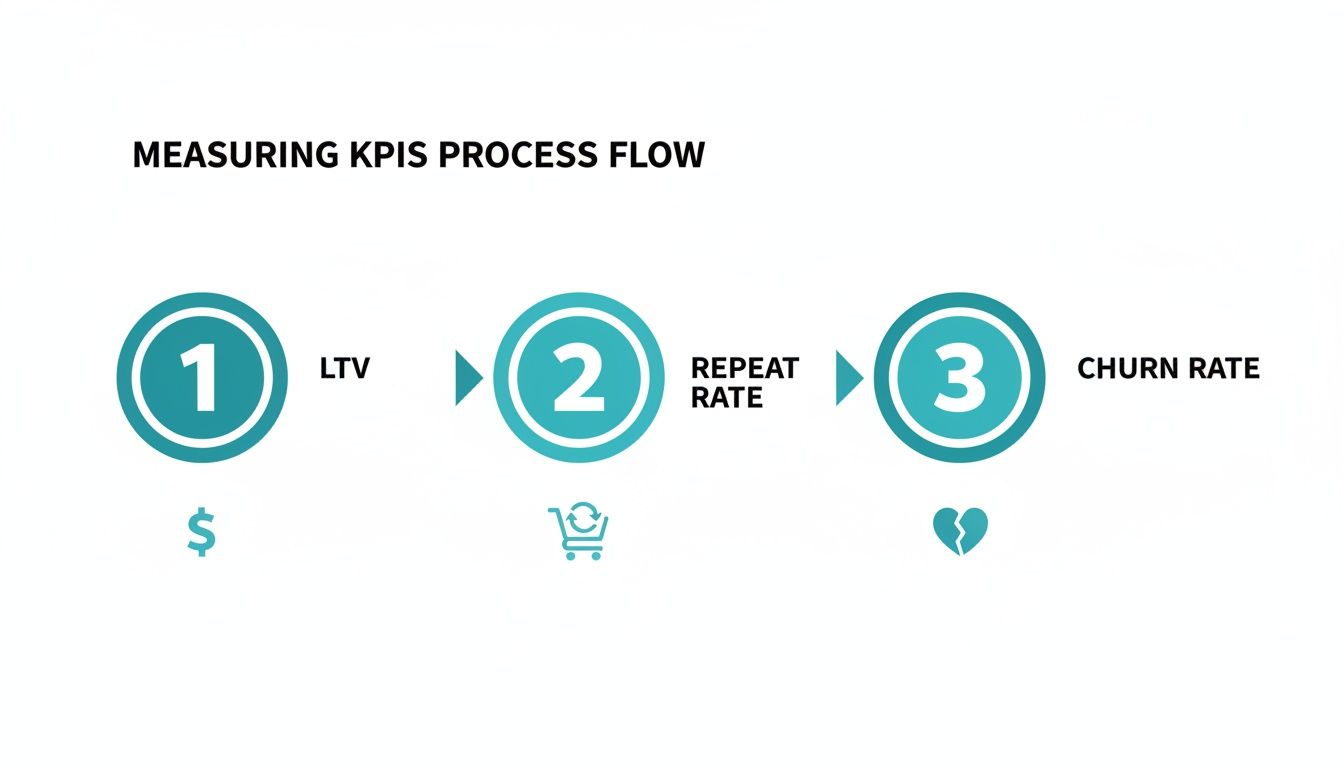
This flow shows exactly what to watch. A healthy program will drive up LTV and Repeat Purchase Rate while pushing your Churn Rate down. Those are the numbers that prove your investment is paying off and tell you where to focus your efforts next.
Standard customer retention programs are effective, but what if you could transform them from a passive system into an active, on-demand revenue generator? This is where the science of urgency marketing comes in.
This isn't about slapping a generic countdown timer on an email. True urgency marketing is the strategic application of behavioral psychology to make your offers feel more valuable, exclusive, and compelling. It takes the relationship you've built and adds a spark of excitement that drives immediate action.

What elevates a high-impact "Moment" from a basic discount? It's the science of human decision-making. By understanding these psychological triggers, you can build campaigns that don't just sell products but deepen your customers' emotional connection to your brand. Quikly is the expert in applying this science to enhance banners, popups, and the entire shopper journey.
Here are the core principles to master:
These triggers can elevate your existing retention programs. Instead of passively waiting for customers to redeem points, you can proactively create "Moments" that drive sales and deepen brand affinity. Basic timer and popup apps simply can't replicate this level of sophisticated automation.
Imagine how Quikly’s "Moments" can power these strategies:
Intelligent urgency isn’t manipulation; it’s motivation. By aligning exciting, time-sensitive offers with the psychological drivers of your best customers, you create a win-win scenario. They receive exclusive value, and you generate profitable revenue while strengthening brand loyalty.
The business impact is significant. You move beyond simply increasing conversion rates to directly influencing profitability. By creating demand without resorting to deep, margin-eroding discounts, you can manage inventory, generate sales during slow periods, and boost the lifetime value of your most important customers. For a deeper dive, our guide on using urgency marketing to achieve your loyalty goals is packed with specific campaign ideas.
The data supports this approach. The most powerful retention programs combine CRM-driven personalization with compelling psychological triggers. With 59% of U.S. customers ready to abandon a brand after several poor experiences, providing a strategic, high-value reason to stay is more critical than ever. On the flip side, 95% of companies report that their loyalty members spend more.
When you integrate sophisticated urgency into these relationships, you don't just reduce churn—you amplify loyalty and drive real, profitable growth.
Embarking on a customer retention strategy often raises practical questions. Getting clear answers can be the difference between a great idea that fizzles out and a program that delivers tangible results.
Here are some of the most common questions from Shopify merchants.
There's no single magic number; your investment should be data-driven. A smart approach is to benchmark against your Customer Acquisition Cost (CAC). A successful retention program should always cost less per customer than acquiring a new one.
Start by calculating the potential profit lift. Given that a 5% increase in retention can boost profits by 25% or more, investing a fraction of that expected gain is a sound financial decision.
Actionable Takeaway: Start small with a program that has a clear ROI, like an automated win-back campaign. Use the revenue generated from that initial test to justify scaling your budget for broader initiatives.
For small businesses, simplicity and effectiveness are key. The two most impactful and easiest programs to launch are a basic points-based loyalty program and a targeted win-back email campaign.
Neither requires extensive technical expertise, and both provide a clear, trackable impact on your repeat purchase rate.
To measure success, you must look beyond vanity metrics and focus on KPIs that directly reflect changes in customer behavior and your bottom line. Track these three core metrics before and after launching your program.
A program that is truly working will show a clear, positive shift in these numbers. This is how you prove it's not a cost center, but a profitable investment.
Ready to transform your retention strategy with high-impact urgency? Quikly helps you create exciting, time-sensitive marketing "Moments" that re-engage customers, reward loyalty, and drive profitable revenue without deep discounts. Learn more about Quikly's approach.