7 Best Ecommerce Website Design Strategies for Driving Revenue
tipsliststrategies
In the competitive world of online retail, a store's success is directly tied to its design. A visually appealing and intuitive interface isn't just a bonus; it's a fundamental driver of conversions, revenue, and customer loyalty. The best ecommerce website design seamlessly blends brand identity with a frictionless user experience, guiding shoppers from discovery to checkout with strategic precision. This process involves more than just aesthetics; it's about applying proven behavioral economics principles like social proof and scarcity to create a compelling journey that encourages action.
This curated list breaks down the premier platforms and marketplaces for sourcing exceptional ecommerce design. We move beyond surface-level observations to provide a deep strategic analysis of what makes each option effective. For each platform, you will find a detailed breakdown of its core strengths, potential drawbacks, and the specific type of business it serves best, from agile startups on Shopify to large-scale Shopify Plus enterprise merchants. To lay a strong foundation for your online store, it's crucial to understand the essential e-commerce website must-haves that provide a competitive advantage.
Our goal is to equip you with the insights needed to make an informed decision. You will discover actionable takeaways and replicable strategies, including how to implement sophisticated urgency tactics that elevate standard popups and basic countdown timers into powerful revenue-generating tools. We’ll explore how to find designers who understand the science of conversion, helping you build a site that not only looks professional but also performs as a powerful engine for business growth, addressing critical business impacts like profit margin protection and inventory management.
1. Shopify Theme Store
For merchants building on the Shopify platform, the official Shopify Theme Store is often the most strategic starting point for achieving a top-tier ecommerce website design. It's a curated marketplace offering themes built by vetted developers, all optimized to work seamlessly with Shopify's core features and the broader app ecosystem. This direct integration significantly lowers the technical risk and maintenance overhead compared to a fully custom build, providing a reliable foundation for growth.
Unlike generic template marketplaces, every theme here is designed specifically for commerce. They come pre-packaged with essential UX patterns for product discovery, filtering, and checkout, which are critical for maximizing sales. This focus ensures that from day one, your store is built on a framework designed to convert visitors into customers, directly impacting your ROI.
Strategic Analysis: Built for Conversion
The true power of the Shopify Theme Store lies in its commitment to conversion-focused design principles. Many themes include built-in features that leverage proven consumer psychology to drive action.
Integrated Urgency and Scarcity: Modern themes often come with native sections for countdown timers, "low in stock" alerts, and flash sale banners. These tools tap into the principle of FOMO (Fear of Missing Out), a powerful behavioral trigger that encourages immediate purchase decisions by creating a sense of scarcity.
Social Proof Elements: Customer review modules, testimonial sections, and "featured in" logos are frequently included. This leverages social proof, a psychological phenomenon where people conform to the actions of others under the assumption that those actions are the correct behavior, building trust and reducing purchase anxiety.
Optimized Product Discovery: Advanced filtering, mega menus, and predictive search functionalities are standard in premium themes. These features reduce cognitive load and help shoppers find what they need faster, directly improving the user experience and conversion potential.
Key Insight: Using a theme from the official store ensures compatibility with Shopify's Online Store 2.0 architecture. This allows for section-based customization on every page, giving merchants granular control over their site's layout and content without needing to write code.
Actionable Takeaways & Implementation
Choosing the right theme is the first step; customizing it for maximum business impact is next.
Prioritize Performance: Use Shopify's filtering options to sort themes by features like "Quick view" and "Sticky cart." Test the demo stores using Google's PageSpeed Insights to ensure the theme is fast, as speed is a critical factor in retaining customers and protecting revenue.
Amplify Urgency with Quikly: While themes provide basic building blocks, a tool like Quikly elevates your strategy from simple timers to sophisticated behavioral marketing. Integrate Quikly's "Moments"—dynamic countdown timers and limited-time offers—directly into your theme's announcement bars or custom sections. This transforms a static design element into a personalized, high-urgency marketing event that drives significant revenue and can integrate with your Klaviyo and SMS marketing flows. For deeper insights, you can learn more about how to improve your Shopify conversion rate.
Validate with Demos: Before purchasing a paid theme (which typically range from $200-$400 USD as a one-time fee), always utilize the unlimited free trial. Install the demo on your store, add your own products and branding, and test the complete user journey from homepage to checkout. This ensures the theme aligns with your brand and operational needs before you commit.
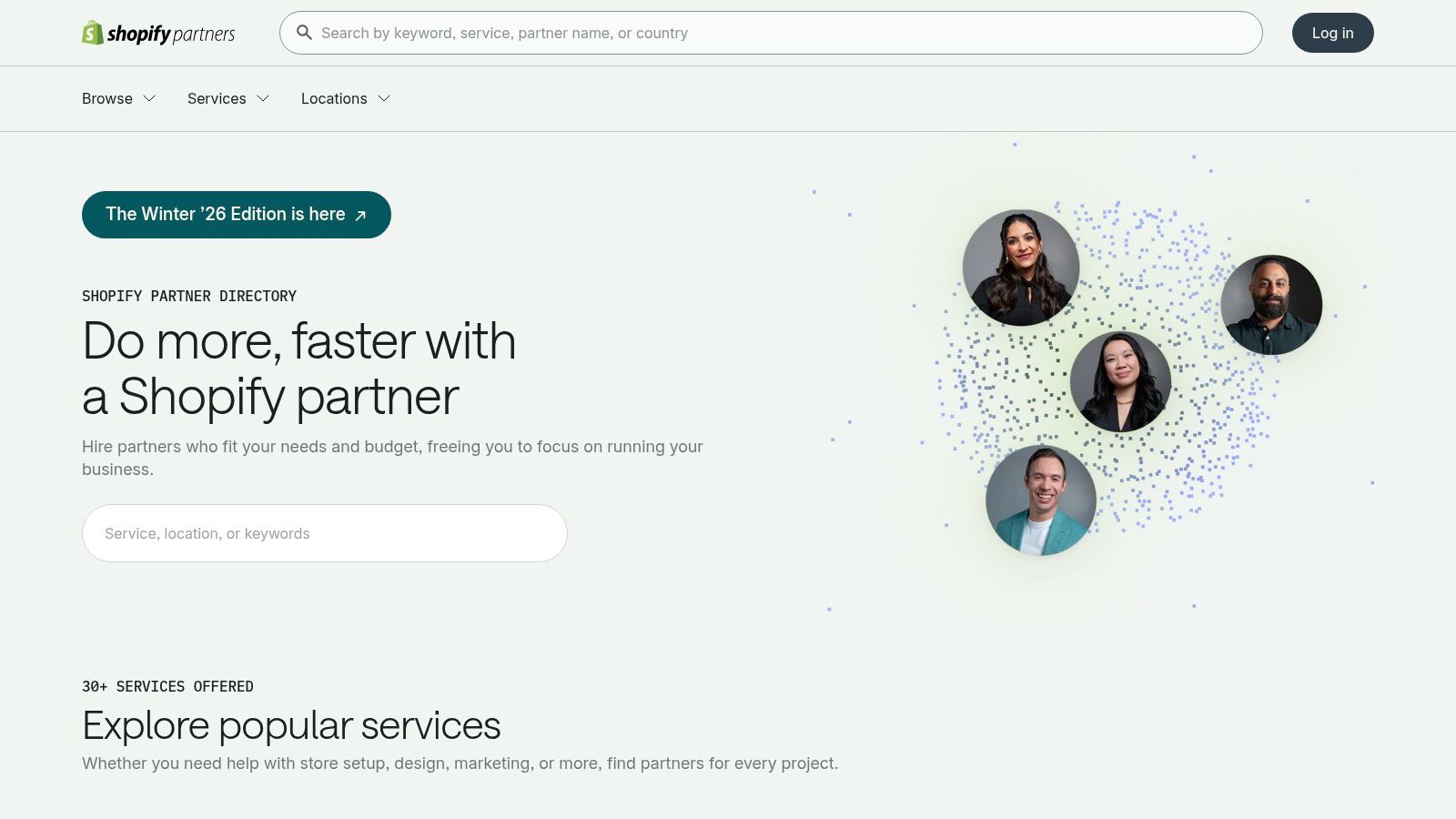
2. Shopify Partner Directory
For brands whose vision for the best ecommerce website design extends beyond pre-built themes, the official Shopify Partner Directory is the essential next step. This is Shopify's curated marketplace of vetted agencies and freelancers specializing in everything from custom theme development and headless builds to conversion rate optimization. Engaging a partner from this directory allows for a truly bespoke design tailored to a brand's unique identity and complex functional requirements, moving past the limitations of templates.
Unlike generic freelancer platforms, every professional listed here has proven expertise within the Shopify ecosystem. This ensures they understand the platform’s nuances, from liquid coding to API integrations and Shopify Plus complexities. This significantly reduces project risk and ensures the final build is not only beautiful but also stable, scalable, and optimized for performance, protecting your investment.
Strategic Analysis: Tailored for Maximum Impact
Hiring a partner is about more than just aesthetics; it's a strategic investment in a high-performance commerce engine. Experts from the directory can implement advanced psychological triggers and UX patterns that generic themes often lack.
Custom-Coded Urgency: An agency can build unique, on-brand urgency features directly into your theme. This moves beyond basic timers to include dynamic progress bars for free shipping, real-time "viewers also looking at this" counters based on social proof, or bespoke low-stock indicators that perfectly match your site's design for a more persuasive user experience.
A/B Testing and Optimization: The most significant advantage is the ability to scientifically test design elements. Partners can implement A/B testing frameworks to validate which headlines, button colors, or product page layouts generate the most revenue, grounding design decisions in hard data rather than intuition.
Headless Commerce Architecture: For enterprise-level merchants on Shopify Plus, partners can build headless storefronts. This separates the front-end presentation layer from the back-end commerce engine, enabling unparalleled design flexibility, sub-second page loads, and omnichannel experiences that are impossible with traditional theme structures.
Key Insight: The Partner Directory includes tiered rankings (like Shopify Plus Partners) that signal a partner's experience with large-scale, complex projects. This system simplifies due diligence for enterprise brands seeking a reliable team for high-stakes initiatives like platform migrations or headless builds.
Actionable Takeaways & Implementation
Choosing a partner is a critical business decision. Here’s how to approach it strategically.
Define a Clear Project Scope: Before contacting partners, create a detailed brief outlining your business goals (e.g., increase AOV, reduce abandonment), required features, technical needs (e.g., Klaviyo integration), and budget. Use the directory's filters for services, industry, and location to shortlist 3-5 potential partners who align with your scope.
Architect for Advanced Urgency: When discussing the project, specify your need for sophisticated urgency marketing. Ask how they can integrate a tool like Quikly to power dynamic, limited-time offers and product drops. An expert partner can build custom Liquid sections or API connections that allow Quikly’s high-impact moments to blend flawlessly with your bespoke design, creating a powerful automated revenue-driving system that basic apps can't match.
Vet Portfolios and References: Thoroughly review each partner's portfolio, paying close attention to live sites they have built. Check their performance with PageSpeed Insights and analyze their UX. Always ask for client references to validate their process, communication, and ability to deliver on time and on budget before signing a contract.
3. ThemeForest (Envato)
For brands seeking a vast selection of designs across multiple ecommerce platforms like Shopify, WooCommerce, and BigCommerce, ThemeForest by Envato is a massive digital marketplace. It offers thousands of themes from independent developers at highly competitive price points, making it an excellent resource for businesses needing a cost-effective path to achieving a professional ecommerce website design. This broad marketplace is particularly useful for launching MVPs (Minimum Viable Products), testing new brand concepts, or creating seasonal microsites without a significant upfront investment.
Unlike curated, platform-specific stores, ThemeForest provides unparalleled variety. This volume allows merchants to find highly niche designs and layouts that might not be available elsewhere. The community-driven model, featuring user ratings, sales data, and public comments, provides a layer of social proof to help vet the quality and reliability of a theme before purchase.
Strategic Analysis: Balancing Variety and Vetting
The primary advantage of ThemeForest is its sheer scale, which opens up a world of creative possibilities. However, this also means quality can vary, requiring a strategic approach to selection that prioritizes both aesthetics and technical performance.
Social Proof and Recency: The platform's built-in sorting filters are crucial. Prioritizing themes with high sales volumes, positive reviews, and recent updates helps mitigate the risk of purchasing an outdated or poorly supported product. This taps into the psychological principle of social proof, trusting the collective experience of other buyers.
Feature-Rich vs. Bloated: Many themes come bundled with premium plugins and page builders, offering significant value. While these add-ons can provide extensive customization options, they can also introduce performance overhead. It's essential to analyze whether these bundled features are necessary or if they will simply slow down the site, negatively impacting the user experience, SEO, and ultimately, revenue.
Author Reputation as a Signal: Experienced authors on ThemeForest often have a portfolio of well-maintained themes and a track record of responsive support. Vetting the author's profile, including their overall rating and response times in the comment section, is a key part of the due diligence process.
Key Insight: ThemeForest is a powerful tool for rapid prototyping and market testing. A lower-cost theme (often $40-$90 USD) allows a brand to launch quickly, gather real-world data on user behavior, and validate a concept before committing to a more expensive, custom-developed ecommerce website design.
Actionable Takeaways & Implementation
Navigating the marketplace effectively is key to finding a high-performing theme that drives business results.
Scrutinize Live Demos: Never purchase a theme without thoroughly testing its live demo. Use tools like Google PageSpeed Insights to analyze its performance on both desktop and mobile. Click through the entire user journey, from product pages to the checkout, to identify any UX friction or design flaws.
Enhance Urgency with Targeted Overlays: Many ThemeForest designs provide basic banner sections. You can supercharge these by integrating a tool like Quikly to deploy dynamic, limited-time offers and flash sales. Instead of a generic "Sale" banner, you can run a Quikly Moment that creates a personalized sense of anticipation and FOMO, driving immediate action far more effectively than a static design element and focusing on revenue generation rather than just email capture.
Verify Support and Documentation: Before buying, carefully read the support policy, which varies by author. Check for comprehensive documentation and a history of regular updates in the theme's changelog. A theme without ongoing support can become a security risk and may break with future platform updates.
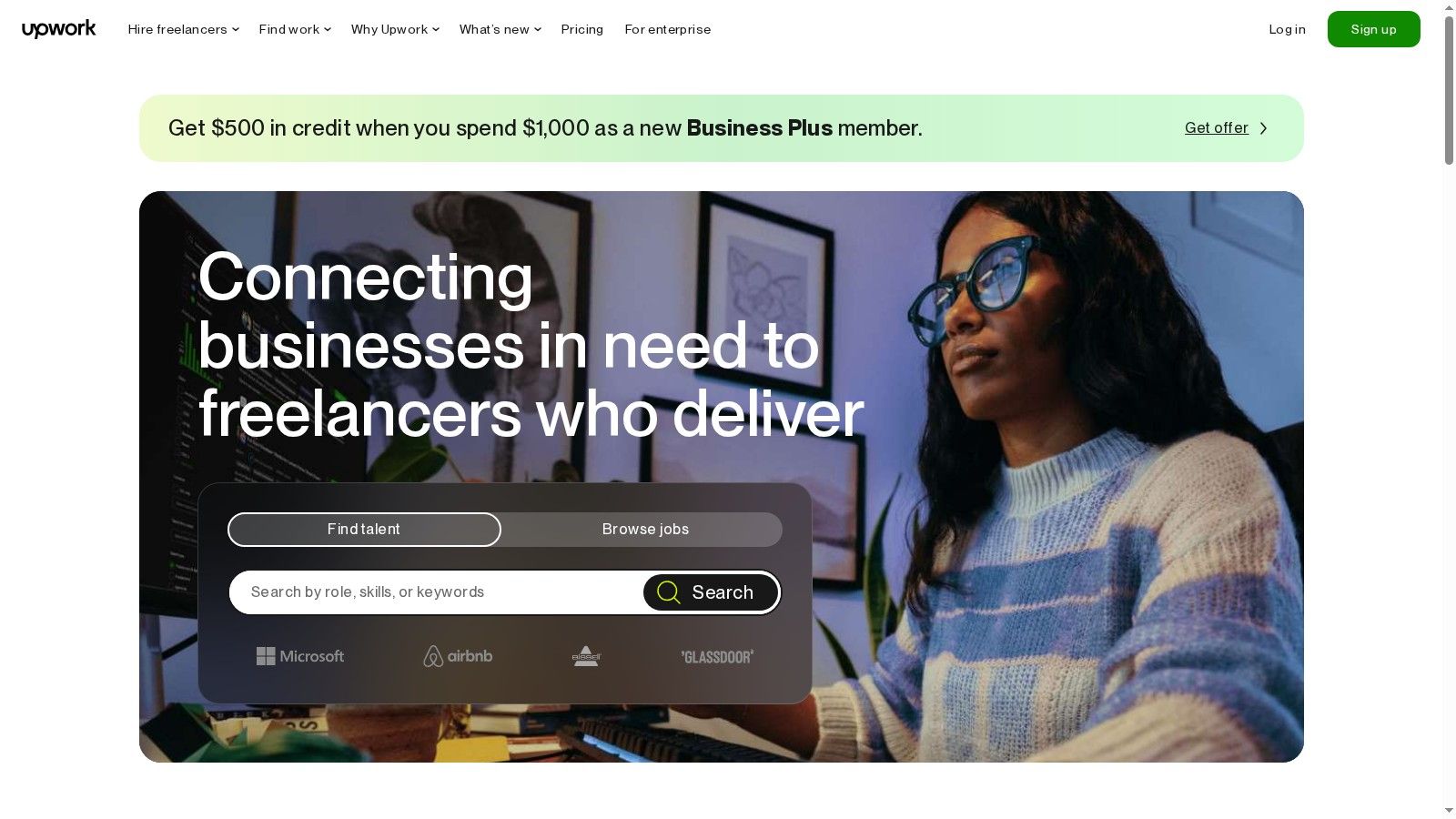
4. Upwork
For brands seeking a bespoke or highly customized ecommerce website design, hiring a specialized freelancer or agency is the most direct path. Upwork is a leading global marketplace where businesses can connect with a vast pool of design talent, including certified Shopify, Webflow, and WooCommerce experts. This approach moves beyond templates, offering tailored solutions for unique branding, complex functionality, or ongoing conversion rate optimization (CRO) needs.
Unlike a theme store, Upwork provides access to human expertise. You can hire for a one-off project like a full site redesign, or establish a long-term relationship with a UX designer for continuous improvement. The platform’s flexible engagement models (hourly, fixed-price, and retainers) and built-in tools like escrow and time-tracking provide a secure framework for collaboration.
The primary advantage of Upwork is the ability to handpick talent with specific, conversion-focused skills that go beyond what a pre-built theme can offer. This allows merchants to implement sophisticated psychological triggers and user experiences tailored to their exact audience.
Custom CRO Implementations: An experienced ecommerce developer can build custom sections that integrate dynamic urgency elements. This could include personalized "low in stock" alerts based on a user's browsing history or unique countdown timers for segmented customer groups, tapping directly into scarcity and FOMO principles based on consumer psychology research.
Behavioral A/B Testing: You can hire UX specialists to conduct rigorous A/B tests on your site's design. They can test different layouts, calls-to-action, and social proof placements (like testimonial carousels or review snippets) to scientifically determine what drives the most revenue for your specific products.
Optimized User Journeys: A freelancer can analyze your user flow and design a completely custom navigation and checkout process. This reduces friction and cognitive load, directly addressing the high cart abandonment rates—which average nearly 70% industry-wide—by making the path to purchase as seamless as possible.
Key Insight: The true value of Upwork lies in finding talent to execute a specific vision. You can filter candidates by their "Job Success Score," platform-specific experience (e.g., "Shopify Plus"), and portfolio to find a designer or developer capable of building a truly unique and high-performing ecommerce storefront.
Actionable Takeaways & Implementation
Hiring effectively on Upwork requires a clear strategy to ensure a positive ROI.
Create a Detailed Project Brief: Before posting a job, clearly define your business goals. Are you trying to improve mobile conversion rates, reduce bounce rates, or implement a new design? Provide brand guidelines, links to competitor sites you admire, and specific revenue outcomes you want to achieve.
Vet Candidates Thoroughly: Look beyond a freelancer's profile. Review their portfolio for examples of ecommerce sites they have designed or developed. During interviews, ask specific questions about how they approach conversion optimization and how they would implement urgency tactics on a site like yours.
Implement Advanced Urgency with Your Hire: Once you've selected a developer, task them with integrating a sophisticated urgency tool like Quikly. A skilled developer can embed Quikly’s dynamic limited-time offers and high-impact countdowns seamlessly into your custom design, creating marketing moments that feel native to your brand experience and drive immediate revenue. This combines the flexibility of custom design with the power of proven psychological marketing science.
5. Fiverr
For merchants needing targeted expertise for specific design tasks, Fiverr offers a unique marketplace model. Instead of committing to a large agency or a single theme, you can hire freelance specialists for scoped-out projects, known as 'gigs'. This approach is ideal for executing quick-win improvements, such as a homepage refresh, product page optimization, or implementing a new feature without the overhead of a full-scale redesign.
Unlike traditional freelance platforms, Fiverr’s project-catalog structure provides transparent, upfront pricing and defined delivery timelines. This significantly reduces ambiguity and is perfect for brands that need to deploy specific, conversion-focused design elements quickly and efficiently. You can find experts specifically for Shopify, ensuring they understand the platform's nuances and can work within its ecosystem.
Strategic Analysis: Task-Based Optimization
The strategic advantage of using Fiverr is its surgical approach to ecommerce design. Rather than a complete overhaul, you can focus budget and resources on high-impact areas of your site, directly addressing friction points in the customer journey and leveraging consumer psychology.
Targeted CRO Implementation: Many sellers specialize in Conversion Rate Optimization (CRO). You can hire an expert specifically to implement urgency-based features, such as sticky "add to cart" buttons or trust badge sections below payment options, which leverages the psychological principle of social proof to reduce cart abandonment.
A/B Testing Support: Need a new product page layout to test against your current one? A Fiverr gig can deliver a functional variation quickly, allowing you to run data-driven experiments to find the highest-converting design without derailing your internal development roadmap.
Custom Section Development: If your theme lacks a specific feature, like a "Shop the Look" gallery or a custom countdown timer section, you can hire a developer to build it as a reusable Shopify 2.0 section. This adds powerful functionality while maintaining your brand’s aesthetic.
Key Insight: Fiverr's seller tier system (including "Top Rated" and "Pro") acts as a filter for quality and reliability. By focusing on sellers with extensive portfolios and positive reviews, you can mitigate risk and partner with proven experts for critical design tasks.
Actionable Takeaways & Implementation
Maximizing Fiverr requires a clear objective and a strategic approach to selecting and managing freelancers.
Define a Hyper-Specific Brief: The best results on Fiverr come from clear, detailed briefs. Instead of "improve my product page," specify "Design and code a new 'Why Buy From Us' section with three icon-and-text blocks and integrate it below the product description on my Shopify Dawn theme."
Hire for Urgency Audits: Engage a CRO specialist on Fiverr to perform an audit of your site and identify opportunities to inject urgency. They can pinpoint where a strategically placed countdown timer or limited-stock alert would be most effective, turning a generic design into a high-converting one. This approach aligns with core conversion rate optimization best practices.
Start Small to Validate Quality: Before commissioning a larger project, hire your top candidate for a small, low-risk task, such as fixing a minor CSS bug or creating a new banner graphic. This is a low-cost way to evaluate their communication, technical skill, and reliability before committing more significant resources.
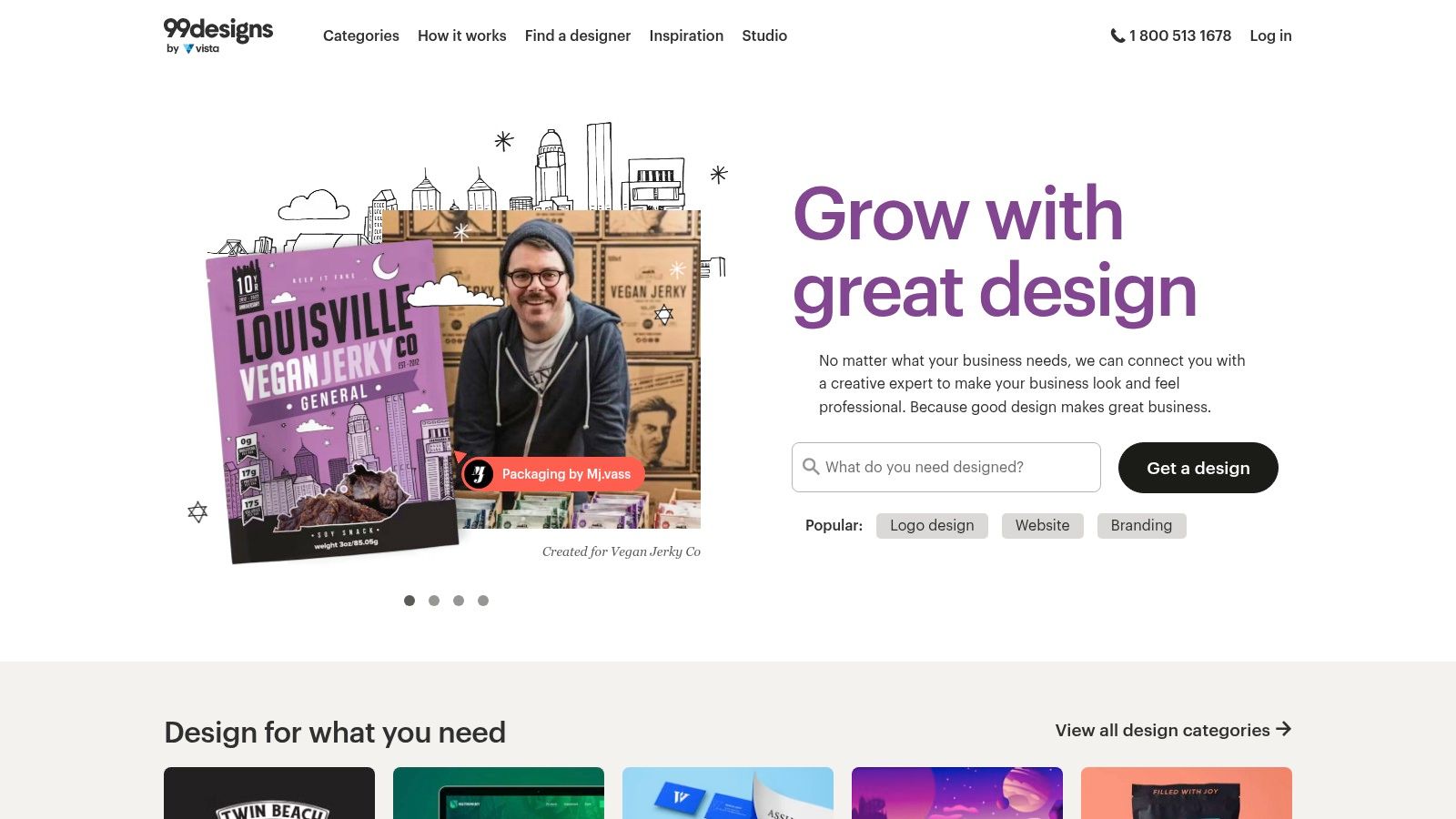
6. 99designs by Vistaprint
For brands seeking a truly unique visual identity without committing to a single designer upfront, 99designs by Vistaprint offers a powerful alternative for sourcing an ecommerce website design. It operates as a creative marketplace where businesses can run design contests, receiving dozens of concepts from a global pool of designers. This approach de-risks the creative process, allowing merchants to explore a wide variety of aesthetic directions before selecting a final design.
Unlike hiring a traditional agency, 99designs flips the model by providing multiple options first. This is especially valuable for new brands defining their look or established stores undertaking a major redesign. The platform gives you access to diverse creative talent and ideas quickly, turning a subjective design process into a more objective selection based on tangible submissions.
Strategic Analysis: Sourcing Diverse Creative in a Fixed-Cost Model
The core strength of 99designs lies in its ability to leverage competitive creativity to achieve a superior design outcome. By crowdsourcing concepts, you tap into varied interpretations of your creative brief, often revealing innovative ideas you hadn't considered.
Design optionality: Instead of being locked into one agency's vision, a contest can yield 30, 40, or even 50+ unique homepage mockups. This allows you to A/B test concepts visually before a single line of code is written, ensuring the chosen direction resonates with your brand and target audience.
Vetted Talent Tiers: The platform offers different contest packages (Bronze, Silver, Gold, Platinum) that attract designers of varying skill levels. This allows you to match your budget to the quality and experience of the designer pool, with higher tiers reserved for vetted, "Top Level" creatives.
From Concept to Collaboration: While contests are the main draw, 99designs also facilitates direct-hire relationships. Once you find a designer whose work you admire, you can engage them for the full website build-out, creating a seamless transition from concept to a fully functional Shopify or Webflow site.
Key Insight: The 99designs process separates the creative design phase (the "what it looks like") from the technical development phase (the "how it works"). This is a critical distinction; you receive design assets (like PSD or Figma files), which must then be handed to a developer for implementation.
Actionable Takeaways & Implementation
Maximizing the value of 99designs requires a well-defined process from brief to final selection.
Write an Airtight Creative Brief: The quality of your submissions is directly proportional to the quality of your brief. Clearly define your target audience, brand values, key competitors, and provide examples of ecommerce designs you admire. The more specific your input, the more relevant the output will be.
Layer in Urgency at the Design Stage: When creating your brief, instruct designers to incorporate dedicated sections for urgency-based marketing. Ask for mockups that include announcement bars for flash sales, product page modules for "low stock" alerts, and homepage sections for featured limited-time offers. This ensures your final design is structurally prepared for conversion-driving tactics.
Use Quikly to Animate the Design: Once your developer implements the winning design on Shopify, use Quikly to activate the urgency-focused sections. Integrate a dynamic Quikly countdown timer into the announcement bar designed on 99designs, or launch a limited-quantity drop within the hero section. This transforms the static design concept into an interactive, revenue-generating experience that leverages psychological principles like scarcity and anticipation.
Budget for Development: Remember that contest packages (which typically start around $599 for a landing page) cover design files only. Always budget for a separate development phase to turn the visual mockups into a live, functional ecommerce store.
7. Webflow (Templates & Certified Partners)
For brands seeking unparalleled creative control and a high-performance foundation, Webflow offers a sophisticated path to achieving one of the best ecommerce website designs available. It bridges the gap between template-based builders and fully custom-coded sites, providing a visual canvas for designers and developers to build unique, interaction-rich experiences without sacrificing CMS flexibility or site speed.
Unlike closed ecosystems, Webflow gives merchants a choice: start with a professionally designed template from their marketplace or hire a vetted expert from the Webflow Certified Partners directory for a bespoke build. This dual approach makes it accessible for both ambitious DIY projects and complex, enterprise-level stores that require pixel-perfect branding and advanced functionality.
Strategic Analysis: Design-First Commerce
Webflow’s core advantage is its design-centric approach, empowering brands to create memorable user interactions that standard templates often cannot replicate. This is crucial for brands whose value proposition is tied to aesthetics and a premium feel.
Pixel-Perfect Control & Animations: Webflow allows for granular control over every element on the page. Its native interaction and animation engine can be used to create sophisticated scroll-based triggers, micro-interactions, and page transitions that guide the user's eye and reinforce brand storytelling, elevating the perceived value of products.
Flexible CMS for Content Commerce: The platform's powerful CMS is a key differentiator. Brands can seamlessly blend rich editorial content (like blogs and lookbooks) with product collections, creating a content-driven shopping experience that boosts SEO and engages customers beyond the transaction.
Performance-Oriented Foundation: Webflow outputs clean, semantic code hosted on a fast, scalable infrastructure (powered by AWS). This focus on performance is critical for reducing bounce rates and improving conversion, as site speed is a primary factor in user experience.
Key Insight: The true power of Webflow for ecommerce is its ability to create high-converting marketing and campaign landing pages that seamlessly integrate with the core shopping experience. This is ideal for product drops, seasonal campaigns, and brand storytelling initiatives.
Actionable Takeaways & Implementation
Maximizing Webflow requires a strategic blend of design and conversion optimization.
Choose Your Path Wisely: Evaluate your internal resources. If you have design expertise, starting with a marketplace template (typically $59–$129) is a cost-effective route. For complex requirements or a truly unique design, engaging a Webflow Certified Partner ensures a professional outcome. For a broader understanding of design options beyond specific platforms, you might find a comprehensive guide to Wix Studio templates helpful in selecting the best starting point.
Integrate Urgency for Campaigns: Use Webflow’s design flexibility to build stunning landing pages for limited-edition product drops. You can then embed a Quikly campaign to manage the release, adding dynamic countdowns and a fair, gamified waiting room experience. This combination of bespoke design and proven urgency psychology creates immense hype and drives sell-out performance. Discover more about building a website that converts with these tactics.
Mind the Platform Fees: Be aware of Webflow's ecommerce plan structure. The Standard plan, for example, includes a 2% transaction fee on top of payment processor fees. Factor this into your financial modeling and choose a plan that aligns with your projected sales volume to protect your profit margins.
Top 7 Ecommerce Design Providers — Comparison
Solution
Implementation complexity
Resource requirements
Expected outcomes
Ideal use cases
Key advantages
Shopify Theme Store
Low — install & configure; dev needed for deep customizations
Minimal to moderate — theme fee, configuration; developer optional
Fast, conversion‑optimized storefront with Shopify features
The journey to achieving the best ecommerce website design is not about finding a single "perfect" template or hiring the most expensive agency. As we've explored through platforms like the Shopify Theme Store, marketplaces like ThemeForest, and talent networks from Upwork to 99designs, the path is about strategic alignment. Your final design must be a direct reflection of your brand identity, a seamless facilitator for your specific customer journey, and a powerful engine for your business goals.
The most successful brands featured in our analysis didn't just choose a visually appealing layout. They built an intentional user experience. They understood that every element, from the hero banner to the checkout button, serves a purpose. It's about creating a cohesive digital environment that guides, persuades, and converts.
Key Takeaways for Your Design Strategy
As you move forward, keep these core principles at the forefront of your planning. The best ecommerce website design is rarely a static achievement but an ongoing process of refinement and optimization.
Strategy Before Aesthetics: A beautiful site that doesn't convert is merely a digital brochure. Always start with your business objectives, target audience personas, and desired user flow. Let these strategic pillars dictate your design choices, not the other way around.
Mobile-First is Non-Negotiable: With the majority of ecommerce traffic originating from mobile devices, a design that isn't flawlessly responsive and fast on a smartphone is already obsolete. Prioritize mobile UX in every decision, from navigation menus to product image galleries.
Performance is a Core Feature: Website speed is not just a technical metric; it's a critical component of the user experience and a significant factor in conversion rates. A slow-loading site will lead to higher bounce rates and abandoned carts, undermining even the most brilliant design.
Psychology Drives Action: The most effective designs leverage proven principles of consumer psychology. Elements like social proof (reviews, testimonials), scarcity (low stock warnings), and urgency (countdown timers) are not just add-ons. They are powerful behavioral triggers that, when used ethically, can dramatically increase engagement and sales.
Your Next Steps: From Inspiration to Implementation
So, where do you go from here? The path you choose depends on your resources, timeline, and technical expertise.
For Speed and Simplicity: If you need to get to market quickly with a proven, reliable framework, start with the Shopify Theme Store. These themes are optimized for performance and mobile, providing a solid foundation you can customize.
For Maximum Customization: If you have a unique vision that a standard theme can't accommodate, platforms like Webflow combined with a certified partner, or hiring a specialized freelancer from Upwork, offer greater creative freedom.
For Expert Guidance: If you're a Shopify Plus merchant or have complex integration needs, engaging with a vetted agency from the Shopify Partner Directory is your most strategic move. They bring deep platform expertise and a track record of delivering enterprise-level solutions.
Ultimately, the best ecommerce website design is one that works tirelessly for your business. It attracts the right customers, makes it effortless for them to shop, and builds the trust necessary for them to make a purchase. By combining a strong visual foundation with smart, psychology-driven conversion tactics, you can create an online store that not only looks exceptional but also delivers measurable, bottom-line results.
Ready to elevate your meticulously crafted design with powerful, revenue-driving urgency? The best ecommerce website design converts, and Quikly transforms your site's key moments into high-conversion events by integrating the science of urgency and anticipation directly into the shopper journey. Move beyond basic timers and see how intelligent, automated marketing can amplify your design's impact by visiting Quikly to learn more.
Share this post
Quikly Content Team
The Quikly Content Team brings together urgency marketing experts, consumer psychologists, and data analysts who've helped power promotional campaigns since 2012. Drawing from our platform's 70M+ consumer interactions and thousands of successful campaigns, we share evidence-based insights that help brands create promotions that convert.